For seven years adidas Yeezy was the most valuable celebrity sneaker deal outside basketball. It ended in a single press release on 25 October 2022, after Ye, formerly Kanye West, made a series of antisemitic remarks. What followed was a test case for every brand that signs a famous designer: a warehouse full of shoes nobody was sure could be sold, two years of arbitration, a shareholder lawsuit in the United States and an open question about who owns what once the partnership is gone. This case study sets out the verified facts, the money, and the contract lessons, as of October 2026.
Short answer: Adidas ended the Yeezy partnership on 25 October 2022, stopped production and payments, and claimed sole ownership of the design rights to existing products. It later sold off the remaining stock in 2023 and 2024, donating to anti-hate groups. Ye’s company still holds the YEEZY trade mark, while adidas keeps Boost, the three stripes and its design rights.
Key takeaways
- Adidas terminated the deal with immediate effect on 25 October 2022 and expected a hit of up to €250 million to its 2022 net income.
- Instead of destroying unsold pairs, adidas sold them: about €750 million of Yeezy revenue in 2023 and €650 million in 2024, with donations to anti-hate organisations.
- Adidas and Ye settled their disputes in October 2024 with no money changing hands, and a US shareholder suit failed on appeal in December 2025.
- USPTO records show the main YEEZY footwear registration, renewed in April 2026, is owned by a Ye company, not adidas.
How did the adidas Yeezy partnership start?
Ye began in footwear with Nike, which released the Air Yeezy. The relationship soured over money. When he announced on New York radio in November 2013 that he had signed with adidas, Complex reported that he had complained Nike paid him no royalties on Air Yeezy sales because he was not a professional athlete. “I have royalties and I have to provide for my family,” he said. Adidas offered a royalty-based deal.
The first product, the adidas Yeezy 750 Boost, was unveiled in February 2015. USPTO records list February 2015 as the first use in commerce of the YEEZY mark on footwear. In June 2016 the two sides expanded the deal into a full adidas + KANYE WEST line covering footwear, apparel and accessories, run as its own business unit from adidas’s North American base in Portland, as Forbes reported at the time. The Yeezy Boost 350 became one of the defining sneakers of the decade. FLJ’s look at successful and failed fashion collaborations puts the partnership in context.
Why did adidas end the Yeezy deal?
In its ad hoc statement of 25 October 2022, adidas said it “does not tolerate antisemitism and any other sort of hate speech” and called Ye’s recent comments and actions “unacceptable, hateful and dangerous.” It ended the partnership immediately, stopped production of Yeezy branded products and stopped all payments to Ye and his companies. Because the fourth quarter is a high season, it warned of a short-term negative impact of up to €250 million on 2022 net income.
The statement also contained the sentence that mattered most for the legal fight: adidas said it “is the sole owner of all design rights to existing products as well as previous and new colorways under the partnership.” That was a claim to the shoes themselves, not to the YEEZY name.
What happened to the unsold Yeezy inventory?
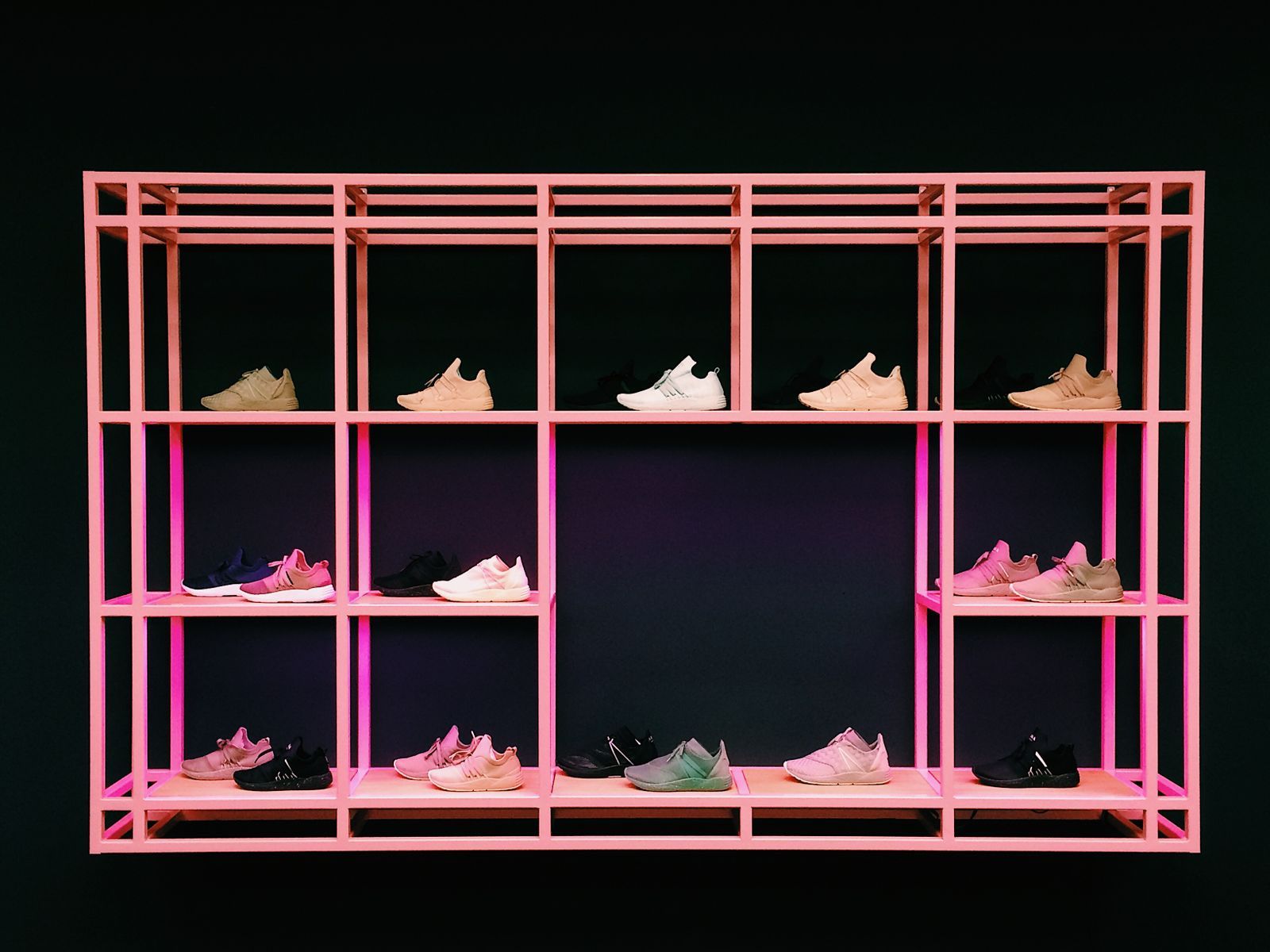
Adidas was left with finished Yeezy shoes that it had already paid to make. It had warned investors of a possible write-off of about €300 million. It chose to sell the shoes instead. The first release, in 2023, brought in about €400 million, and adidas said it would donate to the Anti-Defamation League, the Philonise & Keeta Floyd Institute for Social Change and Robert Kraft’s Foundation to Combat Antisemitism, as the Associated Press reported in August 2023. By then adidas had given €10 million and expected to give a further €100 million.
On 31 January 2024 adidas announced that it would not write off most of the remaining stock and would sell it “at least at cost” in 2024. Only a low double-digit million euro amount, mostly damaged pairs and broken size runs, was written off. The selling continued through 2024, and by March 2025 adidas confirmed the stock was gone. Its finance chief, Harm Ohlmeyer, said there was “not one Yeezy shoe left in our inventory.” FLJ has looked at why so many brands do the opposite and destroy unsold goods in the fashion that never sold.
How much did the Yeezy split cost adidas?
The figures below come from adidas’s own results releases. They show how much of the business Yeezy had become and how the sell-off softened the blow.
| Period | Yeezy revenue | Yeezy operating profit | What happened |
|---|---|---|---|
| 2022 | More than €1.2 billion | Not separately disclosed | Partnership ended 25 October; up to €250 million hit to net income flagged |
| 2023 | About €750 million | About €300 million | Two inventory drops; adidas posts a €58 million net loss, its first annual net loss since 1992 |
| 2024 | About €650 million | About €200 million | Remaining stock sold; about €100 million provisioned for further donations |
| 2025 onwards | None | None | No Yeezy revenue or profit in adidas’s outlook |
The 2024 figures are in adidas’s full-year results of 5 March 2025, which also record that the company finished selling the stock in 2024. The 2023 net loss of €58 million, reported by Reuters and Fortune, followed net income of €254 million in 2022. The loss had several causes, and the end of Yeezy was one of the most visible.
Did adidas and Ye settle their legal dispute?
Yes, in October 2024, not 2025. After the termination, the two sides were in litigation and arbitration for two years. In 2023, adidas went to a US federal court seeking to freeze $75 million held by Yeezy. On a conference call for its third-quarter results on 29 October 2024, chief executive Bjørn Gulden said the disputes had been resolved, that neither side was paying the other, and added: “We both move on.” The terms were not published. As Fashion Dive reported, adidas booked about €100 million of other operating income in the quarter from releasing accruals linked to the settlement, offset by an equal provision for donations, so the deal had no material effect on profit.
What happened to the shareholder class action?
Investors also sued. A securities class action led by HLSA-ILA Funds, which serve maritime workers in south-east Virginia, alleged that adidas had known since at least 2018 about Ye’s improper conduct towards staff and concealed it, so that shareholders lost money when the stock fell after the split. Ye was not a defendant. A federal judge in Portland, Oregon dismissed the case in August 2024. On 3 December 2025 the Ninth Circuit Court of Appeals upheld the dismissal, finding that adidas had not misled investors and that its annual reports properly described partner misconduct as a risk, according to Reuters. A reasonable investor, the court said in effect, understands that a celebrity partnership carries the risk of bad behaviour.
Who owns the YEEZY trademark?
Ye’s side does. The key US registration for YEEZY on footwear, Registration No. 5125895, was filed on 6 August 2013, the year he signed with adidas, and registered on 17 January 2017 in Class 25 for “footwear, shoes, sneakers.” The USPTO’s TSDR record names the original registrant as Mascotte Holdings, Inc., the company through which Ye filed his marks, and lists the current owner as Ox Paha Inc. of Los Angeles. The registration was renewed for a further ten years on 3 April 2026. E! News reported in June 2025 that California filings list Ye as a manager or member of Ox Paha. Bloomberg Law counted more than 160 trade mark filings in Mascotte’s portfolio when the split happened, covering YEEZY, DONDA and YEEZUS.
That split between brand and product is common in collaborations: the celebrity licenses a name, the manufacturer builds the shoe. FLJ explains why brands protect the name and the logo separately in word mark vs logo mark.
Which Yeezy designs does adidas own?
Adidas owns the technology and its house marks, and it claims the product designs. Boost, the cushioning foam in most Yeezy runners, is adidas’s own technology, developed with the chemicals group BASF and launched at the end of February 2013, two years before the first Yeezy shoe. The three stripes are adidas’s registered marks, defended aggressively for decades; FLJ covered its loss in adidas v. Thom Browne.
On the designs, Bloomberg Law reported that adidas obtained US design patents for the Yeezy Boost 350 in 2017 and 2018 naming adidas designer Nic Galway, while Ye obtained a design patent for the Yeezy Slide in 2020. The 2016 contract is not public, so the exact split of rights is not on the record, but the practical result is clear: adidas sold the existing shoes under the Yeezy name until the stock ran out, and anything Ye makes now must avoid adidas’s patented designs, Boost and the stripes. US design patents last 14 or 15 years from grant, depending on when the application was filed, so patents granted in 2017 and 2018 run into the early 2030s. Our guide to design patents for shoes, bags and hardware explains how that protection works.
What should designer-brand collaboration contracts include after Yeezy?
Every brand lawyer drafting a talent deal now has the Yeezy file in mind. The clauses that matter most:
- Morality clause. A clear right to terminate for conduct that brings the brand into disrepute, with an objective test and no cure period for the most serious conduct.
- IP ownership. Who owns the name, the designs, the colourways, the patterns and any new technology, during the deal and after it ends.
- Post-termination sell-off. Whether the brand may sell finished stock under the partner’s name after termination, for how long, and whether royalties or donations apply.
- Payments and royalties. What happens to unpaid royalties, advances and marketing funds if the deal ends for misconduct.
- Dispute resolution. Confidential arbitration kept the Yeezy fight largely private; brands should decide the seat, rules and interim relief in advance.
- Disclosure. Listed companies should describe partner risks accurately in their reports, which is what saved adidas in the shareholder case.
FLJ has set out the wider legal checklist in legal implications of collaborations and partnerships, and how talent deals are structured in the brand ambassador economy.
Frequently asked questions
When did adidas drop Yeezy?
Adidas ended the partnership with immediate effect on 25 October 2022, citing Ye’s antisemitic and hateful comments. It stopped producing Yeezy products and stopped all payments to Ye and his companies the same day.
Does adidas still sell Yeezys?
No. Adidas sold its remaining Yeezy stock in drops during 2023 and 2024 and confirmed in March 2025 that none was left. Its outlook from 2025 onwards includes no Yeezy revenue or profit.
Who owns the Yeezy name?
The main US YEEZY registration for footwear was filed by Mascotte Holdings, Ye’s trade mark company, and USPTO records now list Ox Paha Inc. as owner. It was renewed in April 2026. Adidas does not own the YEEZY trade mark.
Did Kanye West get paid by adidas after the split?
Adidas stopped payments when it ended the deal. When the two sides settled in October 2024, adidas chief executive Bjørn Gulden said neither side was paying the other. The settlement terms were not made public.
Where did the money from Yeezy sales go?
Adidas kept the revenue but pledged donations to anti-hate groups, including the Anti-Defamation League, the Philonise & Keeta Floyd Institute for Social Change and the Foundation to Combat Antisemitism. It provisioned about €100 million for further donations in 2024.
Can Ye make Yeezy shoes again?
He can use the YEEZY name, which his company owns, but he cannot use adidas’s Boost technology, three stripes or the designs adidas patented or owns under the contract. Any new Yeezy footwear would need original designs that avoid those rights.
This case study is for general information as of October 2026 and is based on public company statements, court reports and USPTO records. It is not legal advice; collaboration contracts should be reviewed by a qualified lawyer.
FASHION LAW JOURNAL INSIDER
Join designers, brand founders and fashion lawyers who get the biggest brand battles, IP fights and career moves in fashion law, straight to their inbox.