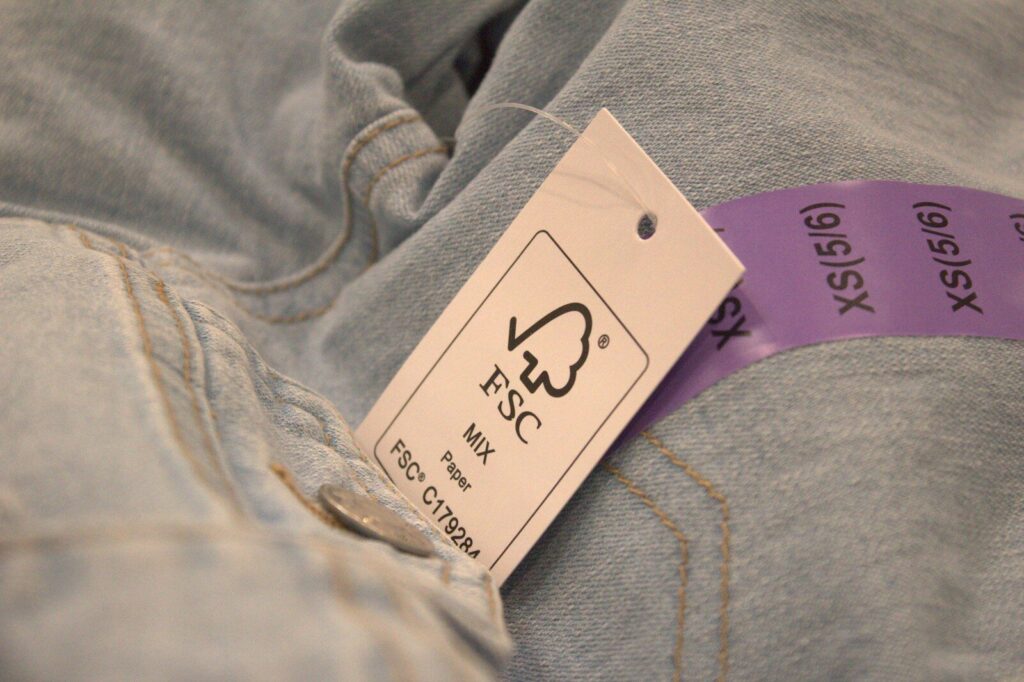

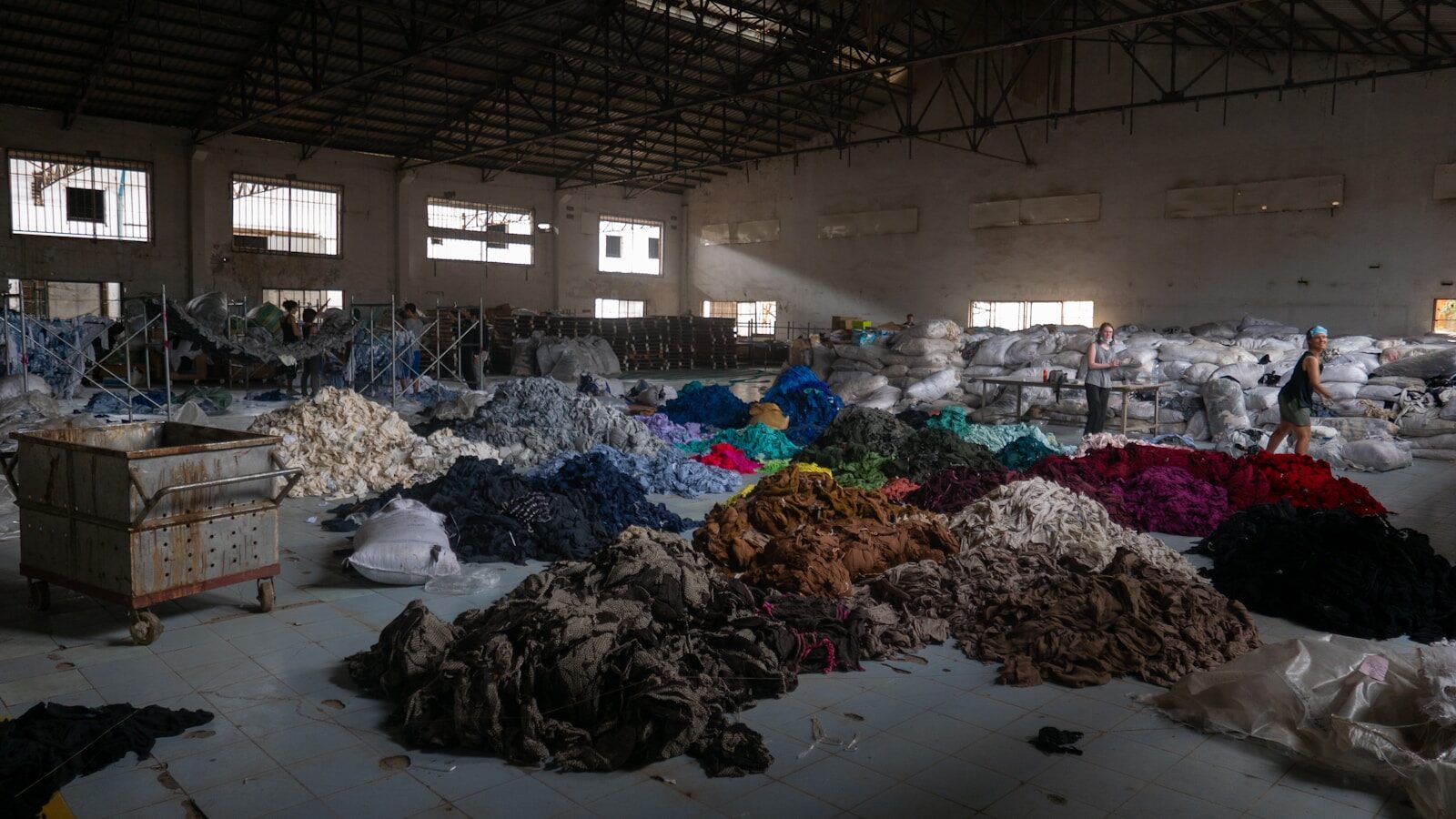
Fashion is an industry where yesterday’s collection can become tomorrow’s clearance rack. Yet, for luxury houses, the story does not always end with a red discount sticker. A handbag that fails to sell, a dress left behind after a season, or a pair of shoes that never finds its buyer can enter a far more unexpected journey; one shaped by scarcity, brand prestige, sustainability and the economics of desire. Because when a brand has spent decades convincing the world that its products are worth more, what happens when it has too many of them?
The Luxury of Not Selling
For most businesses, unsold stock is straightforwardly a problem. If a dress, handbag or pair of shoes has been sitting on a shelf for months, the usual answer is to reduce the price, move it to an outlet or put it on sale. The objective is simple: recover as much value as possible and make room for new inventory.
Luxury fashion does not always work that way.
For a luxury house, the price of a product is not determined only by the cost of its leather, fabric, craftsmanship or production. A significant part of what the customer is paying for is the brand itself; its reputation, history, exclusivity and the feeling that the product is not available to everyone, everywhere, at any price.
This is where discounting becomes complicated. Imagine seeing a handbag that originally sold for ₹3 lakh suddenly available for ₹1 lakh. The immediate attraction may be the bargain, but repeated discounting can also change how consumers perceive the product. If the same item regularly appears in outlets or clearance sales, customers may begin to question why they should pay full price in the first place.
Luxury therefore depends on a rather unusual principle: scarcity can create value. Limited collections, restricted distribution, controlled production and carefully managed availability can make a product feel more desirable precisely because it is difficult to obtain.
The fate of unsold fashion becomes particularly intriguing when the product itself is still perfectly usable, yet its place in the market has disappeared. Once a collection moves on and demand fades, luxury houses must decide what happens next: to sell it, store it, repurpose it, or, in some cases, remove it from circulation altogether. This is where the story of fashion that never sold truly begins.
Where Does The Unsold Go?
When a collection leaves the shop floor, the pieces that remain do not simply disappear. Unsold inventory enters a less visible part of the fashion supply chain, where brands decide what to do with products that have missed their intended selling period. The decision can depend on the type of product, its value, seasonality, condition and the brand’s distribution strategy.
Some pieces may be moved into warehouses and held for a later sale or transferred to another market. Others may find their way into outlet stores, where older or excess inventory can be sold at reduced prices without necessarily appearing alongside a brand’s newest collections. For luxury houses, however, even this route requires careful consideration because the environment in which a product is sold can influence how consumers perceive the brand.
The growth of the resale market has created another possible destination. Pre-owned luxury platforms and specialised resale channels allow products to find new customers while extending their commercial life beyond the original point of sale. Similarly, some garments may be donated, repurposed or sent for recycling, particularly as brands face increasing pressure to address the environmental impact of excess inventory.
Then comes the most controversial possibility: destruction. In certain cases, unsold products have been deliberately removed from circulation rather than sold through discounted or secondary channels. This is what makes the journey of unsold fashion so revealing. A garment may be perfectly wearable and still have no place in a brand’s intended market.
Ultimately, what happens after the sale never happens depends on a complex calculation involving value, demand, brand positioning and the changing expectations around waste. The product may receive a second life; or its story may end before it ever reaches another customer.
The Price of Exclusivity.
Luxury fashion sells more than a product; it sells the idea that the product is rare, desirable and not easily available to everyone. Scarcity is therefore carefully managed. Limited production, controlled distribution and seasonal collections can help maintain the sense that a particular piece belongs to an exclusive world. In this context, allowing large quantities of unsold products to enter discount markets can undermine the very perception that luxury brands spend years building.
This helps explain the logic behind destroying unsold collections. The argument is not that the individual garment has no value, but that releasing it cheaply may reduce the perceived value of the brand and its products. If consumers know that unsold pieces will eventually appear at heavily reduced prices, they may become less willing to purchase them at full price. For a luxury house, protecting pricing power and exclusivity can therefore appear more valuable than recovering the cost of every individual item.
But this logic comes with an obvious contradiction: how can destroying perfectly usable fashion be compatible with sustainability?
A garment that required raw materials, energy, labour, transportation and packaging to reach the market has already consumed resources before it becomes unsold. Destroying it does not undo that environmental cost; it simply prevents the product from being used by someone else. From a sustainability perspective, this makes the practice difficult to reconcile with the principles of extending product life, reducing waste and making better use of resources.
The result is a difficult tension at the heart of luxury fashion: the same scarcity that protects a brand’s exclusivity can contribute to unnecessary waste. As sustainability becomes an increasingly important part of the fashion industry, the destruction of perfectly usable products is becoming harder to justify, both environmentally and socially.
This tension makes the destruction of unsold fashion increasingly difficult to defend. Luxury can control its distribution, limit production and carefully manage how its products reach consumers without necessarily making them disappear. A brand’s prestige should come from the value it creates, not from the waste it can afford.
Unsold pieces can instead be redirected through carefully controlled resale, archival collections, repair, upcycling or material recovery. The challenge for luxury is therefore not simply to remain exclusive, but to find a way of preserving that exclusivity without making waste part of the business model.
The Burberry Moment
Burberry brought this contradiction into sharp focus in 2018 when its annual report revealed that the British luxury house had destroyed £28.6 million worth of finished goods in a single financial year. The disclosure sparked widespread criticism over the environmental cost of destroying perfectly usable fashion and brought an uncomfortable luxury practice into public view.
The controversy became a turning point for the brand. Within months, Burberry announced that it would stop destroying unsaleable finished products and instead expand reuse, repair, donation and recycling initiatives.
The Burberry episode is particularly revealing because it shows how the logic of exclusivity can collide with changing expectations of corporate responsibility. What was once treated largely as an inventory and brand-management decision became a public question about waste, sustainability and the responsibilities attached to luxury.
When The Law Steps in.
For a long time, the fate of unsold fashion was largely left to the discretion of the brand. Whether a garment was discounted, stored, donated, recycled or destroyed was primarily a commercial decision. That is beginning to change. As governments turn their attention towards fashion waste, what happens to an unsold product is increasingly becoming a matter of regulation rather than simply corporate strategy.
The European Union has taken one of the clearest steps in this direction through the Ecodesign for Sustainable Products Regulation (ESPR). The Regulation recognises the destruction of unsold consumer products as an environmental problem and requires businesses to take measures that can reasonably be expected to prevent it. It also requires relevant businesses that discard unsold products to disclose information about what was discarded, why it was discarded and how those products were treated.
For fashion, the most significant provision is Article 25. From 19 July 2026, large enterprises are prohibited from destroying unsold apparel, clothing accessories and footwear. Medium-sized enterprises will be subject to the prohibition from 19 July 2030, while micro and small enterprises are currently outside this specific prohibition.
The law, however, does not simply say that every unsold garment must be preserved forever. The EU has recognised that there can be legitimate circumstances in which destruction may still be necessary. The 2026 delegated regulation provides exceptions involving issues such as health and safety, products that cannot be economically repaired, products that are unsuitable for reuse or remanufacturing, certain intellectual-property concerns, unsuccessful donation efforts, and situations where destruction has the least negative environmental impact.
This distinction is important. The purpose of the law is not to make brands keep every unwanted or unusable product indefinitely. Rather, it attempts to make destruction a last resort, encouraging businesses to consider reuse, refurbishment, remanufacturing, donation and other forms of recovery first. The Regulation also requires information about discarded products to be disclosed, making the practice more visible rather than leaving it entirely behind the doors of warehouses and disposal facilities.
For luxury fashion, this represents a significant shift. The argument that destroying inventory may protect exclusivity can no longer be considered entirely separate from environmental responsibility. The law is beginning to ask not only whether a product can be sold, but whether it should be destroyed at all.
And perhaps that is the most important change: the unsold garment is no longer simply a problem for the balance sheet. It has become part of the legal conversation about what a sustainable fashion industry should look like.
The Cost of Not Selling
The story of unsold fashion reveals one of luxury’s most complicated contradictions. The same scarcity that makes a product desirable can also influence what happens when that product fails to sell. Protecting exclusivity may make commercial sense, but it becomes harder to defend when it results in perfectly usable products being removed from circulation.
As sustainability increasingly shapes both consumer expectations and the law, luxury fashion is being pushed to rethink what happens beyond the boutique. The future may not require brands to abandon exclusivity, but to redefine how exclusivity is maintained; through thoughtful production, controlled distribution and responsible management of what remains.
Because the value of luxury should ultimately lie in the craftsmanship, creativity and identity of the product; not in its ability to become waste.
References
- European Union — Regulation (EU) 2024/1781 (Ecodesign for Sustainable Products Regulation)
https://eur-lex.europa.eu/eli/reg/2024/1781/oj/eng - European Commission – New law to make products on the EU market more sustainable
- European Union — Commission Delegated Regulation (EU) 2026/296
https://eur-lex.europa.eu/eli/reg_del/2026/296/oj/eng - McKinsey & Company – The State of Luxury: What US and Chinese Clients Reveal About the Sector’s Future (2026)
- McKinsey & Company – Mastering Off-Price Fashion in an Omnichannel World
- McKinsey & Company – Welcome to Luxury Fashion Resale.
- Burberry Annual Report. https://www.burberryplc.com/content/dam/burberryplc/corporate/documents/investors/results-reports/2019/BURBERRY_Annual_Report_2019_Web.pdf.downloadasset.pdf
Deadstock Destruction: Why Fashion Keeps Destroying Unsold Goods
FASHION LAW JOURNAL INSIDER
Join designers, brand founders and fashion lawyers who get the biggest brand battles, IP fights and career moves in fashion law, straight to their inbox.