

The 1990s took the shoulder pads off. Fashion swung from gloss to grunge, from power suits to slip dresses, and from anonymous mannequins to five supermodels famous enough to be known by first name. Underneath the plaid and the minimalism, the decade was also rewriting brand law. Courts decided a colour could be a trade mark, Congress gave famous logos protection against dilution and turned counterfeiting into racketeering, and Europe opened a single trade mark office for the whole internal market. This guide covers the looks that defined 1990s fashion, the people who made them, and the legal milestones of the decade that still decide who owns a logo, a colour or a silhouette today.
Short answer: 1990s fashion moved between grunge (flannel, ripped denim, Marc Jacobs’ 1993 Perry Ellis collection), minimalism (slip dresses, black and neutral tailoring) and supermodel glamour. Legally, it was the decade of the logo: Qualitex (1995) allowed colour marks, the US added federal dilution protection (1996) and anti-counterfeiting statutory damages (1996), and the EU trade mark system opened in 1996.
Key takeaways
- A January 1990 British Vogue cover by Peter Lindbergh made Naomi Campbell, Linda Evangelista, Tatjana Patitz, Christy Turlington and Cindy Crawford the faces of the decade.
- The US Supreme Court held in Qualitex Co. v. Jacobson Products (28 March 1995) that a colour alone can serve as a trademark.
- The Federal Trademark Dilution Act (approved 16 January 1996) and the Anticounterfeiting Consumer Protection Act (2 July 1996) gave luxury brands new weapons against copycats and fakes.
- The EU’s Community trade mark, created by Regulation 40/94 in December 1993, began taking applications in 1996; Wal-Mart v. Samara, a 1990s clothing dispute, was decided in 2000.
What did 1990s fashion look like?
The decade had at least three moods running at once, often in the same wardrobe:
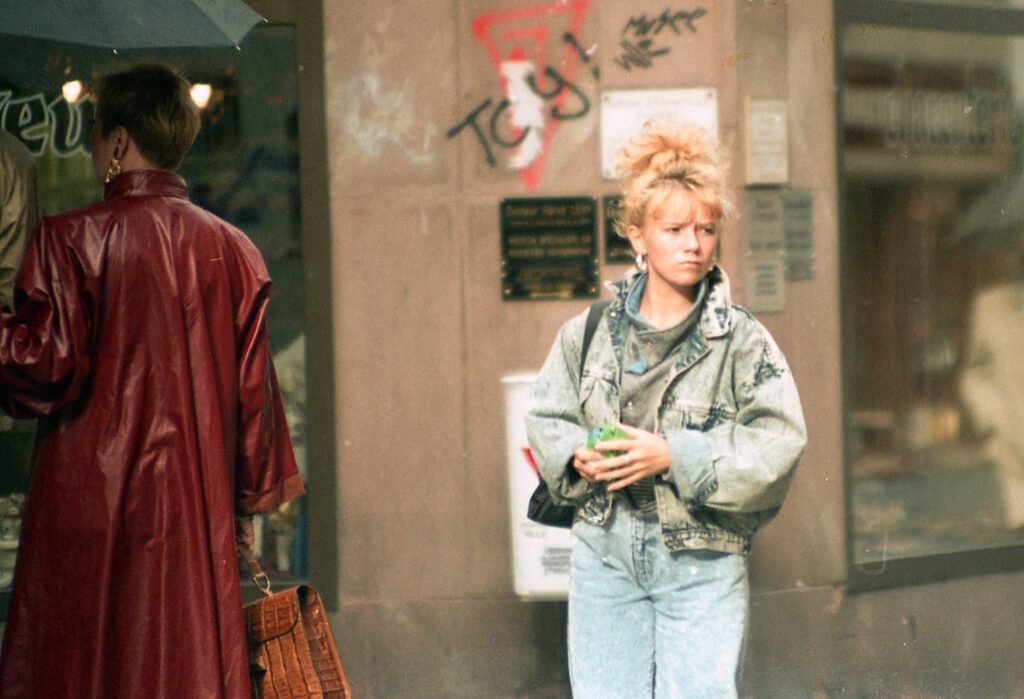
- Grunge. Plaid flannel shirts, ripped jeans, slip dresses over T-shirts and heavy boots, borrowed from the Seattle music scene. Marc Jacobs put the look on a runway in his Spring 1993 “Grunge” collection for Perry Ellis. Critics panned it and it led to his firing, but, as Fashionista reported, he reissued 26 looks under his own label in November 2018.
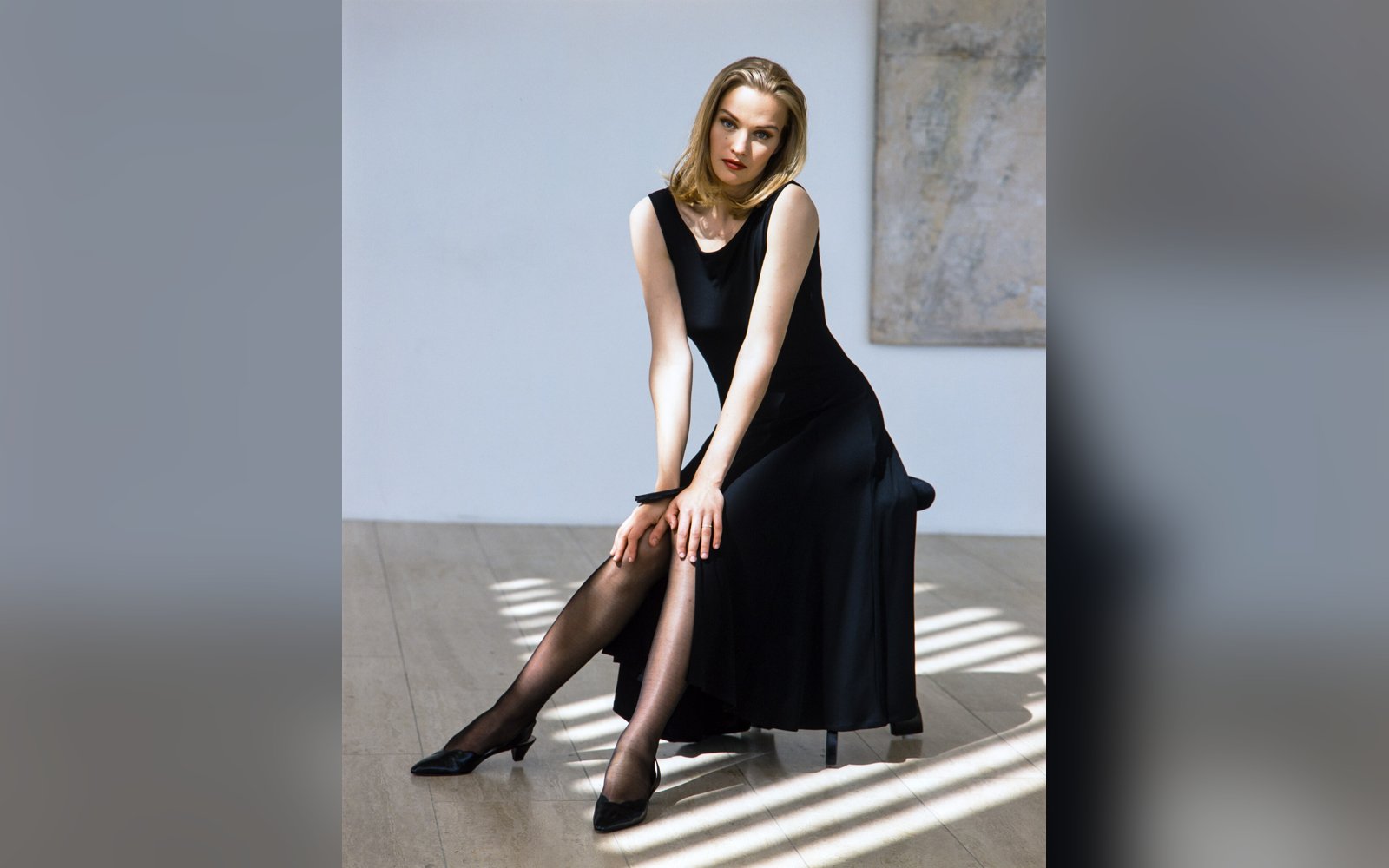
- Minimalism. Clean black, navy and neutral tailoring, bias-cut slip dresses and almost no ornament. The pared-back style of Carolyn Bessette-Kennedy, a Calvin Klein publicist before her marriage, is still the reference image; FLJ looks at her in the girl behind the tortoiseshell headband.
- Sex and polish. Tom Ford was named Gucci’s creative director in 1994 and his first collection, for Fall 1995, was a critical and commercial hit. Gianni Versace’s gold, prints and supermodel runways set the other pole of glamour until his murder in Miami Beach on 15 July 1997, covered in FLJ’s profile of Gianni Versace.
- “Heroin chic”. Waif-thin models and washed-out styling drew a public rebuke from President Bill Clinton on 21 May 1997, who told visiting mayors at the White House that “the glorification of heroin is not creative, it’s destructive.”
In Britain, the same years brought Britpop, whose parkas and tracksuit tops are back in circulation, as FLJ’s piece on Oasis and the Britpop revival explains. For the decade that came before, with its power suits and first counterfeit crackdown, see FLJ’s sibling guide to 1980s fashion.
FLJ Insider Pro is open: live fashion law jobs and internships, five career guides and two roadmaps. Early bird USD 12/month. See what's inside
How did the supermodels change the fashion business?
Models had been famous before, but the early 1990s turned a handful of them into brands. Peter Lindbergh shot Campbell, Evangelista, Patitz, Turlington and Crawford together in New York’s Meatpacking District in 1989, and the picture ran as the January 1990 cover of British Vogue. According to Artsy, George Michael then asked all five to appear in the video for “Freedom!”, directed by David Fincher.
Their bargaining power was the point. In Jonathan Van Meter’s October 1990 Vogue profile, Evangelista said: “We have this expression, Christy and I: We don’t wake up for less than $10,000 a day.” The line became shorthand for the era, and for a shift in who held value in a campaign. A face that sells products is an asset, which is why model contracts, image rights and exclusivity clauses became serious legal documents. FLJ covers what models are owed today in employment law and the rights of fashion models.

Can a colour be a trademark? The Qualitex case
Yes, and the case that settled it in the US had nothing to do with fashion. Qualitex made green-gold pads for dry-cleaning presses and sued a rival that copied the colour. In Qualitex Co. v. Jacobson Products Co., decided unanimously on 28 March 1995, Justice Breyer wrote that when a colour acts as a symbol identifying a source, “no special legal rule prevents color alone from serving as a trademark.” The colour still has to acquire secondary meaning and must not be functional.
Fashion has leaned on that ruling ever since, most famously in the fight over Christian Louboutin’s red sole. FLJ tells the full story of Qualitex and the 90-year fight over colour marks, and what the Louboutin red sole case did with it.
What were the big US logo laws of the 1990s?
Two federal statutes, passed within six months of each other, gave famous fashion marks protection the 1980s brands never had.
The Federal Trademark Dilution Act of 1995. Despite its name, it was approved on 16 January 1996 and took effect that day. It let the owner of a famous mark stop a later commercial use that causes “dilution of the distinctive quality of the mark”, defined as lessening the mark’s capacity to identify goods, whether or not the two businesses compete and whether or not anyone is confused. For luxury houses whose logos were being slapped on unrelated products, that was a new tool. It was the first federal dilution statute in the US.
The Anticounterfeiting Consumer Protection Act of 1996. Signed on 2 July 1996, it found that counterfeiting “has been connected with organized crime” and is “a multibillion-dollar drain” on the US economy. The Act did three things fashion brands still use:
- It made trafficking in counterfeit goods a predicate offence under the federal racketeering (RICO) statute.
- It let brand owners choose statutory damages instead of proving actual losses: $500 to $100,000 per counterfeit mark per type of goods, or up to $1,000,000 if the counterfeiting was wilful. (Those caps have since been raised.)
- It required seizure orders to be carried out by federal, state or local law enforcement officers.
Statutory damages matter because counterfeiters rarely keep honest books. A brand that can claim a set amount per mark does not need the seller’s sales records to win real money.
How did the UK and Europe change trade mark law in the 1990s?
Europe spent the decade building a single system on top of national ones.
| Date | Law or case | What it did |
|---|---|---|
| 20 December 1993 | Regulation (EC) No 40/94 | Created the Community trade mark, one registration for the whole Community |
| 31 October 1994 | UK Trade Marks Act 1994 in force | Modernised UK law in line with the 1988 EU directive |
| 1 January 1995 | WTO TRIPS Agreement in force | Set minimum enforcement standards, including border measures against counterfeit goods |
| 1996 | Community trade mark office opens for filings | 43,229 applications in the first year, according to the EUIPO; renamed the EU trade mark in 2016 |
| 11 November 1997 | SABEL v Puma (Court of Justice) | Held that a mere association between two marks is not in itself enough for likelihood of confusion; the case concerned Puma’s bounding cat |
| 16 July 1998 | Silhouette v Hartlauer (Court of Justice) | Member states cannot apply international exhaustion; brand owners can block grey imports from outside the EEA |
| 13 October 1998 | Design Directive 98/71/EC | Harmonised registered design protection across member states |
Sources: EUR-Lex, legislation.gov.uk, WTO and EUIPO.
Silhouette is the fashion case of the group. The Austrian eyewear maker had sold 21,000 out-of-fashion spectacle frames to a Bulgarian buyer in October 1995, only for Hartlauer, a discount chain it refused to supply, to buy them and offer them for sale in Austria from December 1995. The Court of Justice ruled that national laws allowing exhaustion for goods first sold outside the European Economic Area were contrary to the trade marks directive. That is why luxury brands can still control parallel imports into the EU today, and why the US position, set by K mart v. Cartier in 1988, differs.
Why does Wal-Mart v. Samara belong to the 1990s story?
Because the copying happened in the 1990s, even though the Supreme Court ruled in 2000. Samara Brothers made spring and summer one-piece seersucker outfits for children, decorated with appliqués of hearts, flowers and fruit. Wal-Mart sent photographs of them to a supplier, Judy-Philippine, which copied 16 garments with minor changes for Wal-Mart’s 1996 line. Wal-Mart made more than $1.15 million in gross profit on the copies.
In Wal-Mart Stores, Inc. v. Samara Brothers, Inc., decided on 22 March 2000, Justice Scalia held that an unregistered product design is protectable as trade dress “only upon a showing of secondary meaning.” For fashion, that ruling is the reason a new garment’s design is so hard to protect in the US: shoppers have to associate the design with one source before the law steps in. FLJ explains the test in secondary meaning explained and its limits in trade dress in fashion.
How did the 1990s end for luxury brands?
With a takeover fight. According to WWD’s Gucci timeline, Investcorp bought half of Gucci in 1989 and the rest from Maurizio Gucci in 1993; Gucci listed in New York and Amsterdam in 1995. Between June 1998 and February 1999, Bernard Arnault’s LVMH built a 34.4 percent stake and tried to take control, until François Pinault’s PPR, now Kering, stepped in as a white knight. FLJ covers the family side of that history in the House of Gucci murder. The lesson for the 2000s was clear: logos were now worth fighting over in court and in the boardroom.
This article is general information on fashion history and the law as of 19 November 2026. It is not legal advice. Statutory figures are those enacted at the time and some have since been amended.
Frequently asked questions
What was popular in 1990s fashion?
Grunge flannel and ripped jeans, slip dresses, minimalist black tailoring, chunky boots, Britpop sportswear and supermodel glamour from houses such as Versace and Gucci. Logos returned strongly by the end of the decade.
Who were the 1990s supermodels?
The best-known group was Naomi Campbell, Linda Evangelista, Tatjana Patitz, Christy Turlington and Cindy Crawford, who appeared together on British Vogue’s January 1990 cover and in George Michael’s “Freedom!” video.
What was the Qualitex case about?
A dispute over the green-gold colour of dry-cleaning press pads. On 28 March 1995 the US Supreme Court held unanimously that a colour alone can be a trademark if it has acquired secondary meaning and is not functional.
What is trademark dilution?
Weakening a famous mark’s ability to identify its owner’s goods, even without competition or confusion. US federal law has protected famous marks against dilution since the Federal Trademark Dilution Act was approved on 16 January 1996.
When was Wal-Mart v. Samara decided?
On 22 March 2000. The copying of Samara’s children’s clothing took place in the mid-1990s, but the Supreme Court ruling came in 2000. It requires secondary meaning before unregistered product design is protected as trade dress.
When did the EU trade mark start?
Regulation 40/94 created the Community trade mark on 20 December 1993, and the office began accepting applications in 1996. The system was renamed the EU trade mark in 2016 and is run by the EUIPO.
Featured image: Photo: Seppo Konstig, Finnish Heritage Agency, via Wikimedia Commons, CC BY 4.0 (adapted)
FASHION LAW JOURNAL INSIDER
Join designers, brand founders and fashion lawyers who get the biggest brand battles, IP fights and career moves in fashion law, straight to their inbox.