








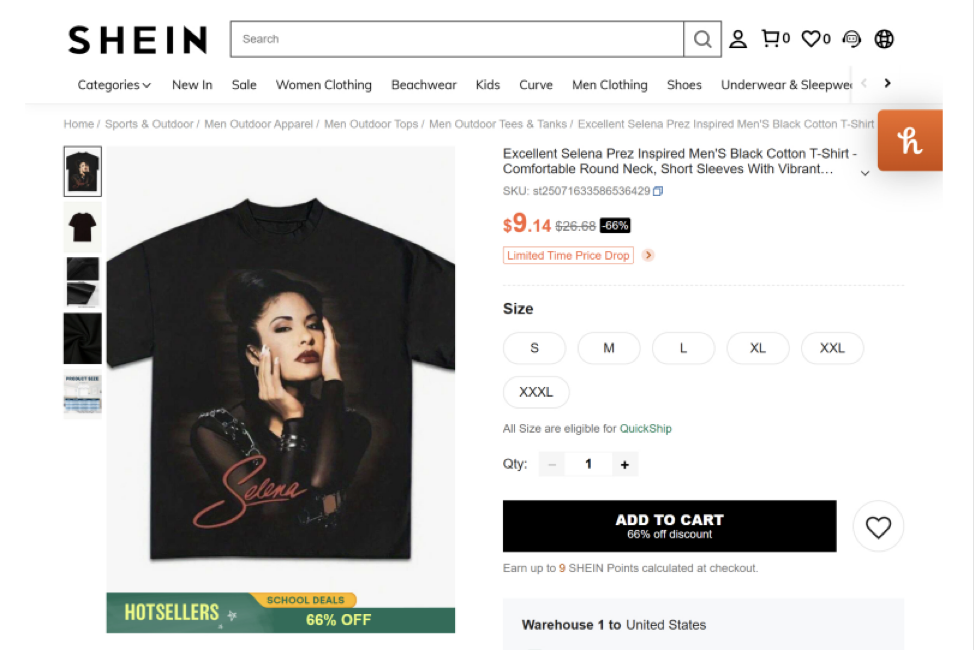
When a company like SHEIN gets sued over celebrity merchandise, it’s easy to assume the story is simple: someone sold shirts they weren’t supposed to sell, and an estate stepped in to shut it down. But the lawsuit filed by Q Productions, Inc. and Suzette Quintanilla over Selena-related merchandise feels bigger than that. This case sits at the intersection of fast fashion, platform retail, trademark law, and the question of what happens when a deceased artist’s image retains strong commercial value decades later. According to the complaint, filed on March 11, 2026, Selena Quintanilla Pérez’s estate alleges that SHEIN sold clothing that used Selena’s name and image without permission. The estate also says this is not a new issue: a cease-and-desist letter was already sent in August 2025, but Selena-related items continued to appear on the platform afterwards. Public docket activity shows the case is still in its early stages. Still, the dispute is already raising a broader issue about how trademark and publicity rights are enforced when allegedly unauthorized goods move through high-volume online marketplaces.
That is what gives the case its edge. This is not only a fight over whether certain items should have appeared on SHEIN. It’s also a fight over how Selena’s estate can enforce rights it says are still active and protectable. For a company like SHEIN, the issue may look operational: listings, sellers, takedowns, and notices. For Selena’s estate, this issue is broader and more long-term. From its point of view, this is about protecting the licensed use of an image that still carries enormous cultural and commercial value.
What Selena’s Estate is Arguing
The complaint raises several claims, but the basic argument is simple. The estate says Selena-related merchandise was presented in a way that could lead consumers to think it was official or connected to Selena’s estate when it was not. Public trademark records also support the estate’s position that it owns and manages those rights. That is where the trademark infringement and false designation of origin claims come in. The estate is arguing that Selena’s name, image, and related branding were used in a way that could suggest an endorsement or affiliation. A consumer doesn’t need to know about trademarks or trademark law for that to matter. The estate is arguing that the way the product was presented could lead people to think it came from or was approved by Selena’s estate.
One of the claims made is for dilution, but not whether shoppers are confused right away. Instead, it’s about whether repeated unauthorized use of their mark can weaken the power of a famous name over time. In fashion, this matters because a name like Selena does not just identify a person, but style, memory, and cultural meaning. If that name keeps showing up on merchandise without approval, the estate can argue that the name loses some of its distinctiveness. Brand owners worry about that kind of erosion because, if a mark is not protected carefully, it can become weaker over time. In extreme cases, a name can even lose trademark protection altogether if it becomes generic (“aspirin” is the classic example in the U.S.). Even though dilution and genericide are not the same thing, both ideas show why owners try to stop repeated unauthorized use before the name loses value.
The publicity rights claim may be the most important part of the case. California law protects a deceased person’s name, voice, signature, photograph, and likeness from unauthorized commercial use. That means this lawsuit is not just about a word or image on a product label. It’s also about whether Selena’s image and identity are still legally protected after her death. Public trademark records help support that position. USPTO records show the SELENA mark is live and registered, with Q Productions LLC listed as the current owner, including for Class 25 apparel goods. Separate USPTO assignment records show an ownership transfer, first from Selena’s father to Suzette Quintanilla and then to Q Productions LLC. That gives the estate a stronger footing when it says Selena’s name and image are still being actively managed, licensed, and protected; not treated as open for anyone to use.
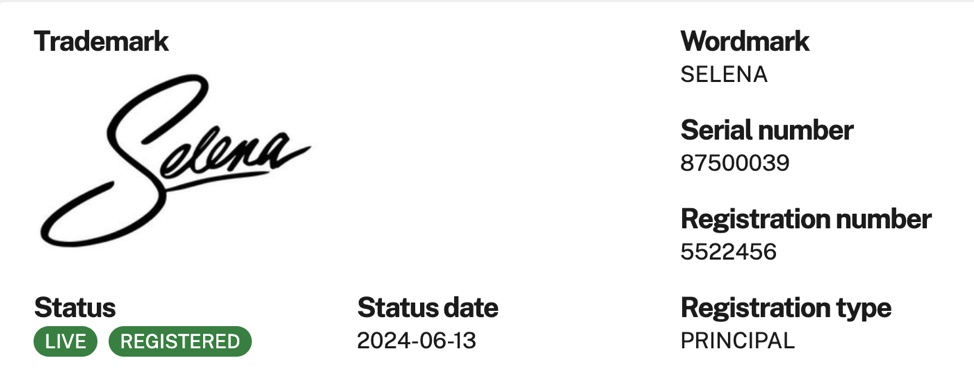
(https://tmsearch.uspto.gov/search/search-results/87500039
The Seller, The Platform, or Both?
One interesting part of the lawsuit is that it does not appear to be built around a one-time incident. The estate is trying to show a pattern. Exhibit A to the complaint includes a cease-and-desist letter and screenshots showing Selena-related search results and listings on the SHEIN platform. The estate is not only saying that Selena merchandise appeared on SHEIN. It is also saying SHEIN was allegedly put on notice, yet the listings still remained. That matters because, once a platform has been warned, the focus shifts. The question is no longer just what was on the site, but what happened after the warning was given.
SHEIN has reportedly said that the merchandise was sold on their platform by third-party sellers, but that it was removed once flagged, and that they have launched an investigation. That may be part of SHEIN’s defense, but it does not completely settle the issue. The seller may have posted the item, but the platform still gives it visibility. It helps shoppers find the listing, and it benefits when people click and buy. That’s why the case matters beyond Selena merchandise. It gets at a bigger issue in fashion e-commerce: how much distance can a platform really claim when it profits from the demand generated by those listings?
In fast fashion, speed changes everything. Products can appear quickly, spread quickly, and get bought quickly. By the time someone objects, the listing may already have done its job: being viewed, shared, or sold. That is part of what makes cases like this so important. They force courts to think about how much responsibility a platform should bear in a system built for speed.

Source: Larry Busacca/Getty
Why Selena Makes This Different
Selena remains one of the most influential Latina artists in music and popular culture, and her connection to fashion has always been part of that story. The GRAMMY Museum says her influence on music, fashion, and culture still inspires generations, and its current exhibit points out that Selena designed many of her own stage costumes. The Smithsonian has also recognized Selena’s cultural impact. They have continued to preserve her legacy, treating Selena as a living cultural force, not just a figure from the past. Describing her as the “Queen of Tejano Music,” the Smithsonian presents Selena as someone whose story and music continue to reach new generations today. That helps explain why her estate is treating this case seriously. Selena’s name and image still mean something to people, and that gives them commercial value. From the estate’s point of view, this is about protecting an image that is still very much alive in fashion, music, and community memory.
As the case moves forward, readers should watch how SHEIN responds, whether it continues to push liability onto third-party sellers, and how the court handles the estate’s trademark and publicity rights claims. For now, the lawsuit is already doing something important; it’s putting pressure on a broader question in fashion e-commerce: how much responsibility a platform should bear when protected names and images appear in online listings.
Sources:
- People, “Late Singer Selena Quintanilla’s Sister Sues Shein Over Clothing Line.”
- Q Productions, Inc. et al. v. SHEIN Distribution Corporation et al., No. 2:26-cv-02588 (C.D. Cal.), case page and filings, accessed via PACERMonitor.
- Q Productions, Inc. et al. v. SHEIN Distribution Corporation et al., No. 2:26-cv-02588 (C.D. Cal.), docket, accessed via Justia.
- Lanham Act / 15 U.S.C. § 1125
- USPTO Trademark Search, SELENA word mark, Reg. No. 5522456
- USPTO Assignment Center records for the SELENA mark
- California Civil Code § 3344.1 (post-mortem rights of publicity)
- kiitv.com, “No results for ‘Selena’ on SHEIN after lawsuit filed by Q Productions.”
- Remezcla, “SHEIN Removes All Selena Quintanilla Merch on Website – Here’s Why.”
- GRAMMY Museum, “GRAMMY Museum Announces ‘Selena: From Texas To The World’ Exhibit.”
- Smithsonian National Museum of American History, Selena materials/press release.
Author: Karla Galiano Herrera

Karla Galiano Herrera is a second-year J.D. candidate at New York Law School with interests in intellectual property, fashion law, and the legal issues that shape brands, media, and creative industries. Her perspective is informed in part by her background in immigration advocacy, which continues to shape the way she thinks about identity, protection, and access. Outside of law school, she enjoys blogging, content creation, and following the trends, stories, and cultural conversations that shape fashion and media.