

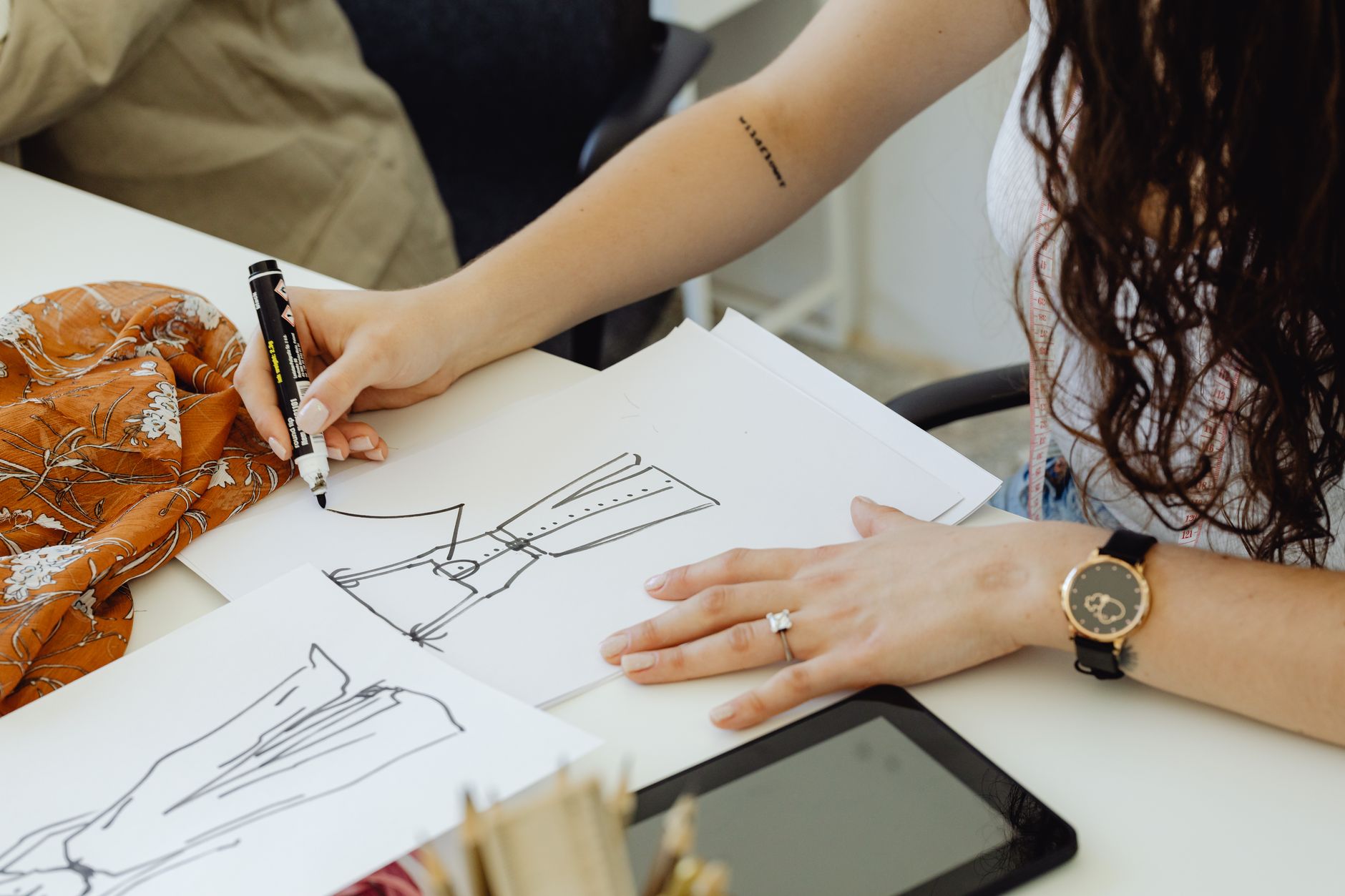
A designer owns a copyright without registering it, but U.S. law requires registration before most infringement suits can be filed, and registering early is what opens the door to statutory damages and attorney fees, the remedies that make litigation worth the cost. For fashion brands, the catch is that most of what makes a garment sell, its cut, fit, and silhouette, cannot be registered at all. Only certain design elements qualify.
What Is Copyright Registration and Why Does It Matter for Designers?
Copyright exists the moment an original work is fixed in a tangible medium, a sketch, a fabric sample, a finished print. Registration is a separate, formal step: filing an application, a copy of the work, and a fee with the U.S. Copyright Office. For fashion brands the distinction matters because ownership and enforceability are not the same thing. A designer owns the copyright in an original print the day it is drawn. But to actually sue someone who copies it in federal court, registration has to happen first.
That enforcement gap is where most designers get tripped up. A brand protection lawyer often gets the call only after a knockoff has already shipped, at which point registering is still possible but some remedies are already off the table. Fashion Law Journal has covered how brands structure that kind of counsel relationship in this breakdown of what a fashion brand protection lawyer actually does.
What Can Actually Be Copyrighted in a Fashion Design?
This is the part that surprises new designers most. U.S. copyright law treats a garment as a “useful article,” meaning its overall shape and cut are functional and generally not copyrightable. What can be protected is any design feature that can be pulled out mentally and viewed as a standalone piece of art, independent of the clothing it sits on.
The test courts use today was set by the Supreme Court in 2017 in Star Athletica v. Varsity Brands, which turned on the chevrons, stripes, and color blocks on cheerleading uniforms. The case set the standard for deciding when a design element on a useful article can be protected under the Copyright Act. Under that test, a decorative feature of a garment qualifies if two things are true: you can picture it as a flat or sculptural artwork separate from the garment itself, and, imagined on its own or transferred to another medium, it would count as a pictorial, graphic, or sculptural work in its own right. Applying the test, the justices held that the graphic designs on Varsity’s uniforms could be protected.
In practice, this means a printed floral pattern, an embroidered logo, a graphic placed on a t-shirt, or an original textile design can usually be registered. The stitching pattern that makes a jacket fit a certain way, or the general silhouette of a wrap dress, usually cannot. The Cornell Law School summary of the case notes that lower courts had issued conflicting rulings on separability for years before the Supreme Court settled the question.
When Do Designers Actually Need to Register?
Three moments matter most.
- Before a launch involving a signature print. If a brand is building an identity around a specific pattern, such as a house monogram or a seasonal textile motif, registering early means the print is enforceable from day one against fast fashion copyists.
- Before filing a lawsuit. A copyright owner cannot bring an infringement claim in federal court without a registration (or a refusal from the Copyright Office) in hand.
- Within three months of first publishing the work, or before the infringement starts. Registering promptly preserves eligibility for statutory damages and attorney fees, which are usually the only realistic way to make litigation against a copier financially worthwhile, since proving actual damages from a knockoff print is difficult and expensive.
Designers who skip registration and only file after a copy has already appeared on the market can still register and sue, but they are typically limited to actual damages, which in a case involving a printed textile design are often small.
What Does Registration Cost and How Long Does It Take?
The Copyright Office publishes its current schedule directly. As of June 2025, filing fees break down as follows.
| Application type | Fee | Best for |
|---|---|---|
| Single application | $45 | A single work by a single author that isn’t made for hire, such as one print by an independent designer |
| Standard application | $65 | The most commonly used application, allowing for multiple authors, works made for hire, and published or unpublished works |
The Copyright Office fee schedule also lists specialized categories, including group registrations for photographs and periodicals, which can matter for brands registering lookbooks or campaign imagery alongside prints. Fashion Law Journal has separately examined how copyright applies to runway imagery in this piece on runway photography rights. Processing itself is not instant; the Office publishes updated turnaround windows on its registration portal, and designers planning a launch around a new print should file well ahead of the release date.
Is There a Cheaper Option Than Federal Court?
Yes, for smaller disputes. The Copyright Office operates a Copyright Claims Board, a small-claims style tribunal that is available to resolve copyright disputes of up to 30,000 dollars as an efficient, less expensive alternative to federal court. For an independent label whose print was copied by a small competitor rather than a major retailer, the Board can be a faster route than a full lawsuit, though it still requires the underlying work to be registered.
When Should Designers Rely on Other Protection Instead?
Copyright is narrow by design, so most fashion brands combine it with trademarks for logos and brand names, trade dress claims for packaging and store environments, and contractual tools for supply chain control. Scarcity and exclusivity strategies, the kind covered in Fashion Law Journal’s analysis of how law shapes high fashion business strategy, often do more commercial work than copyright ever could, because copyright cannot stop someone from making a similarly cut garment, only from copying a protected print or graphic outright.
This overlap is also why comparative advertising and “dupe” disputes increasingly turn on trademark and trade dress theories rather than copyright, as seen in the ongoing litigation profiled in Fashion Law Journal’s coverage of Williams-Sonoma v. Quince and the next frontier of dupe litigation. Brands running temporary retail activations should also check registration status before printing merchandise, a step covered in the pop-up store legal checklist.
Frequently Asked Questions
Does a fashion designer need to register a garment design for copyright protection?
No. Copyright protection exists automatically once an original work is fixed in a tangible form, but registration is required before a designer can file an infringement lawsuit in federal court and before certain remedies become available.
Can you copyright a dress or garment shape?
Generally no. The overall cut, silhouette, and construction of a garment are treated as a useful article and fall outside copyright. Only design features that can be perceived separately from the garment, such as a printed graphic or fabric pattern, qualify under the separability test set out in Star Athletica v. Varsity Brands.
How much does copyright registration cost?
As of June 2025, the U.S. Copyright Office charges 45 dollars for a single application covering one work by one author, and 65 dollars for a standard application covering multiple authors or works made for hire.
What happens if a design was never registered before it was copied?
A designer can still register after the fact and then sue, but registering only after infringement begins usually forfeits access to statutory damages and attorney fees for that infringement, leaving actual damages as the main remedy.
This article is general information for fashion industry professionals and is not legal advice. Consult a qualified attorney about a specific situation.
FASHION LAW JOURNAL INSIDER
Join designers, brand founders and fashion lawyers who get the biggest brand battles, IP fights and career moves in fashion law, straight to their inbox.