

The relationship between luxury companies, consumers, and the law has evolved as a result of the “dupe economy.” Subtle copying was the extent of “duplicating” in the past. However, the practice has evolved into a sophisticated economic structure that depends on influencers, social media, and consumers’ need for reasonably priced luxury goods. The term “dupe” has become an advertising tactic employed by applications like Instagram and TikTok to promote the search for reasonably priced, luxury-like goods.
From Copycat Products to Comparative Marketing: The Williams-Sonoma v. Quince Dispute
Luxury goods corporations have used intellectual property rules to protect themselves against imitations during the previous few decades. The primary strategies employed to combat counterfeit goods have been trademark infringement, design patents, copyright regulations, and trade dress. However, most of the time, using these tools causes issues, particularly when a product is modeled after another but does not duplicate its protected elements. In fact, most designs lack the usefulness and distinctiveness needed to be protected by intellectual property regulations.
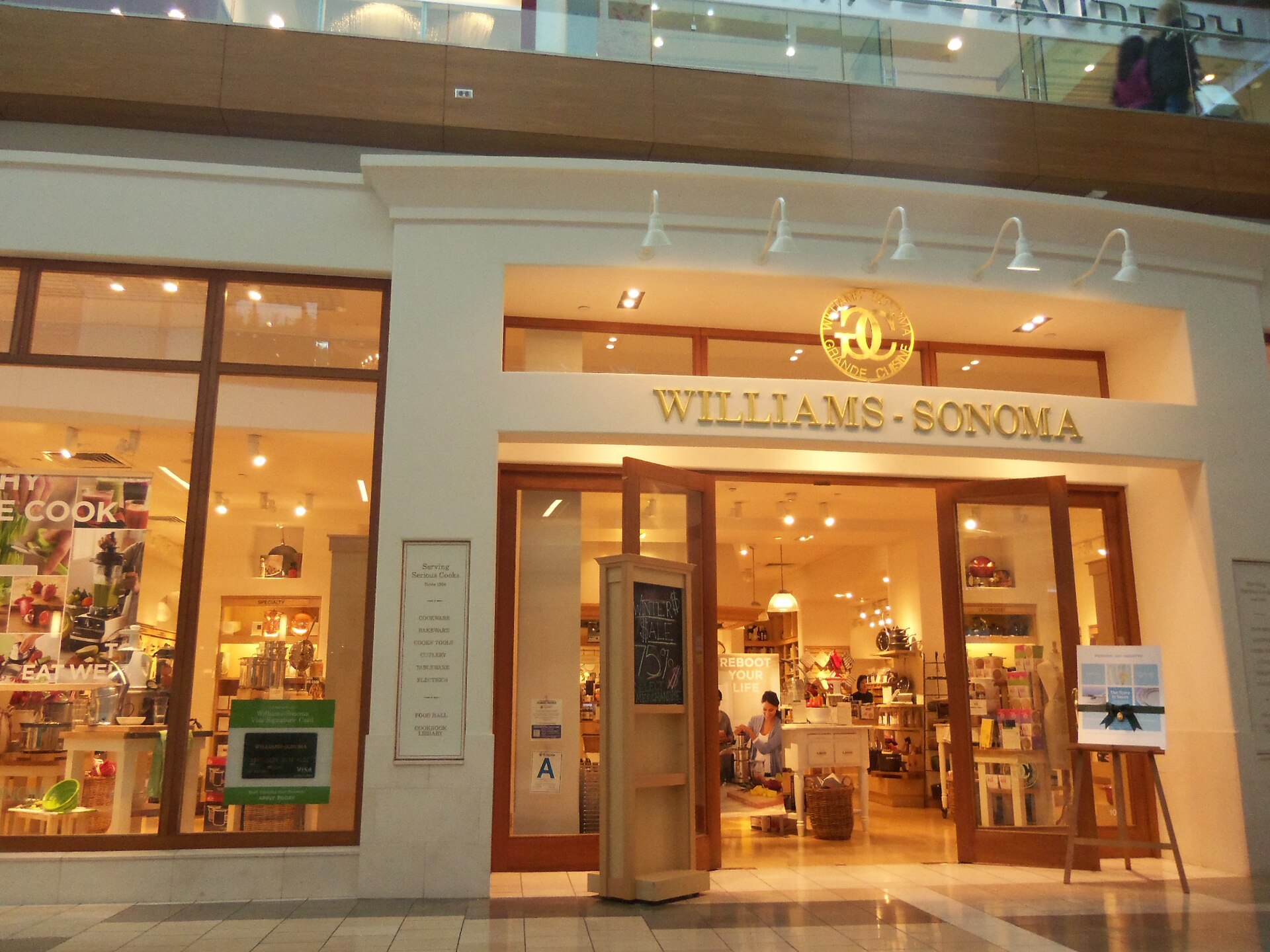
Against this backdrop, Williams-Sonoma, Inc. v. Last Brand, Inc. (doing business as Quince) marks a significant evolution in the legal response to the dupe economy. Rather than alleging that Quince unlawfully copied the design of its products, Williams-Sonoma advances an entirely different legal theory: that Quince systematically misled consumers through deceptive comparative advertising. The dispute therefore shifts the focus from what was being sold to how it was being marketed.
In this regard, Williams-Sonoma, Inc. v. Last Brand, Inc. (dba Quince) signifies a significant change in how courts handle matters pertaining to the duping economy. In contrast to instances when Quince is accused of breaking the law by stealing their product designs, Williams-Sonoma accuses Quince of deceiving consumers with its comparison advertising.
FLJ Insider Pro is open: live fashion law jobs and internships, five career guides and two roadmaps. Early bird USD 12/month. See what's inside
The lawsuit, which was filed on November 21, 2025, in the United States District Court for the Northern District of California, alleges that Quince ran a massive advertising campaign in which it frequently contrasted its goods with those of Williams-Sonoma brands, including Pottery Barn, West Elm, Williams-Sonoma, and Rejuvenation. According to the lawsuit’s assertions, Quince’s marketing materials implied that its goods offered comparable quality at significantly lower costs.
Quince’s well-known “Beyond Compare” advertising campaign is a major component of the allegations against Williams-Sonoma. These comparisons, which showed significant percentage savings between Quince’s items and those of well-known premium brands, were prominently shown on numerous product pages. Williams-Sonoma has argued that because these comparisons did not compare comparable products, they were intrinsically misleading. Instead, it has been said that Quince made the decision to increase the pricing of competitors by comparing different items.
A comparison chart showing that a comparable Pottery Barn sectional sofa cost roughly $5,148 suggests that purchasers would save 52% when purchasing the Quince sectional sofa is one of the more persuasive examples of complaints. The closest Pottery Barn sectional sofa to compare is actually priced at about $3,598, according to Williams-Sonoma. The complaint also claims that the Quince and Pottery Barn sectional sofas differ significantly in terms of manufacture and style.
Additionally, Quince’s use of social media advertisements and marketing email campaigns with phrases like “Like Pottery Barn, but 50% less” is mentioned in the complaint. According to Williams-Sonoma, there were at least a few instances where the products that were marketed did not correspond with those that Pottery Barn or other Williams-Sonoma companies actually sold. To give the false appearance of equivalency, the advertisements compared their products to the reputation of a well-known brand rather than comparing similar products.
Section 43(a) of the Lanham Act (15 U.S.C. § 1125(a)(1)(B)), which forbids making any false or misleading representation about the nature, characteristics, quality, or origin of goods or services, is the basis for Williams-Sonoma’s lawsuit. The company argues that Quince’s comparison advertising deceived customers while simultaneously profiting from the goodwill of well-known brands, using California’s False Advertising Law and Unfair Competition Law in addition to the Federal cause of action.
Importantly, Williams-Sonoma acknowledges that truthful comparative ads are legal and promote competition. In other words, it is more concerned with an advertising strategy that misrepresents the cost, quality, or equality of the items than it is with competition in and of itself. The judicial proceedings revolve around the aforementioned point, which distinguishes this case from conventional “dupe cases.” Williams-Sonoma wants its rivals to defend their comparisons rather than asserting a proprietary stake in product appearance.
Beyond Product Copying: Why False Advertising May Become Fashion’s Strongest Legal Weapon
The Williams-Sonoma v. Quince case is significant for reasons that go well beyond the particular dispute between two rival retail establishments. The case demonstrates a shift in the way well-known brands deal with the rapidly expanding counterfeit sector. In order to defend themselves against other businesses producing comparable goods, the brands used to rely solely on intellectual property rules, which proved to be quite ineffectual. However, these days, the brands also use consumer protection laws and misleading advertising.
Intellectual property ownership has long been a key component of anti-dupe arguments. Traditionally, luxury firms have claimed that their rivals had violated their trademark registrations, copied trade dress that was sufficiently distinctive to identify the origin of the goods, or mimicked protectable elements of their items. Even while they are still important, these anti-dupe assertions have inherent limits. Many fashion designs don’t fall within copyright, design patent, or trade dress protection because they are practical, trend-driven, or based on conventional industry aesthetics.
These weaknesses are evident in recent litigation. In the June 2025 case Lululemon Athletica v. Costco, the Kirkland brand of Costco was accused of violating Lululemon’s designs, trademarks, and trade dresses by selling items that were strikingly similar to Lululemon, such as the ABC Pants, Define Jacket, and Scuba Hoodie. It was founded on intellectual property law since the offered goods were replicas of legitimate goods and were likely to lead consumers to believe they were purchasing authentic Lululemon merchandise.
Similar to this, Coach (Tapestry) v. Quince was founded on trade dress law since Quince was charged with copying unique non-functional features of the Coach Rogue and Soho purses. A UGG boot design patent was also threatened with infringement in Deckers Outdoor Corp. v. Quince. Both of these instances addressed products that people frequently referred to as “dupes,” even though they focused on the infringement of intellectual property rights over the products’ designs. In fact, Deckers suffered a loss as a result of the jury’s decision to invalidate its design patent, whereas Coach’s action was settled with a joint dismissal and no verdict at all.
Conversely, the Williams-Sonoma v. Quince case deviates from the conventional method. Williams-Sonoma does not contend that they have a monopoly on the appearance and style of goods like couches, kitchenware, lights, carpets, and home décor. They contend that Quince made allegedly deceptive factual statements about their rival’s goods. The reason for this is that the products were misrepresented to customers as being comparable in nature, not because they were copies of high-end designs.
There are important legal ramifications to such a distinction. Comparative advertising has long been recognized as a legitimate and potentially beneficial method of business communication. Businesses are free to compare their goods with comparable goods sold by other businesses as long as the comparisons are factual and do not mislead customers. In actuality, since customers may compare products impartially, comparative advertising can improve market transparency.
When comparative advertising employs inaccurate or misleading information, it loses its legal immunity. When an advertisement contains a misleading representation of a fact that is likely to mislead a significant portion of the target public and has a meaningful impact on their purchasing decision, liability may be imposed under Section 43(a) of the Lanham Act. Regardless of whether there has been any uncertainty, California’s Unfair Competition Law and False Advertising Law prohibit a businessman from engaging in deceptive behavior if it is likely to mislead reasonable people.
Quince’s response highlights the case’s legal complexity. In its motion to dismiss the complaint, Quince claims that, based on the overall presentation, the advertisements are not deceptive or incorrect. It clarifies that every product advertised is identified as a Quince product, packaged in Quince packaging, and has a disclaimer stating that rival pricing is subject to change at any time. Quince contends that rather than providing proof that customers have been duped, Williams-Sonoma depends too heavily on customer ratings, quality evaluation, and chosen illustrations.
Therefore, whether or not Quince is selling products that are comparable to those of luxury brands won’t determine the outcome; instead, it will depend on whether or not its advertising significantly misleads reasonable consumers. A precedent-setting case may be established if the court discovers any deceptive price comparison in Quince’s comparative advertising campaign, or even an unverified claim of equivalency or omission. However, the case may succeed if the court finds that reasonable consumers interpret this comparative advertisement as literal marketing.
The lawsuit has a significant message for the fashion industry regardless of whether the corporation wins. The legal dangers associated with the fake economy will now extend beyond simply replicating the designs to include how the firms communicate the similarities to their customers. The courts may have to determine the boundaries between advertising and deception as dupe marketing develops, becoming more sophisticated and utilizing analogies to luxury goods. As a result, the Williams-Sonoma v. Quince case might rank among the most significant instances of deceptive advertising in history.
Implications for the Fashion Industry: The Future of Comparative Advertising and Dupe Marketing
The conflict between Williams-Sonoma and Quince is much more than just a lawsuit against two rival merchants; it captures the rapid development of the “dupe economy,” as well as the increasing ubiquity of goods made to resemble premium goods. In the era of social media, comparison-based advertising has become a powerful marketing tool; companies frequently claim that their goods are “the same quality for half the price.” The case questions the veracity of such statements rather than the idea of “dupe” items per se. Williams-Sonoma states in its lawsuit that while the competition itself is not illegal, false advertising laws may be broken by making deceptive claims about the product’s quality, composition, or cost.
The lawsuit also serves as a reminder that assertions made during competitive advertising should be substantiated. Businesses that utilize comparison advertising in their marketing campaigns need to ensure that the items are similar in terms of features, pricing, and quality. We can anticipate that possibly deceptive comparative advertisements will receive greater attention as internet commerce and influencer marketing become increasingly significant factors in consumers’ decision-making processes. Ultimately, the goal of the action is to establish the limits of the dupes’ permissible advertising methods rather than to eliminate their market.
Conclusion
The emergence of the “duped economy” has brought attention to the intellectual property regime’s shortcomings when it comes to luxury goods, shifting the focus of fashion conflicts from product design to advertising. The question in Williams-Sonoma v. Quince is whether Quince produced deceptive comparative marketing regarding the pricing comparison, the product comparison, and the equivalency claim, rather than whether Quince was accused of violating Williams-Sonoma’s designs. The case serves as an example of how businesses are free to compete with one another, but they are not allowed to mislead or deceive their clients. As marketing moves into the internet sphere, the case highlights the growing intersection between consumer protection and fashion rules.
In a broader sense, the lawsuit illustrates a new strategy used by corporations to enforce their brands, as they are starting to employ a variety of legal tools to safeguard their commercial interests, including intellectual property, false advertising, unfair competition, and consumer protection law. Even though the case’s fate is still unknown, it can serve as a helpful reminder to all parties that any comparative advertising must be based on factual product comparisons and objective evidence. Legal compliance is no longer an afterthought but rather a crucial component of marketing strategies in the fashion and luxury industries. The Williams-Sonoma v. Quince case will probably influence future rulings about comparative advertising in the modern economy, regardless of the court’s ruling.
FASHION LAW JOURNAL INSIDER
Join designers, brand founders and fashion lawyers who get the biggest brand battles, IP fights and career moves in fashion law, straight to their inbox.