
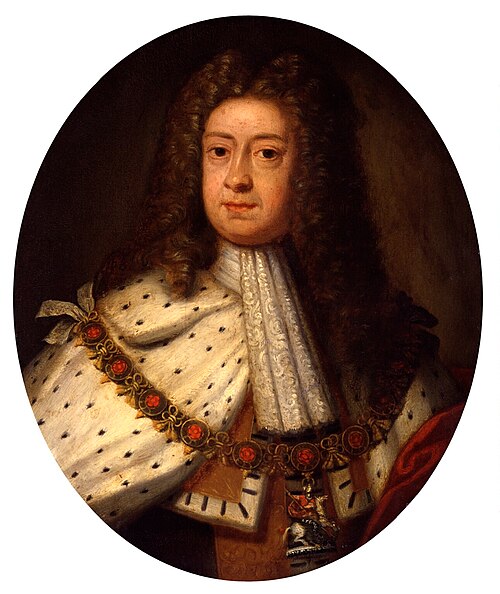
The House of Hanover was a German royal house that held power from 1714 to 1901 on the British throne. They had the Georges on the throne, Georges I through IV, featuring William IV with a special appearance of Queen Victoria. Seems like the Hanoverians ran out of names because George rolls off the tongue quite easily for them. And I guess by now, you would understand why an era is dedicated to the Georges.
But what did the Georges bring to the table besides losing America and making ‘America Great’? Credit to George III.
The Georges reigned from 1714 to 1830, and each George had their own achievements.
George I (1714-1727) was the heir of Queen Anne, son of Ernest Augustus and Sofia of the Palatinate, who was the granddaughter of James I of England and IV of Scotland. He established the Hanoverian rule, but his ability to understand the English language introduced the need for a Prime Minister, Robert Walpole.
George II (1727-1760) was known as the last monarch to lead his own troops into battle against the French at the Battle of Dettingen in 1743.
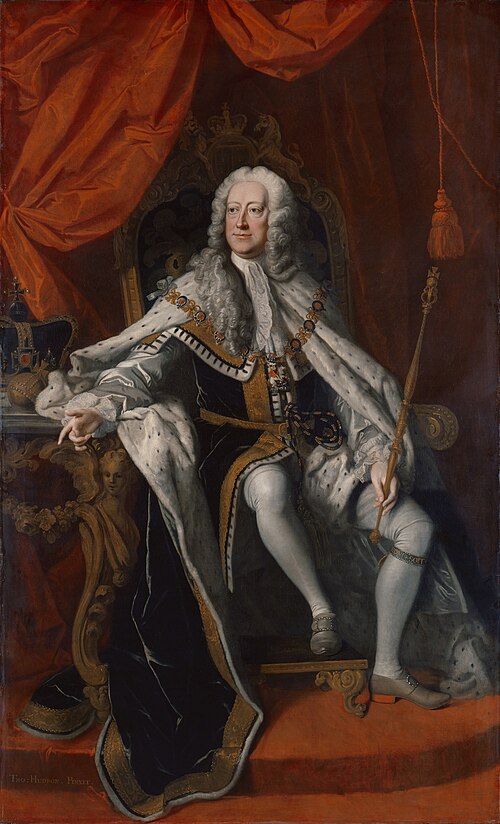
If you are a Bridgerton fan, then you’d know that George III (1760-1820) was none other than the husband of Queen Charlotte. George III, or the Mad King, was mostly known for losing the American colonies. His mental illness made him an incompetent ruler.
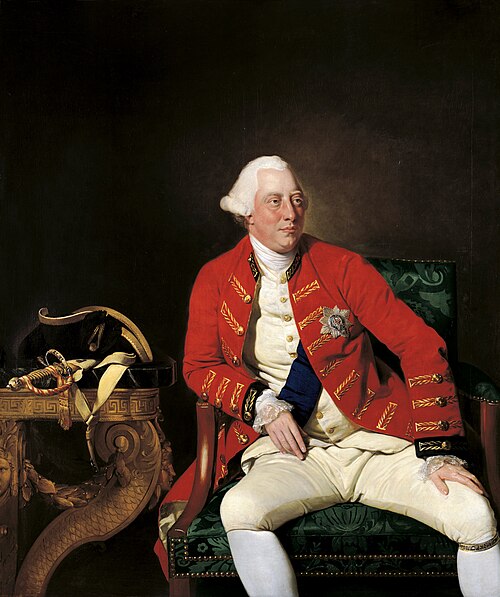
George IV(1820- 1830) was known for his scandalous love affairs, love of gambling, extravagant parties and an extreme fondness for alcohol. Let’s add the fact that he also showed up drunk to his own wedding.
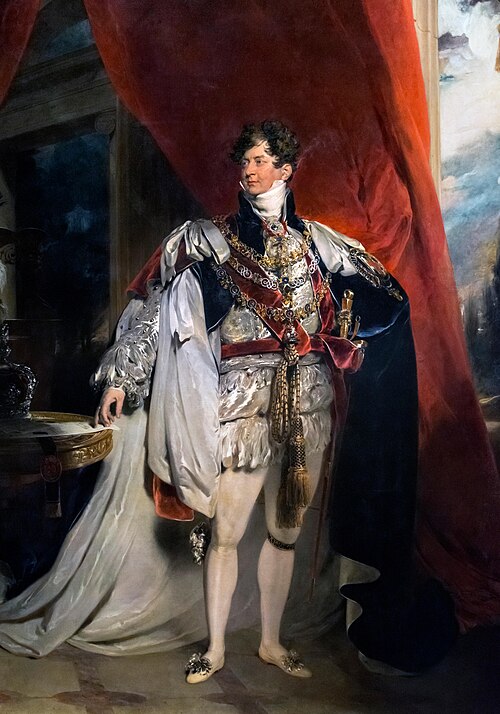
Let’s forget about the Georges I through IV and move on to the fashion statement during their reign and the transition from the thriving Rococo era to the Regency period.
Fashion during the Georgian Era- The Rococo Style in the British Empire.
The Rococo era started in France in the 1720s, and it was pretty well known for its ornamental style, with a subtle approach to pastel colours and an asymmetrical structure. But did the Georgian era have any connection with the Rococo trends?
The spread of the Rococo style throughout Europe was revolutionary, especially in England. It was a thriving trend among the elite and the aristocrats. The people of the era were heavily inspired by the aesthetics, textiles, hairstyles, and accessories of the fashion revolution.
Men and women had their own distinct features during this period. At the earliest reign of George I, Baroque fashion was slowly fading into the Rococo style. The years 1730s- 1760s had the strongest influence of Rococo fashion; this was highly visible in paintings and portraits of the 18th century. In the late Georgian period, Rococo style remained in style but later transitioned to the Regency fashion we all know.
Women’s fashion during the Georgian Era.
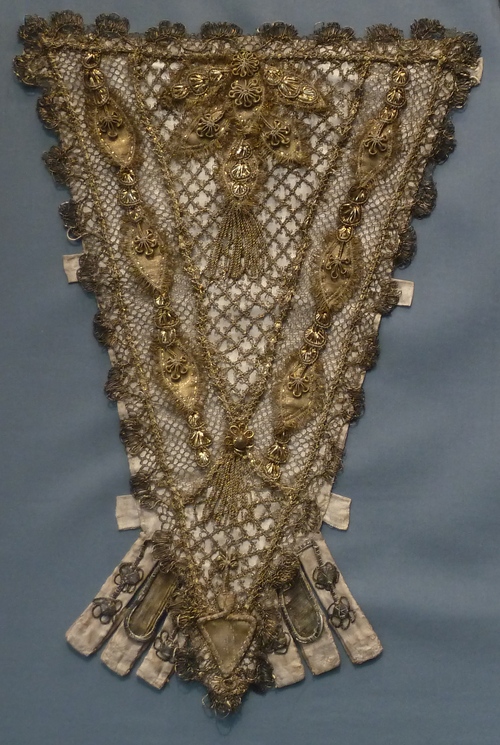
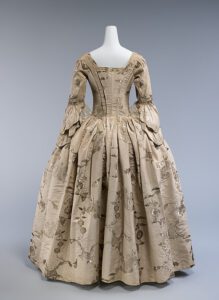
The stomacher was a V- shaped triangle piece worn on the front of the open gown. It is often adorned with beautiful embroidery, laces and ribbons.
Daniel D. Hill described the Robe Volante as “A flowing robe- like gown with a box pleat at the back neckline that fell loosely to the hem.” It flowed from the shoulders to the ground.
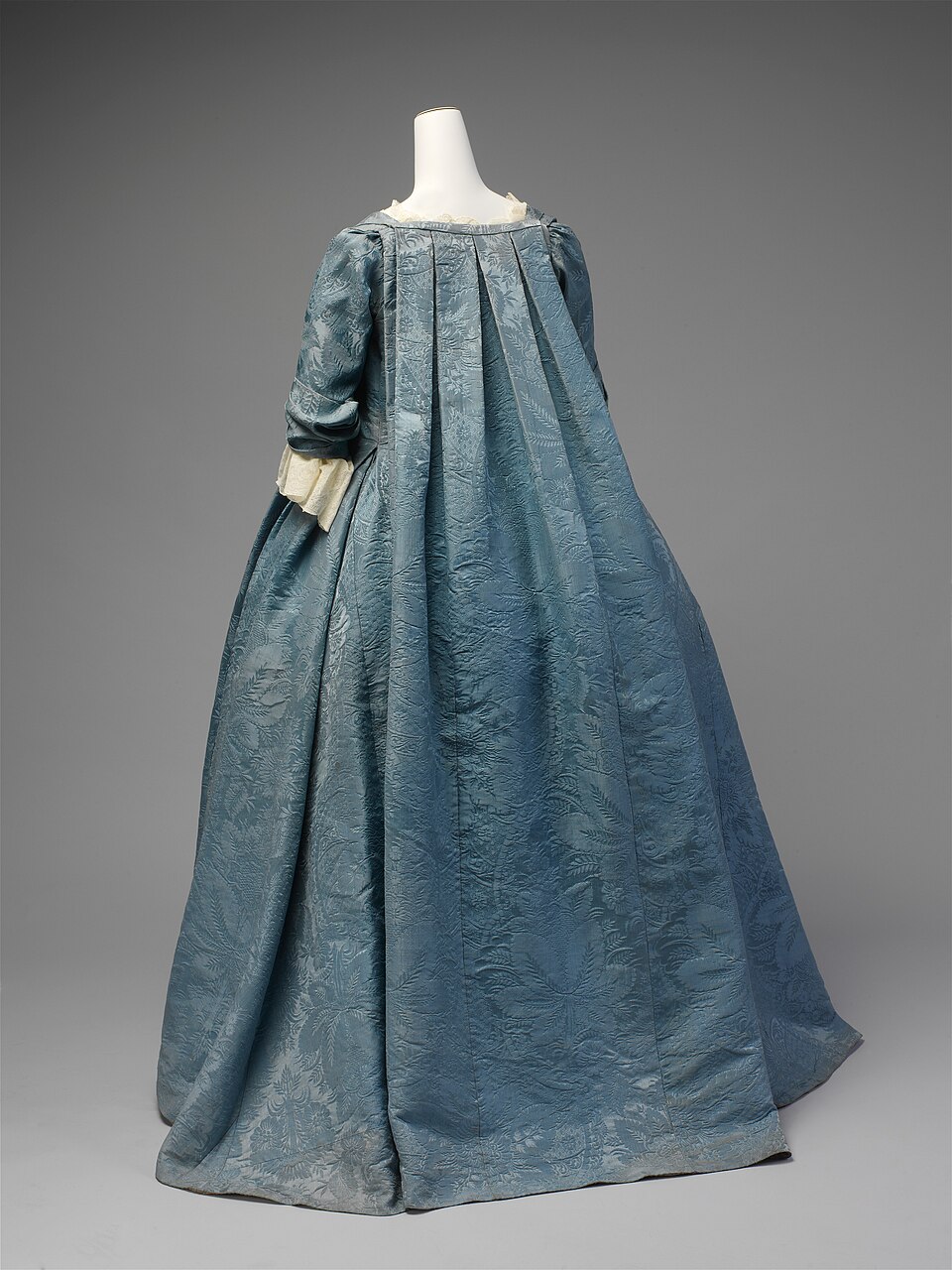
The Mantua was a fashion piece of the 1670s, but stayed prominent in the English court till the 1730s. Designed around the fitted bodice, it was worn over a supported petticoat, with the fabric gathered around the hips and a long train.
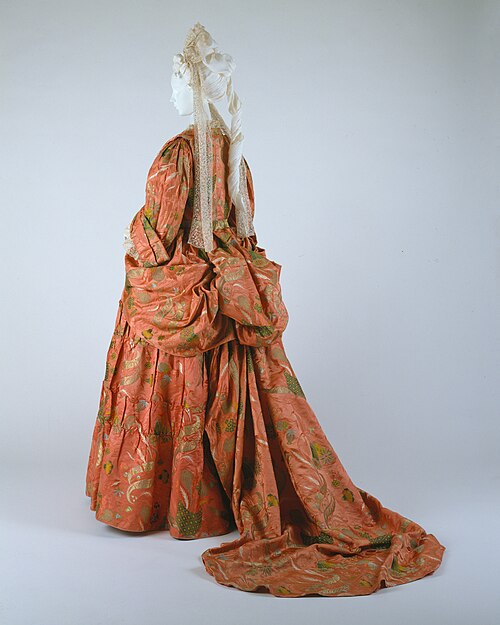
The Robe à la Française was the Rococo ‘it’ dress. It consisted of a funnel- shaped bust with a wide rectangular skirt. It was said to have been inspired by the Spanish design of later centuries.
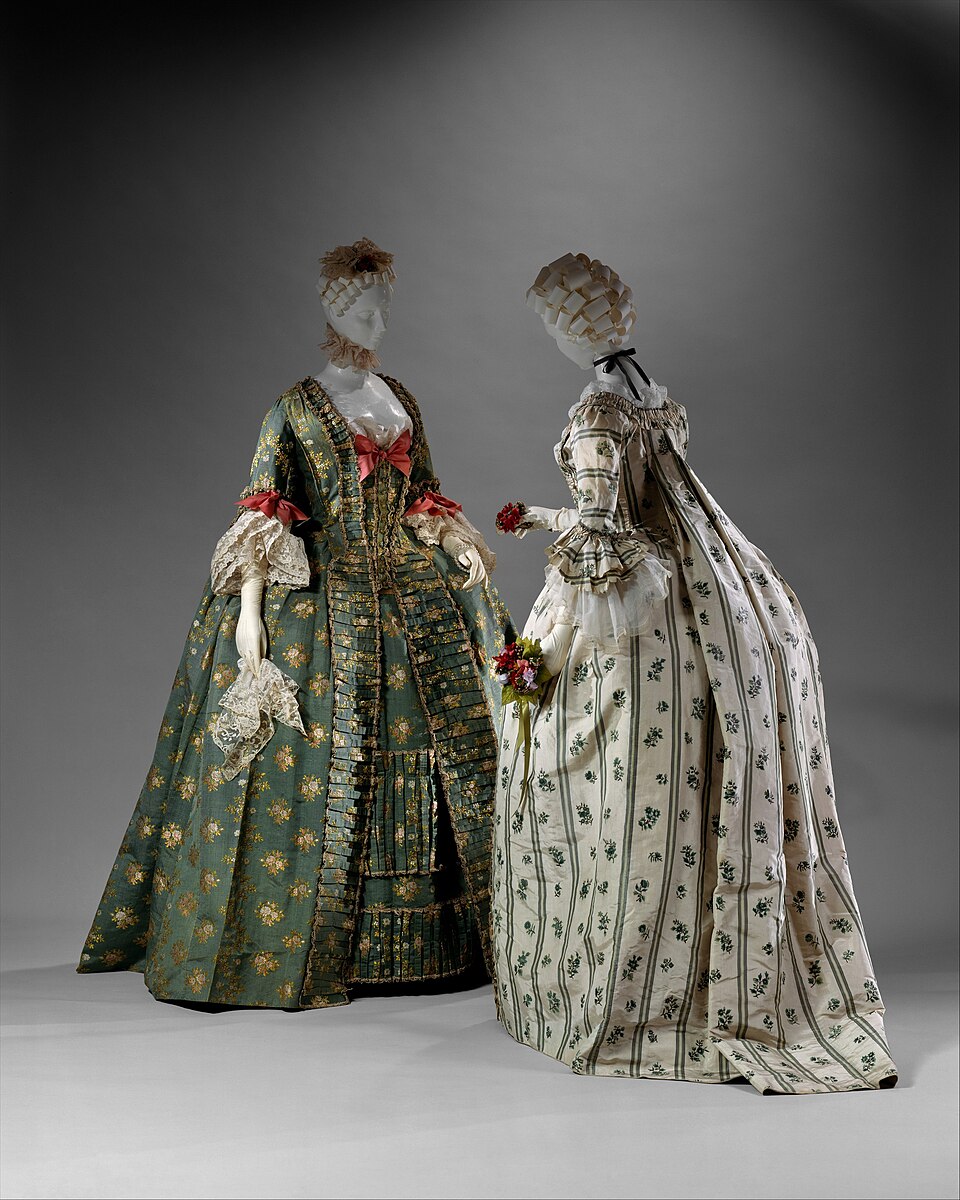
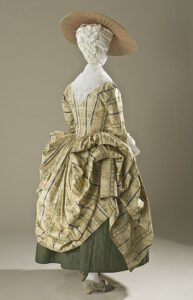
The Robe à l’anglaise, often worn outside court, had pleats sewn to the waist, and the skirt in the Robe à la polonaise was held up by cords, and it was divided into three panels of full drapes of the underskirt.
Men’s fashion during the Georgian Era.
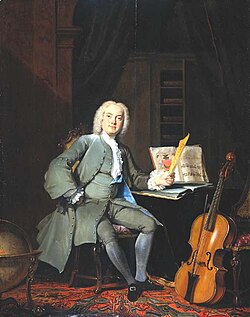
In the 1730s, men wore a tight-fitting coat made of cloth embroidered at the edges and pockets. These waistcoats were raised to the hip level. The breeches were also tighter and fastened below the knee with a buckle. A lace cravat was preferred by all men; this was worn around the neck; their shirts were frilled at the cuffs. A powdered wig was worn for formal occasions, and it was usually tied with a bow along with a patterned silk waistcoat.
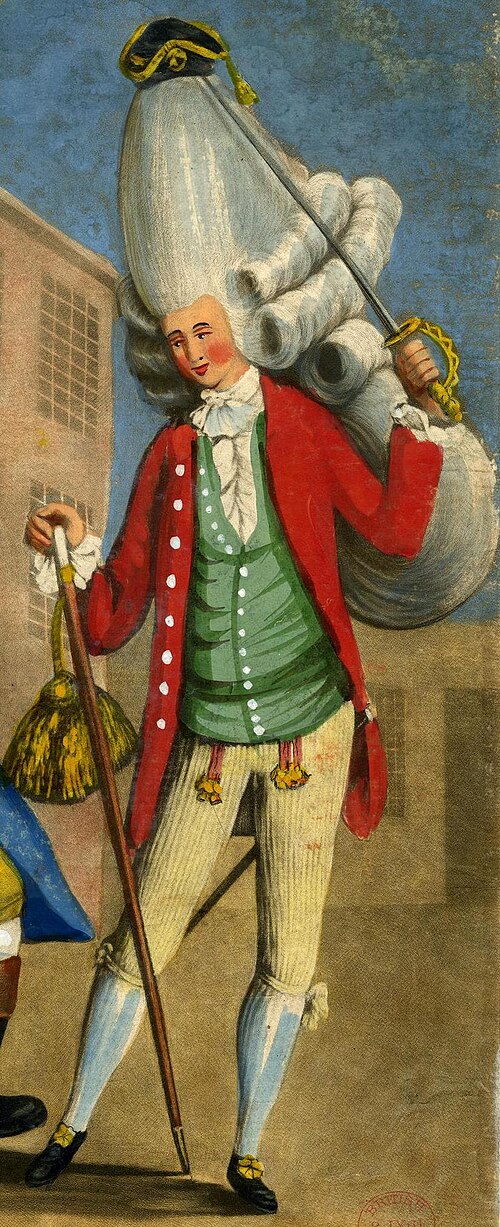
Macaroni Fashion was all the craze during the 1760-1770s . After the end of the ‘Seven Years’ War, young British men, after their Grand Tour of the European countries, came back home in exaggerated styles adopted from the French Court style.
The men wore plain, tight-fitting, and curved-tailed coats. The waistcoat was shortened to the waist, made of silk or velvet, and often made in bright colours. Knee-length breeches, patterned stockings and high red heels. Formal events were also similar to those of the 1730s. Powdered wigs tied at the back.
The Regency Era.
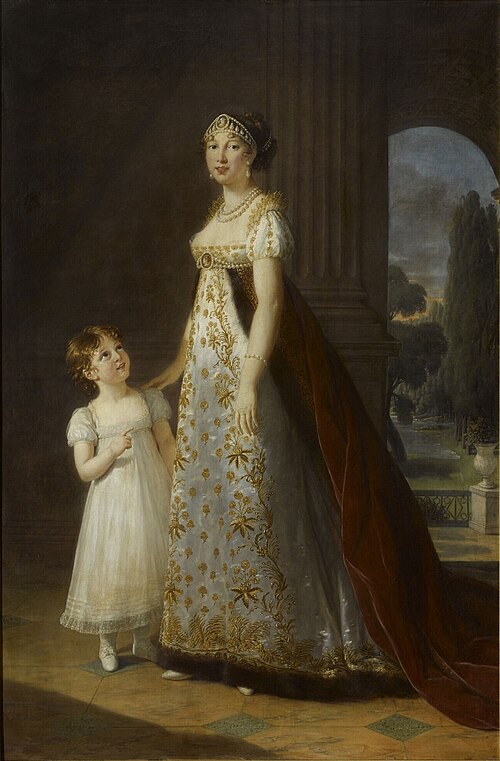
The Regency Era was from 1811 to 1820. This was when the Prince of Wales ruled as regent when George III was not at his best. For most, how we picture the Regency era is through the Netflix hit series Bridgerton. Fashion during this era was the most vibrant, lightweight, and high-waisted, with neoclassical inspiration from ancient Greece.
Women in this era are known to be elegant; dresses were lightweight with a slim silhouette.
Unlike the old Rococo style, women’s dresses had a higher waistline or the Empire waistline, which was gathered around the bust. Their gowns would fall straight and narrow with a low neckline. Sleeves were short and puffed. The muslin fabric was the fabric of choice. It was light, translucent, and soft. The Regency fashion made its way into Europe as well.
Men’s fashion was also rewarded with a massive upgrade from the marquis and fop culture. The dandyman was all the rage during this era, made popular by Beau Brummell. Their attire consisted of a waistcoat and a tailcoat, a linen or a silk cravat over a lace cravat. Fitted pantaloons with Hessian boots. Wigs were done away with.
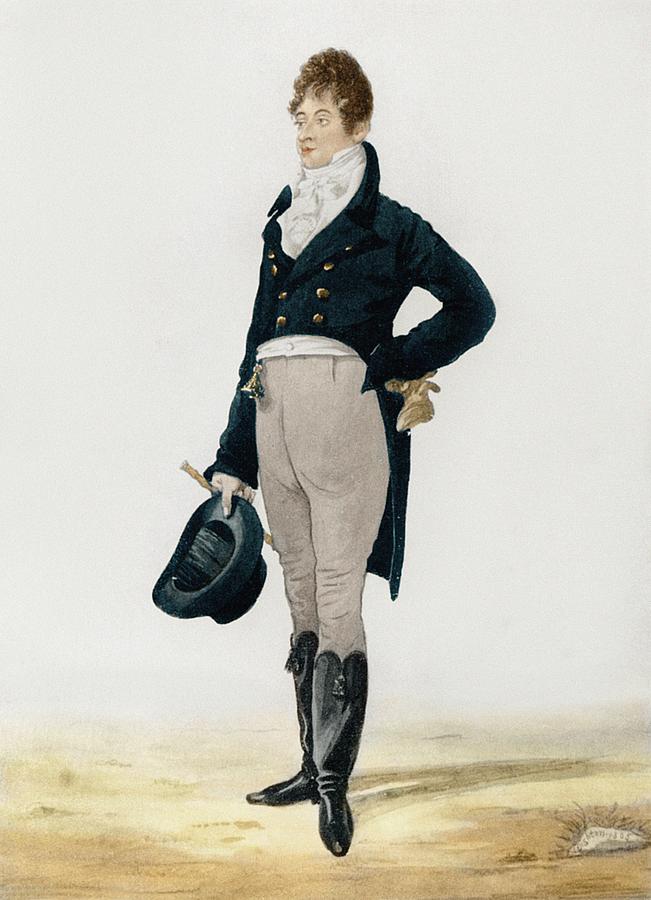
The Regency fashion left a long-lasting legacy, popularising subtlety over extravagance and over-the-top rituals, making comfort a priority. This era of fashion did not just inspire the people of that generation. It has made its way into the big pictures. Jane Austen’s adaptations of Pride and Prejudice, Emma, Mansfield Park and Persuasion. Another fan favourite is the Netflix Bridgerton Series. The costume design for the men and women beautifully portrayed the subtlety of the tones and the fabric, along with the effortless attire of the dandies.
The transition from the Rococo to the Regency fashion was graceful and uninterrupted, making it seem like it was only a few months apart, though it was years and years apart. And that’s the beauty of fashion: the smooth transition from one era to another. So, are we seeing more of the Regency fashion pieces coming back to life in our everyday lifestyle, or will it just be another costume for Bridgerton premieres and Halloween costumes? We shall find out soon enough.
FASHION LAW JOURNAL INSIDER
Join designers, brand founders and fashion lawyers who get the biggest brand battles, IP fights and career moves in fashion law, straight to their inbox.