
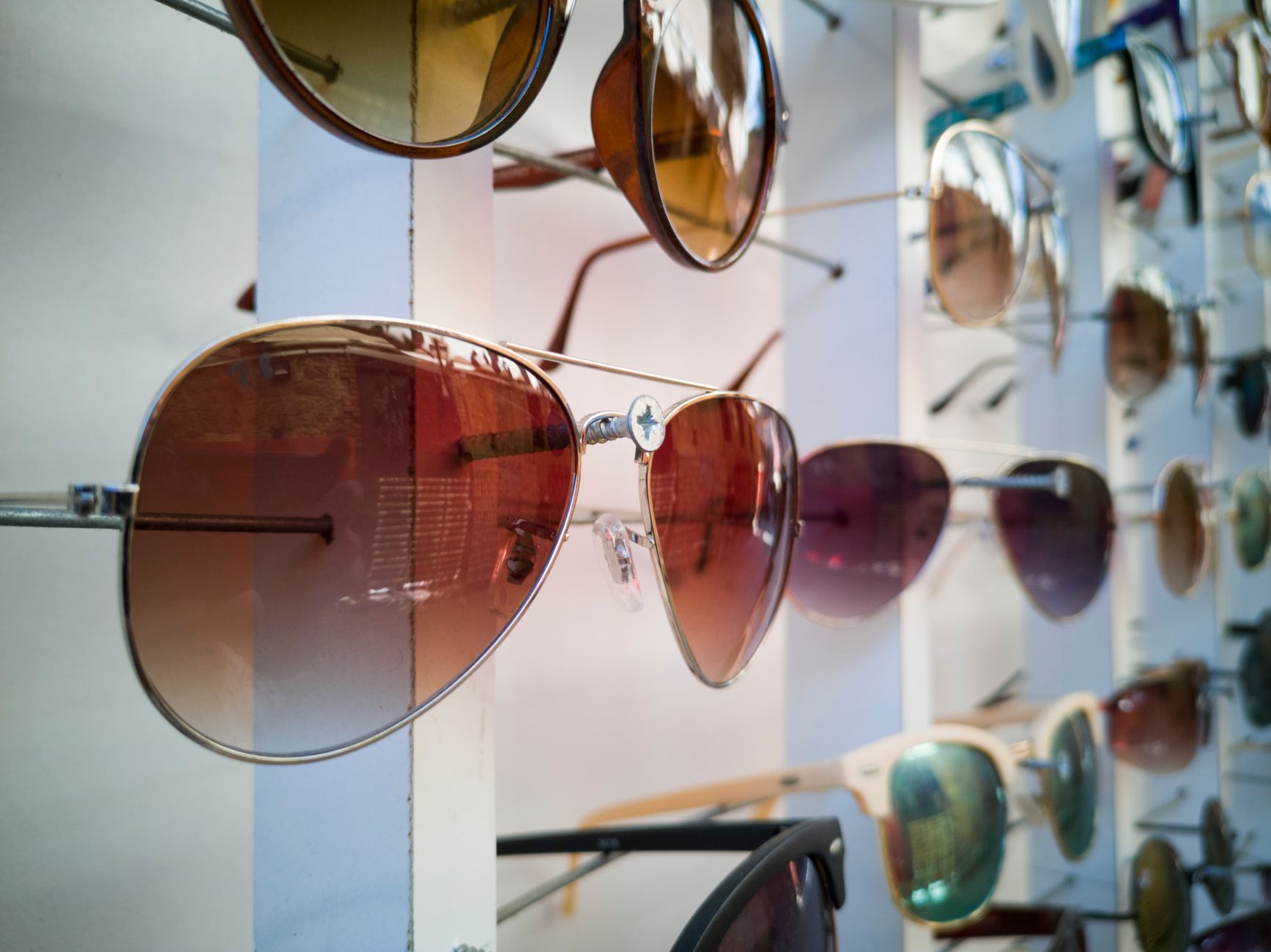
A fashion licensing lawyer writes and manages the agreements that let one company put another company’s brand on a product. Eyewear, fragrance, watches, homeware, footwear and children’s ranges are usually made and sold by specialist licensees rather than by the brand itself. The lawyer’s job is to define what the licensee may do, hold them to a quality standard, and make sure the money arrives.
It is the most commercial lane in fashion law, and the one where a lawyer sits closest to how the business actually makes money.
Why brands license at all
A house that is excellent at leather goods is not necessarily good at manufacturing prescription eyewear, formulating fragrance, or running a homeware supply chain. Licensing lets the brand extend into those categories using someone else’s factories, distribution and category expertise, in exchange for a royalty and a set of controls.
The trade-off is control. Every licence transfers a piece of brand presentation to a third party, which is why the drafting matters and why the interesting arguments in these deals are rarely about the royalty percentage.
FLJ Insider Pro is open: live fashion law jobs and internships, five career guides and two roadmaps. Early bird USD 12/month. See what's inside
The size of the market
Licensing International’s annual study put global sales of licensed merchandise and services at USD 389.8 billion in 2025, a 5.45 percent year on year increase (Licensing International, May 2026). The previous year’s study recorded fashion as one of the faster growing property categories, up 8.1 percent in 2024 (Licensing International, 2025 study).
Those are industry association figures rather than official statistics, and they should be read as such. The point they support is straightforward: this is a large, established business with enough legal work in it to sustain specialists.
What a real fashion licence looks like
Public examples are useful because they show the timescales involved. In December 2025, EssilorLuxottica and Burberry announced the renewal of their eyewear licence, extending an agreement due to expire on 31 December 2025 through to 31 December 2035, in a partnership that had run since 2006 (announcement).
A ten-year term following a nineteen-year relationship tells you something important about the practice area. These are not one-off transactions. The lawyer who drafts a licence like that will still be dealing with its consequences a decade later, which changes how you write it.
Anatomy of the agreement
| Term | What it does | Where the argument usually is |
|---|---|---|
| Scope of products | Defines exactly which goods are covered | Adjacent categories: are sunglasses and optical frames one category or two? |
| Territory | Where the licensee may sell | Online sales, which cross every border by default |
| Term and renewal | Duration and the conditions for extension | Whether renewal is automatic, negotiated or performance-linked |
| Royalty | Percentage of net sales, and how net sales are defined | Deductions: returns, discounts, freight, taxes |
| Minimum guarantee | A payment floor regardless of sales | The number itself, and what happens when it is missed |
| Quality control and approvals | The licensor’s right to inspect and approve | Approval turnaround times, which stall production if too slow |
| Marketing commitment | Minimum spend on advertising the licensed range | Whether spend counts if it is co-branded |
| Termination and sell-off | Exit rights and what happens to stock | Length of the sell-off period and channels permitted during it |
The sell-off clause is the one junior lawyers underestimate. A generous sell-off period at the end of a terminated licence can put discounted product into the market at exactly the moment the brand is launching with a new partner, and it is very hard to fix once agreed.
Quality control is a legal obligation, not a preference
In the United States, a trademark owner who licenses a mark without exercising adequate control over the licensee’s use risks being found to have abandoned it. This is the naked licensing doctrine, and courts look at whether the owner retained contractual rights over quality, whether it actually exercised control, and whether any reliance on the licensee was reasonable. The Ninth Circuit applied it to invalidate trademarks in FreecycleSunnyvale v The Freecycle Network in 2010 (Finnegan).
The practical consequence is that approval clauses have to be exercised, not merely drafted. A licensing lawyer who papers a strong quality control regime and then never asks whether anyone is using it has done half the job.
How the work differs by jurisdiction
United States. Contract law is state-based, trademark law is federal, and the naked licensing doctrine gives quality control an unusual amount of weight. Royalty audit rights and their enforcement receive a lot of attention.
European Union. The substantive IP is unified through EUIPO, but competition law shapes the deal. Territorial restrictions, exclusivity and anything touching resale pricing are assessed under Article 101 of the Treaty on the Functioning of the European Union and the vertical agreements framework, currently Regulation (EU) 2022/720. A licence that works commercially and fails on competition grounds is a real risk in Europe in a way it is not everywhere.
United Kingdom. Post-Brexit, UK and EU trademark rights are separate, so a licence drafted before 2021 may need territorial definitions checked. UK competition rules broadly track the EU framework but are now administered separately.
India. The Trade Marks Act, 1999 recognises use by a licensee as permitted use, and allows but does not require recordal of a registered user. Indian licensing practice also involves substantial inbound work, since many international brands enter the market through local licensees and joint ventures rather than directly, and those arrangements carry foreign exchange and royalty remittance considerations that a purely contractual analysis will miss.
What the job demands
- Precise drafting. Licensing disputes are almost always about definitions. If “net sales” is loose, the deal is loose.
- Financial literacy. You need to be able to read a royalty statement and understand why a minimum guarantee is set where it is.
- Long time horizons. These agreements outlast the people who sign them. Write for a successor who has no context.
- Relationship sense. A licence is a partnership. Drafting it as though litigation is inevitable tends to produce worse commercial outcomes.
- Enough IP knowledge to check ownership. Licensing a mark that is not properly registered in the territory is a recurring and avoidable problem, which is where the brand protection side of the practice connects.
How to get into it
- Qualify and get commercial contract experience. Any decent commercial team will give you supply, distribution and services agreements. Those are the foundation.
- Add trademark literacy. Enough to check what is registered, where, and in which classes.
- Ask for the licence files. Licensing sits in different teams at different firms: sometimes IP, sometimes commercial, sometimes corporate. Find where it lives and ask.
- Learn the industry structure. Know which manufacturing groups hold which categories. That knowledge is what makes you useful in a first meeting.
- Consider the licensee side. The manufacturers and brand management companies that hold licences are large employers of licensing lawyers, and are less competitive to enter than luxury houses.
Adjacent work is worth understanding too. Collaborations raise ownership questions that ordinary licences do not, covered in who owns a collab design. Sponsorship and endorsement deals use similar machinery, as our piece on licensing and sponsorship in Formula 1 shows. And influencer agreements are licensing deals in miniature, priced the way the influencer rate card calculator illustrates.
The honest downsides
Licensing is slower and less visible than litigation. Deals take months, most of that time is spent on definitions and schedules, and nothing about the process is dramatic. The volume of renewal and amendment work is high, and a lot of a junior lawyer’s time goes on comparing versions of documents.
There is also a structural point about the field. Pure fashion licensing roles are rare outside large brand owners and the manufacturing groups. Most people doing this work do it as part of a wider commercial practice, and describing yourself as a fashion licensing lawyer is usually a description of a client base rather than a job title, as we set out in how to become a fashion lawyer. Pay tracks commercial practice generally, discussed in fashion lawyer salary.
What you get in return is unusual proximity to the business. Licensing lawyers are in the room when a brand decides what it will and will not become, which very few legal roles offer. The wider case for and against the field is in Is Fashion Law a Good Career? An Honest Look, and the vocabulary is in the fashion law glossary.
Frequently asked questions
What does a fashion licensing lawyer actually do?
They structure and draft the agreements under which one company puts another company’s brand on a product. That means negotiating scope, territory, term, royalty rates, minimum guarantees, approval processes and termination, then advising on what happens when a licensee underperforms or the relationship ends. A significant part of the job is managing an existing portfolio of licences rather than signing new ones.
Is licensing work transactional or contentious?
Mostly transactional, but with a contentious tail. Licences generate disputes about royalty accounting, quality standards, territorial breaches and post-termination sell-off periods. Lawyers who draft licences well usually understand where those disputes come from, which is one argument for spending some time in litigation before specialising.
Do you need an intellectual property background to do licensing work?
You need enough of one to understand what is being licensed and whether the licensor actually owns it. Many licensing lawyers come from commercial contracts rather than pure IP backgrounds, and the combination of contract drafting skill with a working knowledge of trademark and design law is the useful profile. You do not need to be a filing specialist.
What is a minimum guarantee and why does it matter?
A minimum guarantee is a floor on royalty payments: the licensee pays at least a set amount per period regardless of sales. It matters because it converts a brand’s licence from a speculative arrangement into predictable revenue, and because it is often the term the parties argue about hardest. Getting the guarantee wrong in either direction can make an otherwise sound deal unworkable.
Can a brand lose its trademark by licensing it badly?
In the United States, yes. The naked licensing doctrine holds that a trademark owner who licenses a mark without exercising adequate quality control over the licensee’s use may be found to have abandoned the mark. Courts examine whether the owner retained contractual rights over quality, whether it actually controlled quality, and whether reliance on the licensee was reasonable. This is why approval and inspection clauses are not boilerplate.
Where do fashion licensing lawyers work?
In-house at brand owners and at the manufacturing groups that hold licences, at law firms with brand and commercial practices, and at brand management companies whose entire business model is acquiring and licensing trademarks. The manufacturer side is often overlooked by students and is a genuine entry point, because those companies hold many licences and need lawyers who understand them.
This article is general career information for an international readership. It is not legal advice, and it is not career advice specific to any individual. Licensing and competition rules differ by jurisdiction and change, so take local advice on any actual agreement.
Licensing is the “licensing” lane in our fashion law career quiz. If the description above appealed because you like building something that has to work for ten years, that lane fits. If you would rather argue about what went wrong, look at fashion litigation. Other routes into the same industry are covered in entertainment and fashion law, compliance and sustainability careers, where to study fashion law, internships and independent practice.
FASHION LAW JOURNAL INSIDER
Join designers, brand founders and fashion lawyers who get the biggest brand battles, IP fights and career moves in fashion law, straight to their inbox.