

The FIFA World Cup has evolved far beyond a sporting spectacle into one of the world’s most influential commercial ecosystems, where fashion, branding, sponsorship, and intellectual property converge. As FIFA World Cup 2026 prepares to become the largest tournament in history, hosted across the United States, Canada, and Mexico with an expanded 48-team format, it presents unprecedented opportunities for fashion brands while simultaneously exposing them to complex legal and commercial challenges. Official sponsorships and trademark licensing programmes generate billions of dollars in commercial value, but that exclusivity is increasingly threatened by ambush marketing, digital advertising, influencer campaigns, and unauthorised brand associations. This article examines the legal architecture underpinning sponsorship and trademark licensing within the FIFA ecosystem and analyses how intellectual property law safeguards commercial exclusivity. It further explores why fashion brands must move beyond traditional trademark protection and adopt integrated legal and commercial strategies to preserve brand value in the evolving global sports economy.
Football Is the New Global Fashion Runway
For decades, the FIFA World Cup was regarded primarily as the pinnacle of international football, a tournament celebrated for sporting excellence, national pride, and unforgettable moments on the pitch. Today, however, the tournament has transformed into something far more significant. It is one of the world’s largest commercial platforms, where fashion, branding, entertainment, technology, and intellectual property intersect.
Football jerseys are no longer viewed merely as sporting apparel. They have become fashion statements, collector’s items, cultural symbols, and premium lifestyle products. Luxury fashion houses collaborate with athletes, global sportswear companies release limited-edition collections, and consumers queue outside flagship stores to purchase official merchandise months before the opening match.
The commercial significance of football fashion is evident in the scale of investment surrounding the FIFA World Cup. Global brands spend hundreds of millions of dollars to secure sponsorship rights, exclusive merchandising opportunities, and official licensing arrangements. The tournament influences not only consumer purchasing behaviour but also fashion trends, digital marketing strategies, and cross-border brand expansion.
FLJ Insider Pro is open: live fashion law jobs and internships, five career guides and two roadmaps. Early bird USD 12/month. See what's inside
The FIFA World Cup 2026 is expected to amplify this phenomenon. As the first tournament to feature 48 national teams and be hosted jointly by three countries, it will reach more consumers, attract more sponsors, and generate greater merchandising revenues than any previous edition. For fashion brands, this represents an unparalleled commercial opportunity.
Yet, with opportunity comes competition and with competition comes legal complexity.
The commercial value of official sponsorships increasingly depends upon the ability of brands to preserve exclusivity. At the same time, competitors seek innovative ways to associate themselves with the tournament without paying sponsorship fees, while counterfeiters exploit consumer demand through unauthorised merchandise and deceptive marketing practices.
Consequently, intellectual property has become the invisible infrastructure supporting the modern sports economy. Trademark registrations, licensing agreements, sponsorship contracts, copyright protection, design rights, and advertising regulations collectively ensure that official partners receive the commercial value for which they have invested.
Understanding this legal framework is no longer relevant only to lawyers; it has become a strategic necessity for every fashion brand seeking to participate in the global sports marketplace.
Sponsorship: Purchasing Exclusivity in the World’s Largest Sporting Marketplace
Sponsorship has become the financial backbone of the FIFA World Cup.
Every edition of the tournament attracts some of the world’s most recognisable corporations, each competing not merely for advertising exposure but for the exclusive right to associate its brand with football’s most prestigious event. These commercial relationships fund tournament operations while simultaneously creating immense value for participating brands.
Unlike conventional advertising, sponsorship grants far more than visibility. Official FIFA partners acquire carefully negotiated rights that include category exclusivity, use of official tournament marks, access to marketing assets, hospitality programmes, athlete appearances, promotional campaigns, and global merchandising opportunities.
For fashion and sportswear companies, these rights are commercially invaluable.
Adidas provides perhaps the most enduring example. As FIFA’s long-standing official partner, Adidas enjoys extensive rights relating to official match balls, tournament apparel, retail merchandising, and promotional campaigns. These rights extend far beyond logo placement; they create an integrated commercial ecosystem that influences consumer purchasing decisions worldwide.
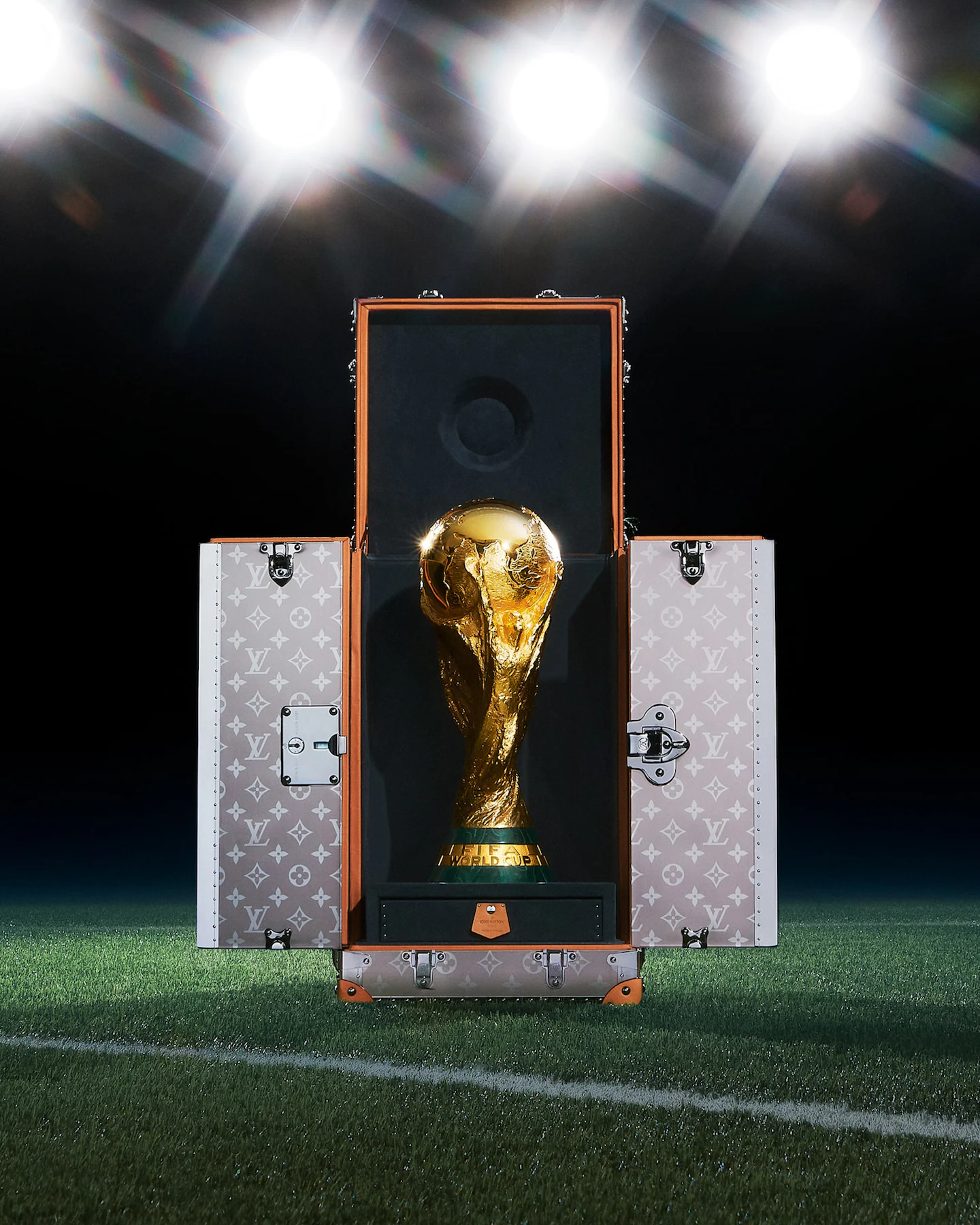
Similarly, luxury fashion has increasingly recognised the commercial potential of football. Louis Vuitton’s specially designed trophy travel case for the FIFA World Cup illustrates how luxury craftsmanship can become part of the sporting narrative without manufacturing football equipment itself. The collaboration elevated both brands, demonstrating that sporting events have become legitimate platforms for luxury fashion marketing.
The value of these partnerships lies in exclusivity.
Consumers associate official sponsors with authenticity, prestige, and quality. This association translates into increased sales, stronger brand recognition, and enhanced consumer loyalty. For many companies, the commercial returns generated by successful FIFA campaigns extend well beyond the duration of the tournament.
However, sponsorship also creates legal expectations.
Official partners invest substantial resources precisely because competing businesses are expected to refrain from creating misleading associations with the tournament. If non-sponsors could freely imply affiliation with FIFA or exploit tournament goodwill without authorisation, the commercial value of official sponsorship would rapidly diminish.
Accordingly, sponsorship agreements are supported by an extensive legal framework comprising trademark law, contractual rights, copyright protection, advertising regulations, and event-specific commercial protection measures. Together, these mechanisms preserve the exclusivity that sponsors purchase and enable FIFA to maintain the commercial integrity of its flagship event.
Trademark Licensing: The Commercial Engine Behind Official Merchandise
While sponsorship attracts global attention, trademark licensing quietly generates one of the tournament’s most valuable revenue streams.
Every official FIFA World Cup jersey, cap, scarf, football, training kit, children’s toy, collectible, and lifestyle accessory exists because intellectual property owners have granted carefully structured licences permitting the use of protected trademarks and associated branding.
Trademark licensing allows rights holders to commercialise their intellectual property while retaining ownership and quality control. Rather than manufacturing every product directly, FIFA authorises selected licensees to produce official merchandise under strict contractual conditions governing design, manufacturing standards, distribution channels, marketing practices, and territorial scope.
This licensing model enables a single intellectual property portfolio to generate commercial value across diverse product categories and international markets.
For fashion brands, trademark licensing offers significant strategic advantages.
It facilitates rapid market expansion without substantial capital investment, enables collaboration with specialist manufacturers, and ensures consistent product quality across multiple jurisdictions. Simultaneously, licensing agreements preserve the integrity of the underlying trademarks by imposing detailed obligations concerning product specifications, packaging, advertising, and retail presentation.
The commercial success of official national team jerseys demonstrates the effectiveness of this model.
Each authentic jersey represents the culmination of multiple legal relationships involving trademark ownership, design protection, sponsorship rights, manufacturing agreements, athlete endorsements, and retail licensing. Consumers purchasing an official product are not merely buying apparel; they are purchasing authenticity, quality assurance, and participation in an officially licensed commercial ecosystem.
The licensing framework also extends beyond traditional merchandise.
Fashion collaborations, limited-edition lifestyle collections, footwear, accessories, collectibles, and increasingly digital products, including virtual merchandise and gaming assets, are becoming integral components of modern licensing strategies. As consumer engagement increasingly shifts toward digital platforms, licensing models continue to evolve to accommodate new forms of commercial exploitation.
Nevertheless, licensing succeeds only where exclusivity is effectively protected.
Counterfeit merchandise, unauthorised commercial use, and misleading brand associations undermine consumer confidence and diminish the value of legitimate licensing programmes. Consequently, trademark licensing cannot function independently; it must operate alongside robust intellectual property enforcement mechanisms capable of preserving market exclusivity.
It is this tension between official commercial rights and unauthorised competitive activity that gives rise to one of the most fascinating and controversial areas of sports marketing law: ambush marketing.
Part II will examine how brands seek to capture the commercial value of the FIFA World Cup without becoming official sponsors, the legal limits of ambush marketing, and the practical strategies fashion brands should adopt to safeguard their investments in the global sports economy.
Ambush Marketing: The Greatest Threat to Sponsorship Value
Official sponsorship is built on one fundamental promise—exclusivity. Brands invest millions of dollars not merely to display their logos during the FIFA World Cup but to secure a unique association with the tournament, its values, and its global audience. However, as sponsorship investments have grown, so too have the strategies employed by competitors seeking to benefit from the tournament’s popularity without paying the substantial cost of official partnership.
This practice, commonly known as ambush marketing, has become one of the most controversial aspects of modern sports marketing. It represents the tension between legitimate commercial competition and the legal protection of sponsorship rights.
Unlike counterfeiting, ambush marketing does not necessarily involve the unauthorised use of registered trademarks or copyrighted material. Instead, it seeks to create a mental association between a brand and a sporting event, allowing consumers to believe—explicitly or implicitly—that the brand is connected with the tournament.
The commercial consequences can be significant. If consumers perceive a non-sponsor to be an official partner, the value of official sponsorship diminishes, reducing the incentive for businesses to invest in future sporting events.
For this reason, FIFA has developed one of the most sophisticated commercial protection programmes in international sport, supported by trademark registrations, contractual restrictions, advertising regulations, and event-specific enforcement measures.
The Evolution of Ambush Marketing
Ambush marketing has evolved alongside the commercialization of global sporting events.
In its earliest form, businesses relied on advertising campaigns strategically timed to coincide with the tournament without making direct reference to FIFA or the World Cup. As consumer awareness increased, marketing strategies became considerably more sophisticated.
Today, ambush marketing extends beyond billboards and television advertisements to encompass:
- Social media campaigns;
- Influencer collaborations;
- Viral digital content;
- Hashtag marketing;
- Real-time advertising;
- Experiential brand activations;
- User-generated content; and
- Artificial intelligence-generated promotional campaigns.
The digital economy has significantly blurred the distinction between legitimate marketing and unlawful commercial association, making enforcement increasingly complex.
The Bavaria Beer Incident: A Defining Moment
Perhaps no incident illustrates the challenges of ambush marketing more effectively than the Bavaria Beer campaign during the 2010 FIFA World Cup in South Africa.
Although Bavaria Beer was not an official FIFA sponsor, a group of spectators attended a World Cup match wearing bright orange dresses associated with the brewery’s promotional campaign. The coordinated appearance generated enormous media attention, effectively linking the Bavaria brand with the tournament despite the absence of any official sponsorship rights.
The incident attracted immediate action from FIFA and local authorities, leading to the removal of spectators and legal proceedings under South Africa’s event-specific legislation.
From a legal perspective, the campaign demonstrated that a brand does not necessarily need to use FIFA’s trademarks to create a commercially valuable association with the tournament. Public perception alone may generate significant marketing value.
The Bavaria incident continues to be cited as one of the most influential examples of ambush marketing in sports law and illustrates why rights holders increasingly seek protection beyond traditional trademark infringement actions.
Nike, Adidas, and the Battle for Consumer Attention
The rivalry between Nike and Adidas provides another compelling illustration of the limits of sponsorship.
Adidas has long maintained a formal commercial relationship with FIFA, enjoying extensive rights relating to official match balls, tournament branding, and licensed merchandise. Yet Nike has repeatedly demonstrated that consumer attention can often be captured without official sponsorship.
By focusing on athlete endorsements, emotionally compelling storytelling, digital campaigns, and product innovation, Nike has successfully generated significant visibility during international football tournaments despite not always holding equivalent tournament sponsorship rights.
This illustrates an important legal distinction.
Merely advertising during the FIFA World Cup or celebrating football culture is not unlawful. Businesses remain free to market their products provided they do not create a misleading commercial association with FIFA or suggest official sponsorship where none exists.
The challenge for rights holders lies in distinguishing legitimate competitive advertising from unlawful attempts to appropriate tournament goodwill.
Social Media and the Rise of Digital Ambush Marketing
The emergence of digital platforms has transformed ambush marketing.
Brands no longer require expensive television advertising or physical presence near stadiums to reach consumers. A carefully designed social media campaign can achieve global visibility within hours.
Today, non-sponsoring businesses increasingly rely upon:
- Trending hashtags;
- Football-themed short videos;
- Influencer collaborations;
- Real-time marketing;
- Interactive fan campaigns;
- Live-stream promotions; and
- AI-generated promotional content.
A fashion retailer, for example, may launch a football-inspired clothing collection during the FIFA World Cup while carefully avoiding direct references to FIFA’s registered trademarks. Although legally compliant, such campaigns may nevertheless benefit from the heightened consumer attention surrounding the tournament.
Similarly, influencers wearing unofficial football-inspired apparel may unintentionally create commercial associations that challenge the exclusivity purchased by official sponsors.
As marketing becomes increasingly decentralised, monitoring and enforcement become substantially more complex.
The Legal Response: Beyond Trademark Law
Trademark law remains the primary legal mechanism for protecting official FIFA branding. However, trademark infringement alone cannot address every form of ambush marketing.
Consequently, rights holders frequently rely upon a combination of legal doctrines, including:
- Trademark infringement;
- Passing off;
- Unfair competition;
- Copyright infringement;
- Advertising regulation;
- Consumer protection legislation; and
- Contractual restrictions imposed upon sponsors, broadcasters, athletes, venues, and commercial partners.
Many host nations also enact event-specific legislation providing enhanced protection against unauthorised commercial association during major sporting events.
The effectiveness of these measures ultimately depends upon balancing two competing principles:
First, protecting the substantial investments made by official sponsors.
Second, preserving fair commercial competition and freedom of expression.
Achieving this balance remains one of the most challenging aspects of contemporary sports marketing law.
Practical Considerations for Fashion Brands
For fashion brands preparing campaigns around the FIFA World Cup 2026, legal compliance should form an integral part of marketing strategy rather than an afterthought.
Businesses should consider:
- Conducting comprehensive trademark clearance before launching campaigns.
- Reviewing advertising materials for implied tournament associations.
- Carefully structuring influencer agreements.
- Monitoring user-generated content that may create misleading impressions.
- Establishing internal approval processes for social media campaigns.
- Coordinating legal and marketing teams before product launches.
- Protecting official merchandise through robust trademark licensing and customs enforcement programmes.
Brands that successfully integrate legal strategy into commercial planning are better positioned to maximise marketing opportunities while avoiding regulatory disputes.
Conclusion
The FIFA World Cup has evolved into one of the world’s most influential commercial ecosystems, where fashion, sport, entertainment, and intellectual property converge on an unprecedented scale.
Official sponsorships and trademark licensing programmes generate enormous commercial value, but that value depends upon preserving exclusivity in an increasingly competitive marketplace. Ambush marketing, digital advertising, influencer campaigns, and AI-driven content continue to test the limits of traditional intellectual property law, requiring rights holders to adopt more sophisticated and integrated enforcement strategies.
For fashion brands, success at the FIFA World Cup 2026 will depend not only upon creative marketing or premium product design but also upon a comprehensive understanding of the legal framework governing sponsorship, trademark licensing, and commercial association.
As the boundaries between sport, fashion, technology, and digital commerce continue to converge, intellectual property protection is no longer simply a legal function; it has become a strategic business asset. The brands that thrive in the global sports economy will be those that recognise sponsorship as more than visibility, licensing as more than merchandising, and intellectual property as the foundation upon which long-term brand value is built.
FASHION LAW JOURNAL INSIDER
Join designers, brand founders and fashion lawyers who get the biggest brand battles, IP fights and career moves in fashion law, straight to their inbox.