
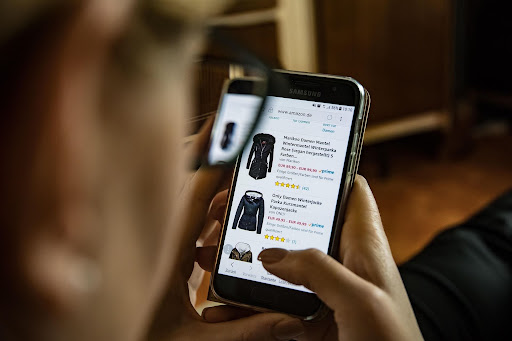
In fashion e-commerce, consumers cannot physically inspect garments before purchase and therefore depend on digital product information, including product imagery, to assess their appearance, design and other characteristics. Product imagery is therefore not merely decorative advertising but an important component of the online fashion purchasing experience, particularly where consumers must assess a garment’s appearance, design and other characteristics without physical inspection.
Generative Artificial Intelligence (“AI”) now threatens the assumption underlying this visual exchange. AI systems can generate sophisticated fashion designs and realistic synthetic representations without requiring a corresponding physical garment to be photographed. Reports concerning online marketplaces have already documented concerns surrounding AI-generated images, while more recent reporting based on Citizens Advice data has linked AI-generated product images to a substantial number of complaints concerning online fashion purchases in the United Kingdom.
Beyond Exaggeration: When the Garment Doesn’t Exist
The deception may extend beyond exaggerating an existing garment to depicting one that never physically existed. As AI-generated imagery becomes increasingly accessible to online sellers, such representations can undermine informed consumer choice. While existing Indian consumer law can capture such deception, it lacks a clear threshold for distinguishing permissible AI visualisation from materially misleading product representation. India should therefore regulate material visual divergence, supported by disclosure and authentic-product imagery, rather than AI use itself. The growing use of AI imagery on platforms such as Etsy, which has recently tightened its policies on AI-assisted imagery, demonstrates that this is no longer a hypothetical concern.
The problem is particularly significant in India, where the rapid expansion of e-commerce has made digital platforms an increasingly important channel for consumer purchases. India’s e-retail market was valued at approximately $50 billion in 2022 and was projected to reach $150–170 billion by 2027, reflecting the growing importance of digital retail in the Indian consumer market.
FLJ Insider Pro is open: live fashion law jobs and internships, five career guides and two roadmaps. Early bird USD 12/month. See what's inside
The Consumer Protection Framework
Generative imagery can deepen information asymmetry by making deceptive representations appear authentic. Such representations may fall within the Consumer Protection Act, 2019 (CPA), despite the Act not expressly contemplating generative AI.
- Right to Informed Choice
Section 2(9) recognises the consumer’s right to be informed about the quality, quantity, potency, purity, standard and price of goods. Where physical inspection is unavailable, accurate visual information becomes particularly important. An undisclosed AI-generated image may falsely suggest that a representation depicts an existing garment rather than a synthetic visualisation. Disclosure of AI-generated imagery would therefore support informed purchasing decisions.
- Unfair Trade Practice
Section 2(47) includes within “unfair trade practice” false representations concerning a product’s standard, quality, grade, composition, style or model. Where an AI-generated image depicts embroidery, fabric, construction or a silhouette materially absent from the garment supplied, the representation may fall within this prohibition. The “prompt-to-polyester” model therefore demonstrates how synthetic imagery can facilitate a misleading representation of the product’s actual characteristics.
- Misleading Advertisements
Section 2(28) defines a “misleading advertisement” to include representations that falsely describe a product or mislead consumers concerning its nature, characteristics, or qualities. The CCPA Guidelines for Prevention of Misleading Advertisements and Endorsements, 2022 further require advertisements to be truthful and not misleading. AI-generated imagery that materially misrepresents a garment may therefore warrant scrutiny under this framework.
From Representation to Reality: Indian Consumer Disputes
Indian consumer disputes involving apparel already demonstrate the importance of correspondence between a garment’s representation and the product supplied. In M/S Dressco v. Ridhima Thakur, the consumer forum considered evidence of poor-quality garments that failed to meet the represented standard. Yash Raj Films Pvt. Ltd. v. Afreen Fatima Zaidi further demonstrates that promotional representations must be assessed in light of what they actually communicate to consumers. Generative AI therefore introduces a technologically advanced means of creating potentially misleading product representations.
From Caveat Emptor to Caveat Venditor: Regulatory Response
AI-generated imagery unsettles the traditional balance of caveat emptor. Where consumers could previously scrutinise available product information, hyper-realistic synthetic imagery may conceal discrepancies that cannot reasonably be detected before purchase. The burden should therefore shift towards caveat venditor: sellers using synthetic or materially altered imagery should ensure that consumers can distinguish visualisation from actual product representation.
Restoring Material Truth in Fashion E-Commerce
A disclosure requirement alone, however, may be insufficient where AI-generated imagery depicts a garment that materially differs from the product supplied. This article therefore proposes a Material Correspondence Standard (MCS): where synthetic imagery is used to market apparel, sellers should provide at least one verified representation of the actual product, showing material characteristics such as fabric, embroidery, construction, silhouette and finish. The AI-generated image may supplement this representation, but should not substitute for it, as said in Section 5(2) of the Consumer Protection ( E-Commerce ) Rules 2020. Failure to provide such verification, or a material divergence between the verified product and the synthetic representation, should serve as a rebuttable indicator of misleading representation under the existing consumer-protection framework.
Such a framework would distinguish creative visualisation from deceptive representation. It would neither prohibit generative AI nor require platforms to eliminate synthetic imagery; instead, it would reinforce the existing requirement that online product descriptions and images correspond with the goods offered. Where the advertised visualisation materially diverges from the verified product, the representation could attract scrutiny under existing provisions governing unfair trade practices and misleading advertisements.
Author: Lakshmi Laasya
Lakshmi Laasya is a law student and writer interested in fashion law and AI regulation, with implications across different facets of law. Her work focuses on how emerging technologies affect law and the fashion industry. Beyond the technicalities of the legal realm, she also likes to sing and dance, and she has a penchant for reading and rainy weather.
FASHION LAW JOURNAL INSIDER
Join designers, brand founders and fashion lawyers who get the biggest brand battles, IP fights and career moves in fashion law, straight to their inbox.