
AliExpress is one of the cheapest places online to buy clothes, jewellery, phone cases and Christmas stocking fillers, and one of the most searched-about. In July 2026 the European Commission fined it €550 million under the Digital Services Act, the largest penalty under that law at the time, for failing to deal with illegal, unsafe and counterfeit products sold by its traders. Weeks earlier, its parent company settled a US criminal investigation over illegal goods sold through its sites. So is AliExpress legit, and what protects you if an order goes wrong? Here is what regulators found, what the rules say, and how to buy with less risk.
Short answer: Yes, AliExpress is a real, lawful marketplace owned by Alibaba Group, and most orders arrive. The risk lies with its third-party sellers. In July 2026 the EU fined AliExpress €550 million for failing to assess and curb illegal, unsafe and counterfeit listings. Buy branded goods, toys and cosmetics with care, and pay by a method with chargeback rights.
Key takeaways
- AliExpress is a genuine Alibaba Group marketplace, designated a very large online platform in the EU on 25 April 2023 with 104.3 million average monthly active EU users.
- On 20 July 2026 the Commission fined it €550 million for breaching its duties to assess and mitigate the risk of illegal, unsafe and counterfeit products, and ordered an action plan by 20 October 2026.
- Commission testing found counterfeits, unsafe toys and dangerous cosmetics that stayed online for weeks, and a brand authorisation system that traders easily bypassed.
- Your strongest protection is often your payment method: section 75 and chargeback in the UK, and the Fair Credit Billing Act for US credit cards.
Is AliExpress a real company, and who runs it?
Yes. AliExpress is the consumer marketplace of China’s Alibaba Group, which reports it within its international digital commerce business in its results filed with the US Securities and Exchange Commission. Most products are listed by independent traders, many based in China, and AliExpress takes a commission and runs payments, logistics and disputes.
In the EU it is regulated as a very large online platform (VLOP) under the Digital Services Act (DSA). The Commission’s list of designated platforms shows AliExpress was designated on 25 April 2023 with 104.3 million average monthly active users in the EU. VLOPs must assess and reduce the “systemic risks” their services create, which for a marketplace means the sale of illegal products.
FLJ Insider Pro is open: live fashion law jobs and internships, five career guides and two roadmaps. Early bird USD 12/month. See what's inside
So the question “is AliExpress legit?” has two answers. The platform is legitimate. Whether a given listing is legal, safe and genuine depends on the seller, and that is exactly where regulators say AliExpress fell short.
Why did the EU fine AliExpress €550 million?
The Commission announced the €550 million fine on 20 July 2026. It found that AliExpress breached its obligations under Articles 34 and 35 of the DSA to assess and mitigate risks from illegal, unsafe or counterfeit products. The decision identified failures on both fronts.
Risk assessment. AliExpress did not properly evaluate whether it had enough staff to review potentially illegal products and overestimated how well its detection system worked. It did not adequately assess how its recommender and advertising systems spread illegal products: Commission testing showed many were recommended or advertised to shoppers before removal. It relied on a single quantitative indicator that did not measure whether illegal products reappeared in similar forms.
Risk mitigation. The Commission found that:
- illegal products, from counterfeits to unsafe toys and dangerous cosmetics, circulated and, even when detected, remained online for several weeks;
- stores selling illegal products stayed active despite being penalised;
- traders bypassed product compliance checks by placing items in the wrong category, where requirements were looser; and
- the mandatory “brand authorisation” system meant to stop counterfeits was “ineffective and understaffed”.
The fine reflected the gravity and duration of the breaches, which ran at least until June 2025, but the Commission took into account the novelty of the DSA as a mitigating factor. The ceiling under the DSA is 6% of worldwide annual turnover. For comparison, Temu was fined €200 million in May 2026 for failing to assess the same kind of risk properly.
What happens next: the action plan and the appeal
The case began on 14 March 2024, when the Commission opened formal proceedings covering risk management, content moderation, complaint handling, advertising and recommender transparency, trader traceability and researcher data access. On 18 June 2025 it made binding a set of commitments from AliExpress on most of those issues, including its notice and action mechanism for flagging illegal products, its internal complaint system and trader traceability, overseen by an independent monitoring trustee. On the same day it issued preliminary findings on the two issues the commitments did not settle, which led to the July 2026 fine.
Under the DSA, AliExpress had until 20 October 2026 to submit an action plan. The European Board for Digital Services then has one month to give its opinion, and the Commission a further month to adopt a final decision and set an implementation period. Failure to comply can lead to periodic penalty payments. AliExpress called the decision disproportionate, and MLex reported that it lodged a challenge at the EU General Court on 30 September 2026. An appeal does not suspend the obligation to comply.
Is AliExpress safe to buy from?
For many low-risk items, such as plain clothing, phone cases or storage boxes, the main risk is quality rather than safety. The evidence points to particular care with products that touch the body or are used by children. The Commission’s own testing found unsafe toys and dangerous cosmetics on the platform, and the mis-categorisation trick it describes means a listing may have avoided the checks that apply to its real category.
Earlier tests point the same way. In February 2020 the UK consumer group Which? reported that 66% of 250 products it bought from AliExpress, Amazon Marketplace, eBay and Wish failed safety tests, including fabric child car seats listed on AliExpress that did not meet EU standards; AliExpress removed them when told. The problem is not unique to one platform: FLJ’s reviews of whether Temu is legit and whether Shein is legit set out similar test results and enforcement.
The EU’s tougher customs rules also changed the cost of an order. Since 1 July 2026 low-value parcels from outside the EU pay a €3 customs duty per item, and since 1 November 2026 a €2 handling fee per item applies on top, as FLJ’s guide to the EU small parcel tax explains. In the US, duty-free de minimis treatment was suspended for all countries in August 2025, covered in FLJ’s piece on the end of de minimis.
Is there a counterfeit risk on AliExpress?
Yes, and the Commission put it plainly: counterfeit products “represent a significant risk on AliExpress”. Its brand authorisation system, which should require a seller to show it may sell a brand, was bypassed so easily that many products went live and were removed as fakes only later.
In the United States, Alibaba Group and AUS Merchant Services, a payments company and subsidiary of Ant Group, agreed on 1 July 2026 to pay a combined $600 million under non-prosecution agreements with the Department of Justice. Alibaba admitted that from January 2016 to December 2024 it failed to prevent about 80,000 sales of illegal pharmaceuticals, controlled substances and pill presses imported into the US through Alibaba.com and AliExpress.com, worth over $200 million. Alibaba’s share was a $125 million criminal penalty and $200 million in forfeiture.
AliExpress is not on the US Trade Representative’s 2025 Notorious Markets List, published on 3 March 2026, although Alibaba’s Chinese platform Taobao and the rival DHgate are. That is not a clean bill of health, as the EU decision shows.
If a “designer” bag or trainer costs a fraction of the real price, assume it is fake. Buying one can cost you the item and the money if customs detain the parcel, as FLJ’s guides to DHgate and buying fakes abroad explain.
What rights do you have if an AliExpress order goes wrong?
Start with AliExpress’s own dispute process, which covers items that never arrive or are not as described, and keep screenshots of the listing. If that fails, your legal and payment rights depend on where you live.
European Union. The Consumer Rights Directive requires marketplaces to tell you before you buy whether the seller is a trader, and EU consumer rights such as the 14-day right of withdrawal for online purchases apply only against traders. The DSA requires platforms to collect and check traders’ contact and registration details. In practice, enforcing rights against a small seller in China is hard, so the platform’s dispute route and your bank matter more.
United Kingdom. MoneyHelper explains that section 75 of the Consumer Credit Act makes a credit card provider jointly liable for purchases of over £100 and up to £30,000, with the £100 minimum applying per item. Paying through a PayPal account you log into breaks section 75 protection. Chargeback, a voluntary card scheme rule, covers debit and credit cards, usually with a claim within 120 days of purchase.
United States. The Fair Credit Billing Act lets you dispute credit card charges for goods you did not accept or that were not delivered as agreed. The FTC says your letter must reach the card issuer within 60 days after the first bill showing the error was sent to you.
For refunds on fakes bought through other marketplaces, FLJ’s guide to counterfeits on Amazon sets out a similar sequence.
How does AliExpress compare with Temu and Shein under the DSA?
All three are designated VLOPs and all three are under Commission scrutiny for illegal products, but they are at different stages.
| Platform | VLOP designation | Proceedings opened | Status at 22 November 2026 |
|---|---|---|---|
| AliExpress | 25 April 2023 | 14 March 2024 | Commitments binding June 2025; fined €550 million on 20 July 2026; action plan due 20 October 2026; challenge reported at the General Court |
| Temu | 31 May 2024 | October 2024 | Fined €200 million in May 2026 over its risk assessment; action plan approved October 2026; new preliminary findings on risk mitigation on 17 November 2026 |
| Shein | 26 April 2024 | 17 February 2026 | In-depth investigation into illegal products, addictive design and recommender transparency; no fine |
Sources: European Commission press releases IP/25/1551, IP/26/420, IP/26/1654 and IP/26/2463; Commission list of designated VLOPs and VLOSEs.
The Temu findings of 17 November 2026 echo the AliExpress decision: test reports demanded for only a small share of products, too few moderators for the growth in listings, and sanctions imposed on individual stores rather than on the trader behind several stores. Temu can reply before any decision. FLJ’s explainer on Shein’s Digital Services Act duties covers the third case.
How can you shop on AliExpress more safely?
- Check who the seller is. In the EU, look for the statement on whether the seller is a trader, and check the store’s age, rating and number of orders.
- Be wary of brand names at low prices. A heavily discounted branded item is very likely counterfeit, whatever the listing says about authorisation.
- Take extra care with children’s products and cosmetics. These are the categories the Commission’s testing flagged. Look for the CE mark and an EU or UK contact address, and buy toys from established retailers where you can.
- Pay with protection. Use a credit card directly, rather than through a stored-value wallet, so section 75, chargeback or the Fair Credit Billing Act can help.
- Keep evidence. Save the listing, chat messages and delivery tracking, and open a dispute promptly.
- Count the extra charges. In the EU, add the €3 duty and €2 handling fee per item to the price.
This article is general information on EU, UK and US law and regulatory action as of 22 November 2026. It is not legal or financial advice. AliExpress’s own policies and the outcome of the pending proceedings may change.
Frequently asked questions
Is AliExpress legit or a scam?
AliExpress is a legitimate marketplace owned by Alibaba Group, not a scam site. The risk comes from individual third-party sellers, some of whom list counterfeit or unsafe goods, which is why the EU fined the platform €550 million in July 2026.
Why was AliExpress fined by the EU?
The Commission found AliExpress failed to assess and mitigate the risk of illegal, unsafe and counterfeit products under Articles 34 and 35 of the Digital Services Act. Flagged products stayed online for weeks and traders evaded its checks.
Is AliExpress the same as Alibaba?
Both belong to Alibaba Group. Alibaba.com is a business-to-business marketplace for bulk orders, while AliExpress sells to consumers. Both were named in the US Department of Justice’s July 2026 resolution over illegal pharmaceutical sales.
Are AliExpress products counterfeit?
Not all of them, but the Commission found counterfeits a significant risk and AliExpress’s brand authorisation system ineffective. Treat cheap branded fashion, trainers and accessories as likely fakes.
Can I get my money back from AliExpress?
Use AliExpress’s dispute process first. If that fails, UK buyers can try section 75 or chargeback, US buyers can dispute a credit card charge under the Fair Credit Billing Act, and EU buyers can use chargeback through their bank.
Is AliExpress safe for children’s products?
Take care. The Commission’s testing found unsafe toys on the platform, and traders mis-categorised products to avoid stricter checks. Buy toys and children’s items from established retailers where possible.
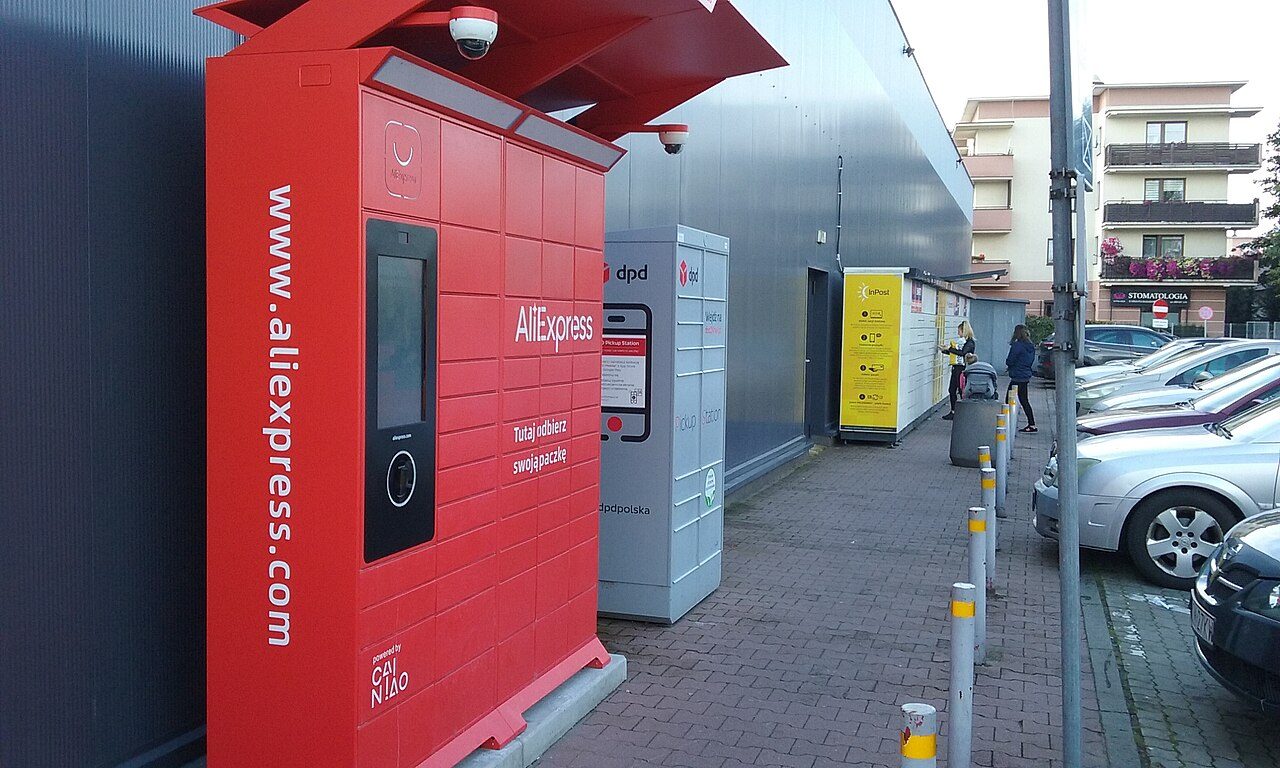
Featured image: Photo: WrS.tm.pl via Wikimedia Commons, CC0
FASHION LAW JOURNAL INSIDER
Join designers, brand founders and fashion lawyers who get the biggest brand battles, IP fights and career moves in fashion law, straight to their inbox.