

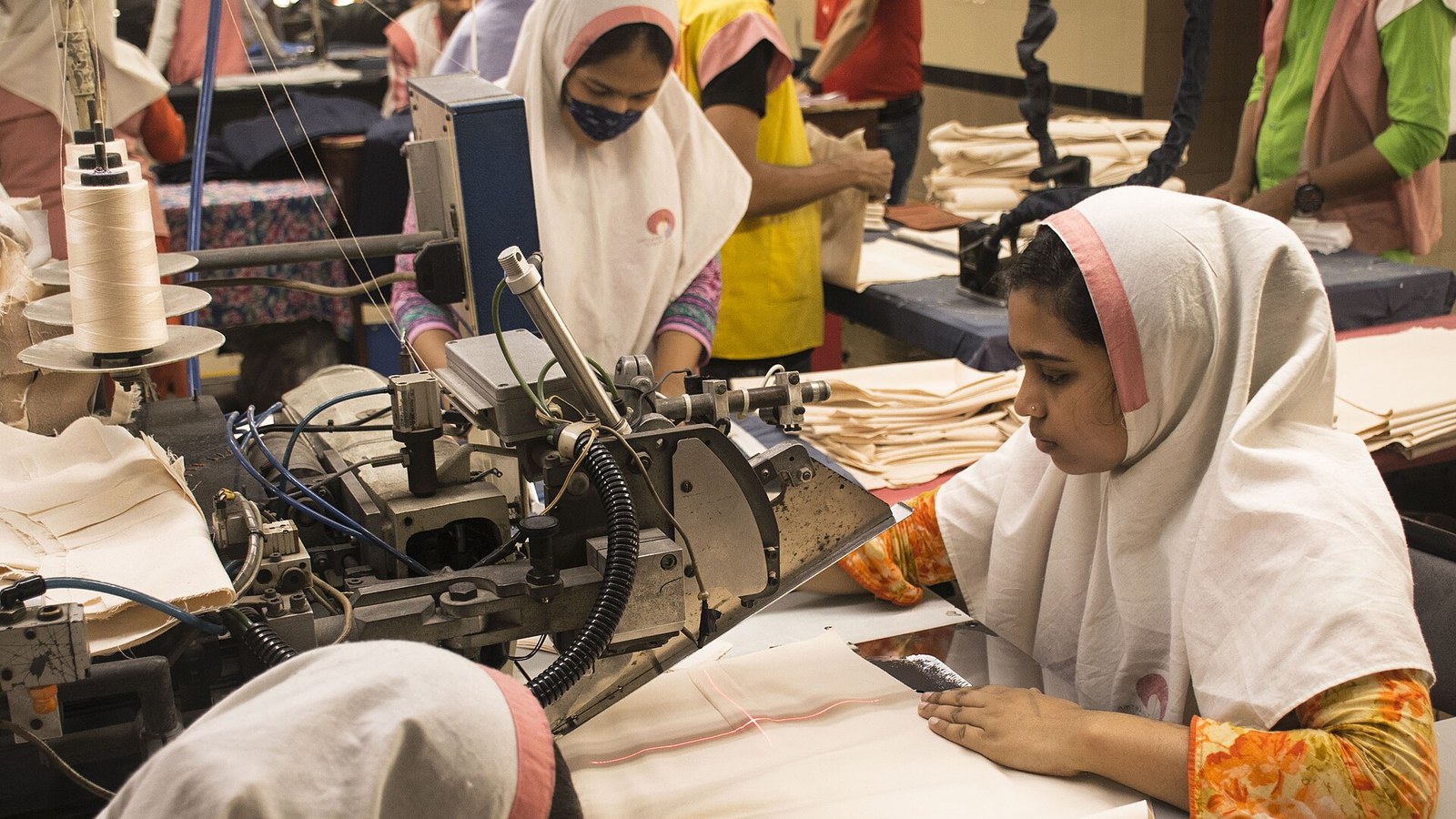
A garment worker on the legal minimum in Dhaka earns 12,500 taka a month, about $100. The best-known independent estimate of what a family in Dhaka needs for a basic but decent life puts the living wage at more than twice that. That gap, repeated across the countries that make most of the world’s clothes, is what the living wage debate in fashion is about. This guide explains what a living wage is, how far minimum wages fall short in major producing countries, and which laws in the EU and the US are changing who is responsible for closing the gap.
Short answer: A living wage is pay for a normal working week that covers a decent standard of living for a worker and their family. In fashion’s main producing countries, legal minimum wages fall well short: Bangladesh’s garment minimum is about $100 a month against a Dhaka living wage estimate of about $248. New laws push brands, not just factories, to address the gap.
Key takeaways
- The ILO agreed a definition of the living wage in March 2024, and the Anker methodology used by the Global Living Wage Coalition is the most widely cited way to estimate one.
- Legal minimum wages for garment workers in Bangladesh, Cambodia and Vietnam sit far below independent living wage estimates, and Ethiopia had no statutory private-sector minimum as of 2025.
- The EU’s due diligence directive names an “adequate living wage” as a protected right, but the 2026 Omnibus changes narrowed its scope and delayed it to July 2029.
- California bans piece-rate pay for garment workers and makes brands liable for unpaid wages; New York’s Fashion Act and the federal FABRIC Act have not passed.
What is a living wage?
A minimum wage is a legal floor set by a government. A living wage is a measure of need: what it actually costs to live decently in a particular place. The two can be close, but in most garment-producing countries they are far apart.
The International Labour Organization agreed a definition at a meeting of experts in February 2024, endorsed by its Governing Body on 13 March 2024: “the wage level that is necessary to afford a decent standard of living for workers and their families”, taking into account country circumstances and calculated for work done during normal hours. The ILO says estimates should be evidence-based, transparent and developed with workers’ and employers’ organisations, and that countries should move gradually from minimum wages towards living wages through social dialogue.
FLJ Insider Pro is open: live fashion law jobs and internships, five career guides and two roadmaps. Early bird USD 12/month. See what's inside
The most common estimation method comes from economists Richard and Martha Anker and is used by the Global Living Wage Coalition, whose members include Fairtrade International, the ISEAL Alliance, the Rainforest Alliance and Social Accountability International. It prices a low-cost nutritious diet, decent housing and other essentials such as health care, education, transport and clothing, adds a small margin for emergencies, scales that up to a typical family, and divides it by the typical number of earners in a household.
How big is the gap between minimum and living wages?
The table compares current legal minimums with independent benchmarks or other reference points, converted to US dollars at recent exchange rates.
| Country | Legal minimum (garment sector or main region) | Living wage benchmark or reference |
|---|---|---|
| Bangladesh | 12,500 taka a month since December 2023 (about $100) | Anker estimate for Dhaka, 2025: 30,459 taka (about $248) |
| Cambodia | $210 a month in 2026; $212 from 1 January 2027 | A union federation said $250.66 was the minimum needed for basic living costs |
| Vietnam | Region I: VND 5.31 million a month in 2026 (about $207); VND 5.7 million from 1 January 2027 (about $223) | Anker estimate for Region I, 2025: VND 9.29 million (about $356) |
| Turkey | Net 28,075.50 lira a month in 2026 (about $562) | Türk-İş union, October 2026: food-only “hunger line” of 38,024 lira and poverty line of 123,857 lira for a family of four |
| Ethiopia | No statutory private-sector minimum wage reported as of 2025 | Customary base wage of 750 birr ($26) at Hawassa in 2019; sector average about 3,000 birr ($52) in 2025 |
Sources: Reuters (Bangladesh), the Global Living Wage Coalition (Dhaka and Vietnam benchmarks), Xinhua and Kiripost (Cambodia), Vietnam’s Decrees 293/2025 and 399/2026, Turkish Minute (Turkey), and NYU Stern and Capital Ethiopia citing the ILO (Ethiopia). Vietnamese figures use the State Bank of Vietnam’s reference rate of 25,615 dong to the dollar on 6 November 2026.
Two caveats. Benchmarks are for a full-time week without overtime, and many workers rely on overtime to get by. And dollar comparisons across countries are rough, because living costs differ. The point the table makes is the ratio within each country: in Dhaka and Vietnam’s top wage region, the minimum covers well under two-thirds of the estimated living wage. FLJ’s earlier piece on the pay gap in the fashion industry looks at how that value is split along the supply chain.
What is happening to garment wages in Bangladesh?
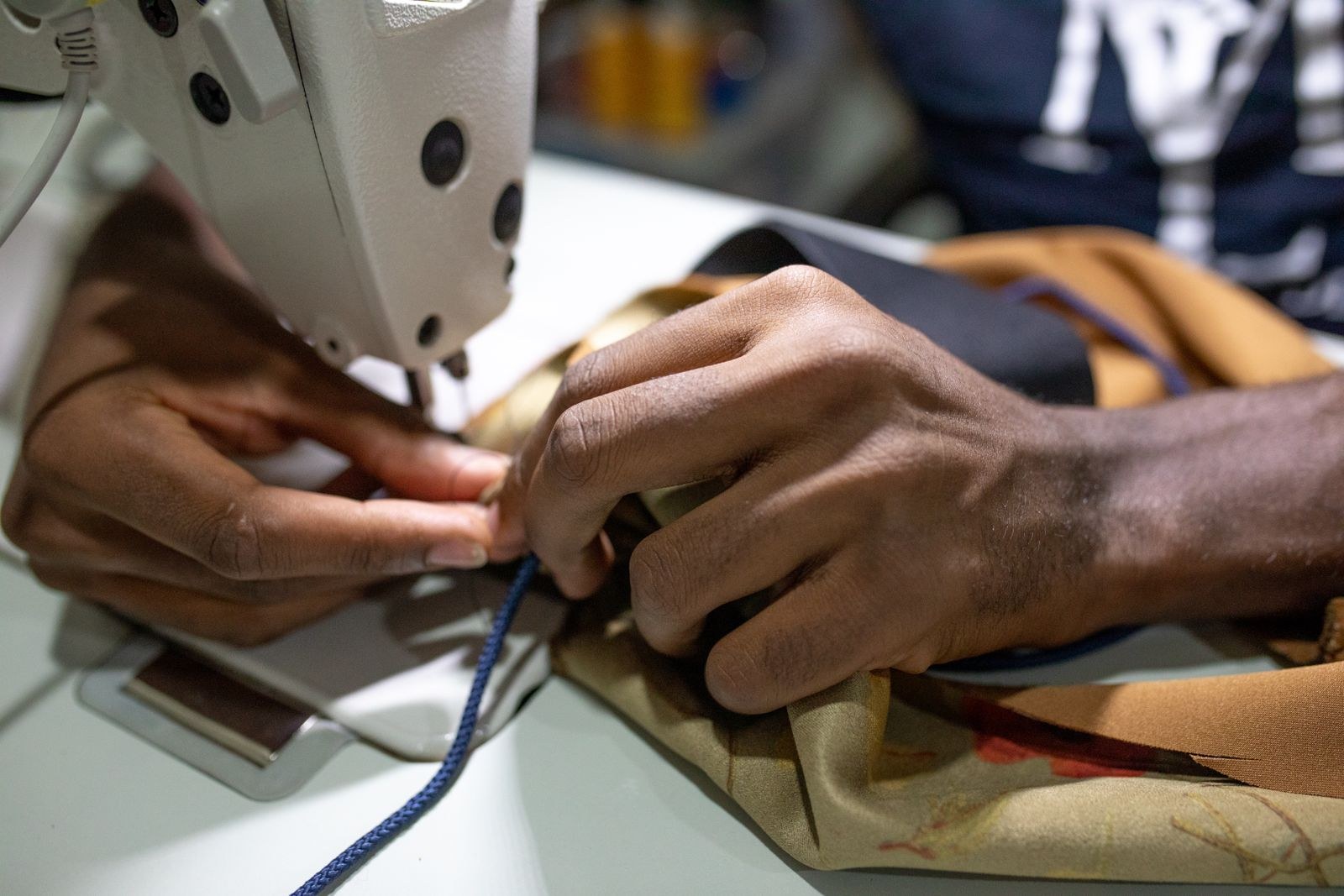
Bangladesh is the world’s second-largest garment exporter after China, and the sector employs about 4 million workers and earns more than 80% of the country’s export income. The current minimum of 12,500 taka took effect in December 2023, up from 8,000 taka set in 2018.
Wages are now being reset again. After protests that began at the end of October 2026, the government formed a new wage board. On 4 November the six-member board, with worker and factory-owner representatives, agreed to bring in a revised pay structure from December, with the first salaries under it paid in January, Reuters reported. It did not set the amount. Workers are asking for 30,000 taka (about $242), close to the Anker estimate for Dhaka. Brands sourcing from Bangladesh include H&M, Inditex’s Zara and Walmart, so the outcome will feed straight into their costs.
What does the EU due diligence directive say about living wages?
The Corporate Sustainability Due Diligence Directive, Directive (EU) 2024/1760, requires large companies to identify and address human rights harms in their own operations and their chains of activities. Its annex lists the rights covered, including “the right to enjoy just and favourable conditions of work, including a fair wage and an adequate living wage for employed workers”. Its recitals add that companies should develop purchasing policies “that contribute to living wages and incomes for their suppliers”.
The Omnibus I package then cut the directive back. Directive (EU) 2026/470 of 24 February 2026, in force since 18 March 2026:
- raises the thresholds to more than 5,000 employees and more than €1.5 billion net worldwide turnover for EU companies, and €1.5 billion of EU turnover for non-EU companies;
- gives member states until 26 July 2028 to transpose the rules, which apply from 26 July 2029;
- removes the harmonised EU civil liability regime, leaving liability mainly to national law, and caps fines at 3% of net worldwide turnover;
- lets companies prioritise impacts involving direct business partners, and makes termination of a relationship no longer mandatory.
The amending directive does not touch the annex, so the living wage reference survives. Far fewer companies are in scope, though, and only the largest fashion groups selling into Europe will be covered. FLJ’s guide to the CSDDD after the Omnibus changes sets out what that means for brands.
What do US laws say about garment workers’ pay?
The US has no living wage law for overseas supply chains. The action is at state level and is mostly about domestic workers. California’s Garment Worker Protection Act, SB 62, was signed on 27 September 2021 and took effect on 1 January 2022. It bans paying garment workers by the piece, with $200 in damages per employee for each pay period where piece rates are used. It also makes manufacturers, contractors and “brand guarantors” jointly and severally liable for unpaid wages, and requires records to be kept for four years. A brand that contracts for garment production can be pursued for its contractor’s wage theft. FLJ’s SB 62 breakdown covers the details.
New York’s proposed Fashion Sustainability and Social Accountability Act, known as the Fashion Act, would require apparel sellers with more than $100 million in annual gross receipts to map their supply chains and carry out due diligence. The current Senate bill, S4558B, was still in committee as of November 2026, and an early version’s definition of a living wage was dropped in a 2025 amendment. FLJ explains the bill in the Fashion Act, explained simply.
At federal level, Senator Kirsten Gillibrand and Representative Jerrold Nadler, both of New York, reintroduced the FABRIC Act (Fashioning Accountability and Building Real Institutional Change) in September 2026. It would reform piece-rate pay with the minimum wage as a floor, add liability measures aimed at major retailers, require garment manufacturers and contractors to register with the Department of Labor and fund grants to bring production back to the US. It has not been enacted.
Does the International Accord cover wages?
No. The International Accord for Health and Safety in the Textile and Garment Industry, which grew out of the 2013 Bangladesh Accord signed after the Rana Plaza collapse, is a binding agreement between brands and unions on factory safety: inspections, remediation, safety training and a complaints mechanism. It was renewed in 2023 as a three-year agreement with automatic renewal for three more. In September 2026 the Accord announced 300 signatories, sourcing from more than 2,000 factories employing over 3.4 million workers in Bangladesh and Pakistan. Its model of enforceable brand commitments is often cited by campaigners who want the same approach for wages.
What have brands promised on living wages?
Voluntary pledges have a mixed record. In its 2013 “Roadmap towards a fair living wage”, H&M said its strategic suppliers should have pay structures in place to pay a fair living wage by 2018, reaching around 850,000 textile workers. The Clean Clothes Campaign later argued the commitment was not met.
The more structured model is ACT (Action, Collaboration, Transformation), an agreement between global brands and the IndustriALL Global Union. In Cambodia, signatory brands have signed legally binding agreements to support factory-level collective bargaining, with commitments on sourcing volumes, building labour costs into purchase prices and funding training, enforced through external verification and arbitration in The Hague. HEMA was reported as signing on 1 June 2026. If you want to check a brand’s claims before buying, FLJ’s guide to ethical clothing brands explains what evidence to look for.
Frequently asked questions
What is a living wage in fashion?
It is pay for a standard working week, without overtime, that covers a decent standard of living for a garment worker and their family, including food, housing, health care, education, transport and clothing, with a margin for emergencies.
What is the difference between a minimum wage and a living wage?
A minimum wage is the legal floor set by a government. A living wage is an estimate of what it actually costs to live decently in a place. In most garment-producing countries the minimum is far below the living wage.
How much do garment workers in Bangladesh earn?
The legal minimum for the lowest grade has been 12,500 taka a month, about $100, since December 2023. A new wage board agreed in November 2026 to revise pay from December, but had not set the amount.
Does EU law require brands to pay a living wage?
Not directly. The CSDDD lists an adequate living wage among the rights companies must respect in their chains of activities, but after the 2026 Omnibus changes it applies only to very large companies, from 26 July 2029.
Is the FABRIC Act law?
No. It is a federal bill, reintroduced in September 2026, that would reform piece-rate pay and add liability for retailers. California’s SB 62, in force since January 2022, already bans piece rates for garment work in that state.
Which brands pay a living wage?
Few brands can show that every worker in their supply chain earns one. Look for published wage data, membership of binding agreements such as ACT, and independent verification rather than general pledges.
Wage figures and legislative status are as of 12 November 2026. Dollar conversions are approximate. This article is general information, not legal advice.
Featured image: Photo: Fahad Faisal via Wikimedia Commons, CC BY-SA 4.0, adapted
FASHION LAW JOURNAL INSIDER
Join designers, brand founders and fashion lawyers who get the biggest brand battles, IP fights and career moves in fashion law, straight to their inbox.