
The 1970s gave fashion the wrap dress, the Ultrasuede shirtdress, the tuxedo for women and jeans with a famous name on the back pocket. It was also the decade designers learned that their names were worth more than their clothes, and that a name, once sold or licensed, can slip out of their control. This guide covers the key looks of 1970s fashion, the night American designers took on Paris at Versailles, and the deals that made and broke Halston, Pierre Cardin, Diane von Furstenberg, Gloria Vanderbilt and Calvin Klein.
Short answer: 1970s fashion moved from hippie dress to disco glamour, punk and designer denim. Its defining pieces were Halston’s minimalist jersey and Ultrasuede, Diane von Furstenberg’s 1974 wrap dress and designer jeans. It was also the decade of licensing: Halston sold his business to Norton Simon in 1973 and later lost control of the company that bore his name.
Key takeaways
- Diane von Furstenberg’s wrap dress launched in 1974 at $80, and by 1976 she had sold a million, according to TIME.
- Halston sold his business to Norton Simon Inc. in 1973, was forced out in 1984 and never regained the company that carried his name.
- Pierre Cardin built a network of some 800 licensees in more than 140 countries, earning royalties of 5 to 12 percent.
- Designer jeans turned a name on a back pocket into a business: Gloria Vanderbilt’s line with Murjani passed $200 million in sales at its 1980 peak.
What did 1970s fashion look like?
There was no single 1970s look. The decade opened with the long skirts and folk prints left over from the late 1960s and closed with sequins under the lights at Studio 54, which opened in New York in April 1977. In between came several styles that still shape what we wear:
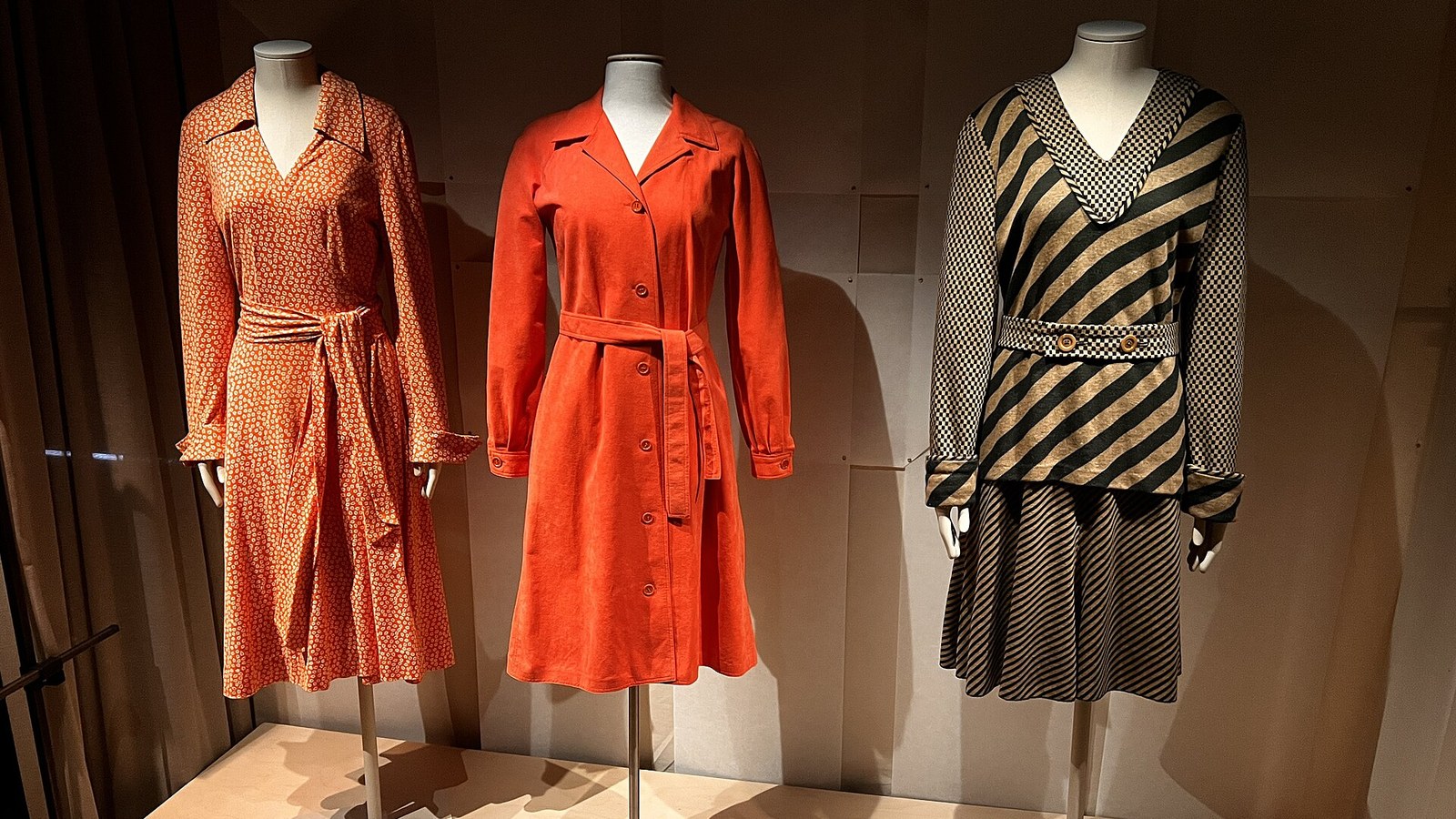
- Disco and American minimalism. Halston’s slinky jersey gowns, caftans and his belted Ultrasuede shirtdress were the uniform of the decade’s nightlife. Halston was a regular at Studio 54, where the club worked as a showroom for his clothes. Andrew Goodman of Bergdorf Goodman later recalled selling the $185 Ultrasuede dresses by the hundred.
- The wrap dress. Diane von Furstenberg’s printed jersey wrap, tied at the waist, became the decade’s working woman’s dress.
- Le Smoking. Yves Saint Laurent first showed his tuxedo for women in his Autumn-Winter 1966 haute couture collection. The Musée Yves Saint Laurent Paris says couture clients snubbed it at first, but the ready-to-wear Rive Gauche version became a classic, and Helmut Newton’s 1975 photograph of it for French Vogue fixed it in the decade’s imagination.
- Punk. In London, Vivienne Westwood and Malcolm McLaren dressed the punk scene; the V&A holds a Seditionaries ensemble dated 1976. FLJ’s piece on the punk movement covers that story.
- Designer denim. Jeans moved from workwear to status item once designers put their names on them.
Why was the Battle of Versailles a turning point?
On 28 November 1973, five French couturiers and five American designers staged a joint show at the Palace of Versailles to raise money for its restoration. According to the Château de Versailles, the French side was Yves Saint Laurent, Pierre Cardin, Emanuel Ungaro, Hubert de Givenchy and Marc Bohan for Christian Dior. The Americans were Oscar de la Renta, Stephen Burrows, Halston, Bill Blass and Anne Klein. About 700 guests attended the dinner that followed.
FLJ Insider Pro is open: live fashion law jobs and internships, five career guides and two roadmaps. Early bird USD 12/month. See what's inside
The American show, fast and pared back, was widely seen as having stolen the night, and it signalled that American ready-to-wear could stand beside Paris couture. FLJ tells the full story in The Battle of Versailles, 1973. For Halston, it came in the same year he sold his business, which is where the legal story begins.
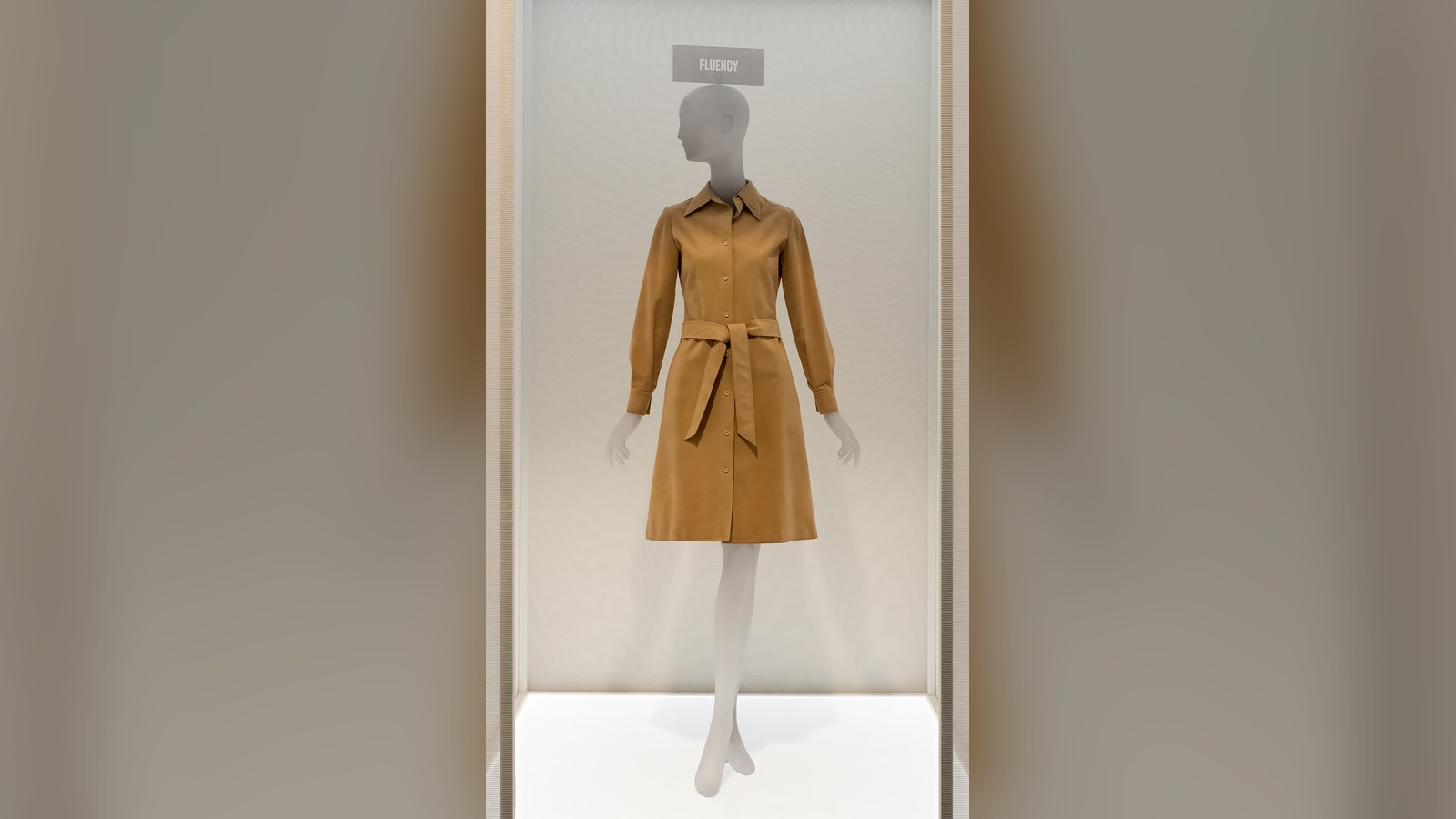
How did Halston lose his name?
In 1973 Halston and his partners sold the business to the conglomerate Norton Simon Inc. WWD’s obituary says sources at the time put the price at $11 million to $12 million; Britannica gives $16 million. Halston stayed on as designer of the new Halston Enterprises, which licensed his name for furs, luggage, lingerie, linens and cosmetics. By 1983 the business had annual volume estimated at $150 million, including $40 million in cosmetics.
Then came the deal that defined the rest of his career. In 1983 Halston signed with J.C. Penney to design a lower-priced line, Halston III, priced from about $24 to $200 and forecast to generate $1 billion in sales over five years. Upmarket stores reacted badly. Bergdorf Goodman, where Halston had made his name designing hats, led a retreat by department and specialty stores that dropped his ready-to-wear and cosmetics. J.C. Penney’s own chairman later admitted the programme “obviously didn’t become the ultimate program one hopes for”.
Ownership kept moving. Esmark bought Norton Simon in 1983 and was soon bought by Beatrice Foods. Britannica says Halston was fired from his namesake company in 1984. He spent two years trying to buy back the made-to-order and ready-to-wear business, with reports that he was locked out of the showroom, before it was sold to Revlon. He never got it back, and he died in San Francisco on 26 March 1990.
The lesson is not that licensing is bad. It is that a designer who sells the company that owns the trade mark has sold the right to decide how the name is used. WWD noted that his lawyer always maintained Halston never sold the trade mark itself, but in practice the person and the name had separated. FLJ explores that gap in what bankruptcy law protects in a fashion house.
How did Pierre Cardin turn licensing into an empire?
If Halston is the cautionary tale, Pierre Cardin is the model and the warning in one. In 1959 he showed his first ready-to-wear collection at the Printemps department store, which got him expelled from the Chambre Syndicale de la Haute Couture; he was later reinstated. He then licensed his name more widely than any designer before him. His obituary in the Boston Globe counts some 800 licensees in more than 140 countries, paying royalties of 5 to 12 percent. By 1980 his name was on matches, sardine can labels, aprons and pickle jars, and by the mid-1980s he was called “the Napoleon of licensors”.
The model made him rich and he kept ownership of his name, but it is also the standard example of the risk that a name on everything stops meaning anything special. Cardin died in December 2020, aged 98. For how licence agreements are structured today, including quality control and approval rights, see FLJ’s guide for the fashion licensing lawyer.
How did the wrap dress make Diane von Furstenberg a brand?
Von Furstenberg launched the wrap dress in 1974 with a Women’s Wear Daily advertisement that read “Feel like a woman, wear a dress!” According to TIME, it retailed for $80, within a year she was producing 25,000 dresses a week, and by 1976 she had sold a million and appeared on the cover of Newsweek.
She also licensed her name. Britannica records licences from the mid-1970s, notably for luggage and eyeglasses, a cosmetics shop on Madison Avenue opened in 1975 and a cosmetics company sold in 1983. In 1997 she bought back her dress line and relaunched the wrap. Unlike Halston, she was able to recover the core of her brand, which is why her career is often taught alongside his.
Why did designer jeans boom in the 1970s?
Jeans were cheap to make, and a famous name let a brand charge more for them. In 1976 Gloria Vanderbilt and Mohan Murjani launched “Gloria Vanderbilt by Murjani” jeans, with her name on the back pocket and a white swan on the coin pocket. A $1 million advertising campaign in 1978 helped the line take off, and by its 1980 peak it generated more than $200 million in sales, as Fox Business recounts. Vanderbilt later sold the name and licences to Gitano.
Calvin Klein’s jeans were made and marketed through Puritan, and became a national hit with the 1980 television commercials starring a 15-year-old Brooke Shields. In November 1983 Klein and his partner Barry Schwartz agreed to buy Puritan for $61.5 million, UPI reported, at a time when Calvin Klein products made up about 93 percent of Puritan’s $246 million business. Buying the licensee brought the most valuable use of the name back in-house. Calvin Klein is now owned by PVH, which FLJ explains in who owns Tommy Hilfiger and Calvin Klein.
What does 1970s fashion teach fashion law today?
| Designer | Deal | What happened to the name |
|---|---|---|
| Halston | Sold business to Norton Simon (1973); J.C. Penney line (1983) | Forced out in 1984; business sold to Revlon; never regained |
| Pierre Cardin | About 800 licensees in 140+ countries | Kept ownership; the classic example of over-licensing risk |
| Diane von Furstenberg | Name licensed from the mid-1970s; cosmetics sold 1983 | Bought back her dress line in 1997 |
| Gloria Vanderbilt | Jeans with Murjani (1976) | Name and licences later sold to Gitano |
| Calvin Klein | Jeans through Puritan | Bought Puritan in 1983 for $61.5 million |
Three points follow. First, a designer’s name registered as a trade mark is an asset that can be sold, and whoever owns it decides how it is used. Founders who sell should negotiate what they can still do under their own name. Second, licences need quality control: a licensor that cannot approve products risks the dilution Cardin was accused of. Third, the clothes themselves were hard to protect. The US Copyright Act of 1976 kept the long-standing rule that a useful article such as a dress is not protected as a whole, which is why the copying fights described in FLJ’s sibling guide to 1950s fashion never really ended. In the 1970s, as now, the name was the part the law protected best.
Frequently asked questions
What was popular in 1970s fashion?
Wrap dresses, flared jeans, jersey disco gowns, Ultrasuede shirtdresses, trouser suits and Le Smoking tuxedos, alongside punk in London later in the decade. Designer jeans became a status item by its end.
Who were the most important 1970s fashion designers?
Halston, Diane von Furstenberg, Yves Saint Laurent, Calvin Klein and Vivienne Westwood are among the most influential. The five American designers at Versailles in 1973 also included Oscar de la Renta, Stephen Burrows, Bill Blass and Anne Klein.
Why did Halston lose his company?
He sold his business to Norton Simon Inc. in 1973. After further takeovers, he was forced out in 1984, failed to buy the business back, and it was sold to Revlon.
When was the Diane von Furstenberg wrap dress created?
It launched in 1974 at $80. By 1976 von Furstenberg had sold one million, according to TIME, and she reintroduced it in 1997 after buying back her dress line.
What is designer licensing?
A designer or brand owner lets another company use its name on products in return for royalties. Pierre Cardin made it a mass business in the 1970s, with royalties of 5 to 12 percent.
What was the Battle of Versailles?
A fundraising fashion show at the Palace of Versailles on 28 November 1973, where five American designers showed alongside five French couture houses. It is remembered as the night American ready-to-wear won international respect.
Prices and sales figures are historical, as reported at the time, and are not adjusted for inflation. Information is as of 12 November 2026.
Featured image: Photo: Bdx via Wikimedia Commons, CC0, adapted
FASHION LAW JOURNAL INSIDER
Join designers, brand founders and fashion lawyers who get the biggest brand battles, IP fights and career moves in fashion law, straight to their inbox.