
Every EU country must have a textile extended producer responsibility (EPR) scheme running by 17 April 2028. Once it does, any brand that sells clothing, footwear, hats, accessories or household linen to customers in that country pays a fee on each product. The fee funds collection, sorting, reuse and recycling. It applies wherever the brand is based, including online sellers in the US, UK or China. This is the core of Directive (EU) 2025/1892, which amends the EU Waste Framework Directive and came into force on 16 October 2025.
This guide covers who counts as a producer, which products are in scope, how fees can be raised for fast fashion, the new rules on exporting used clothes, and the schemes already running in France and the Netherlands. It also explains how textile EPR connects to the EU ban on destroying unsold clothes, which has applied to large companies since 19 July 2026.
the short version
- Directive (EU) 2025/1892 was signed on 10 September 2025, published on 26 September 2025, and came into force on 16 October 2025.
- National rules are due by 17 June 2027. Every Member State must have a textile EPR scheme by 17 April 2028.
- In scope: clothing and accessories, hats, footwear, leather apparel, blankets, bed, table and kitchen linen, and curtains.
- Non-EU online sellers count as producers. Sellers based elsewhere in the EU must appoint an authorised representative. For sellers outside the EU, each Member State decides.
- Member States may raise fees for ultra-fast and fast fashion practices.
- Micro-enterprises get until 17 April 2029.
what is textile EPR?
Extended producer responsibility makes the business that puts a product on the market pay for dealing with it when it becomes waste. Packaging, batteries and electronics have worked this way in the EU for years. Textiles now join them. In practice, a brand joins a producer responsibility organisation (PRO), reports how many items or kilos it sells in each country, and pays a fee. The PRO uses the money to run collection and sorting across the country.
The EU already required Member States to collect textiles separately from 1 January 2025. That duty came from an earlier amendment, Directive (EU) 2018/851. The 2025 Directive adds the money: producers must now fund the system.
what are the key dates?
| Date | What happens |
|---|---|
| 1 January 2025 | Separate collection of textiles required in every Member State (from Directive 2018/851) |
| 16 October 2025 | Directive (EU) 2025/1892 comes into force |
| 19 July 2026 | Ban on destroying unsold clothing and footwear applies to companies that are not SMEs (ESPR) |
| 17 June 2027 | Deadline for Member States to transpose the Directive |
| 17 April 2028 | Textile EPR schemes must be established in every Member State |
| 17 April 2029 | EPR rules apply to micro-enterprises |
| 19 July 2030 | Destruction ban extends to medium-sized companies |
When do fees start? It depends on the country. Where a Member State already had a scheme on 16 October 2025, as France and the Netherlands did, producers pay for products first sold from that date. Elsewhere, fees start when national law takes effect, and no later than 17 April 2028 (Article 22a(10) and (11)). The Commission’s announcement summarises the timetable.
which products are covered?
The Directive adds a new Annex IVc that lists products by customs (CN) code:
- all apparel and clothing accessories, knitted and not knitted (CN chapters 61 and 62)
- blankets and travelling rugs
- bed, table, toilet and kitchen linen
- curtains, drapes and interior blinds, and other furnishing articles
- worn clothing
- hats and headgear
- leather apparel and clothing accessories
- footwear
Member States may also set up a separate EPR scheme for mattresses. Handbags as such are not on the list, although leather clothing accessories are. Check each product’s CN code rather than its marketing category.
who counts as a “producer”?
The definition is wide on purpose. A producer is any manufacturer, importer or distributor that first makes a product available in a Member State “irrespective of the selling technique used”. That includes a business that sells by distance contract directly to consumers in a Member State while being established in another Member State or outside the EU (new Article 3(4b)). A US brand shipping to Paris from its own website is a producer in France. So is a Chinese marketplace seller.
Three groups are excluded: sellers of used products assessed as fit for reuse, makers of products made from used or waste textiles, and self-employed tailors making custom pieces.
On authorised representatives, the rule is more nuanced than many summaries say:
- A distance seller based in another EU Member State must appoint an authorised representative in each country it sells into.
- For sellers based outside the EU, each Member State may require one (Article 22a(3)). It is a national choice, and France has already made it a requirement.
- A PRO can act as the authorised representative.
Joining a PRO is compulsory (Article 22c(1)). Online platforms must obtain a producer’s registration number and a self-certification of EPR compliance before letting it sell. Fulfilment services must check the same and stop serving producers that do not comply (Article 22a(13) to (16)). For a non-EU brand, the practical effect is that marketplaces and 3PLs will refuse to handle stock without EPR registration.
what do producers pay for?
Under Article 22a(8), fees must cover:
- collection, transport and sorting
- preparing for reuse and recycling
- surveys of what is in mixed waste
- consumer information
- data reporting
- support for research and development on product design and waste operations, “with a view to scaling up fibre-to-fibre recycling”
Some commentary quotes a fixed percentage of fees that must go to research. The Directive sets no minimum.
will fast fashion brands pay more?
They can. Fees are based on weight and, where appropriate, number of items. They are modulated according to the ecodesign requirements set under the Ecodesign for Sustainable Products Regulation, Regulation (EU) 2024/1781 (Article 22c(5)). Durability, reparability and recycled content are the kinds of factors ESPR covers. They reach EPR fees through that route rather than being listed in the Directive itself.
Article 22c(6) goes further. Member States may require PROs to adjust fees to address “ultra-fast and fast-fashion practices”. The factors named are product life span, useful life beyond the first owner, and contribution to closing the loop. The recitals point to the width of a product range and the frequency of new offers. France has already gone down this road with its anti-fast fashion law, which adds a per-item penalty of up to €12 in 2026 rising to €20 by 2030. See our explainer on France’s anti-fast fashion law. The Commission may adopt harmonised criteria for modulation where needed (Article 22c(7)).
can you still export used clothes?
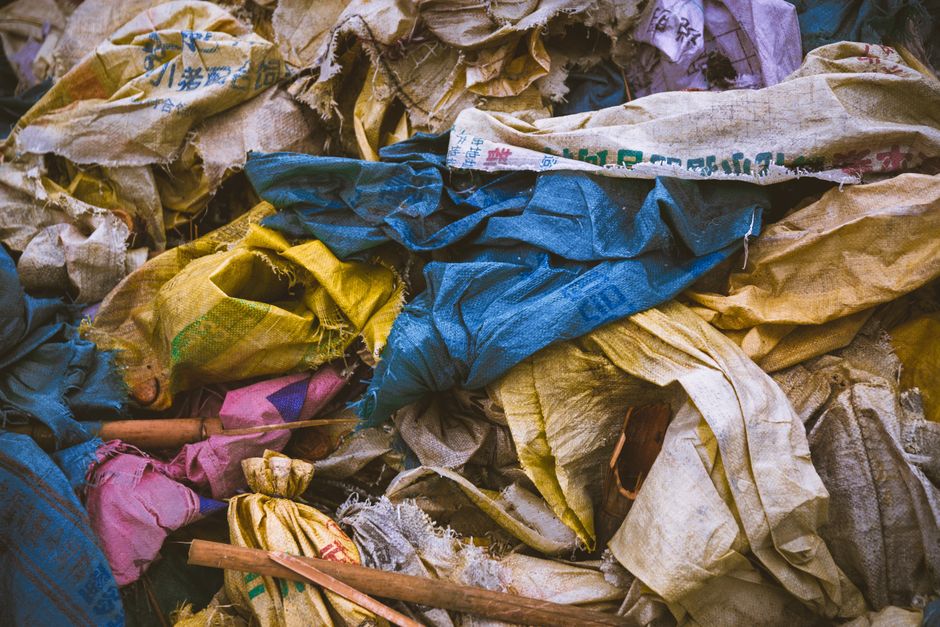
Only with paperwork. This change is aimed at dumping. The article on Chile’s Atacama desert shows where exported “second-hand” clothing often ends up. Under Article 22d, separately collected textiles are treated as waste on collection. The exception is items handed over directly and professionally assessed as fit for reuse at the collection point. All collected textiles must be sorted.
A shipment declared as used goods for reuse must carry:
- the invoice or contract
- evidence of sorting, with records down to the bale
- a declaration that none of the load is waste
Suspect shipments can be inspected at the shipper’s cost. PROs must publish their export rates. Resale and vintage businesses that buy in bulk should check where their supply comes from. Our guide to second-hand and resale law covers the wider rules.
how does this connect to the ban on destroying unsold clothes?
They are two halves of the same policy. EPR makes brands pay for what consumers throw away. The ESPR’s destruction ban stops brands throwing away what they never sold. Article 25 of the ESPR says that “from 19 July 2026, the destruction of unsold consumer products as listed in Annex VII shall be prohibited”. Annex VII covers apparel, clothing accessories and footwear. The ban does not apply to micro and small enterprises. It applies to medium-sized enterprises from 19 July 2030, so since July 2026 it has bound every company above SME size. Companies must also disclose what they discard.
For the history of why brands destroyed stock in the first place, read deadstock destruction and why luxury brands would destroy a product.
which countries already run textile EPR?
France has run the longest scheme, through the approved body Refashion. Its 2026 fee schedule charges per item. The fees run from about €0.02 for hats and gloves to about €0.19 for a men’s suit. For footwear they run from about €0.05 to €0.21. Refashion applies bonuses for durability, certified labels and recycled content, and a penalty for poor recyclability.
The Netherlands has had textile EPR since 1 July 2023. According to the Dutch inspectorate, the target for preparing textiles for reuse or recycling was 50 per cent in 2025, rising five points a year to 75 per cent in 2030. Within that, the domestic reuse target rises from 10 per cent to 15 per cent. The government plans changes in 2027, including adding footwear.
Hungary and Latvia introduced textile obligations in 2023 and 2024. Spain consulted on a draft royal decree in 2025, and others, including Italy and Belgium, are preparing schemes. Expect fee levels and reporting formats to differ country by country until the Commission uses its power to harmonise.
what about the US and UK?
California was first in the US. The Responsible Textile Recovery Act, SB 707, was approved on 28 September 2024. CalRecycle approved Landbell USA as the producer responsibility organisation in March 2026, and producers had to join it by 1 July 2026. Regulations take effect no earlier than 1 July 2028, and the programme is to be fully in place by 2031. Penalties can reach $10,000 a day, or $50,000 a day for intentional violations. Bills in New York and Washington were pending in 2026.
The UK has no textile EPR scheme yet. UK brands selling into the EU are producers there, like anyone else.
a checklist for brands selling into the EU
- Map your products by CN code against Annex IVc.
- Map where you sell, including through marketplaces, since you are a producer in each country you ship to.
- Register in France and the Netherlands now if you sell there. Fees already apply.
- Decide on authorised representatives country by country, and consider a PRO that offers the service.
- Build the data: item counts and weights by country and category. Your platform and 3PL partners will ask for registration numbers.
- Design for lower fees: durability, repair and recycled content are likely to earn lower rates as modulation spreads.
- Stop destruction of unsold stock if you are above SME size, and document what you discard.
Product data will increasingly travel with the garment. Our explainer on digital product passports covers what is coming next, and the care label symbol decoder covers the label rules you already follow.
frequently asked questions
When do EU textile EPR fees start?
It depends on the country. Where a scheme existed on 16 October 2025, such as France and the Netherlands, fees apply to products sold from that date. Elsewhere they start when national law takes effect, and no later than 17 April 2028.
Do non-EU online sellers have to comply with EU textile EPR?
Yes. A business outside the EU that sells directly to consumers in a Member State is a producer there. Each Member State may require it to appoint an authorised representative.
Are shoes and bags covered by EU textile EPR?
Footwear is covered, as are hats, leather apparel and clothing accessories. Items are identified by customs code, so check each product’s CN code.
Will fast fashion brands pay higher EPR fees?
They may. Member States can require fees to be adjusted to address ultra-fast and fast-fashion practices, based on factors such as product life span and useful life beyond the first owner.
Is destroying unsold clothes banned in the EU?
Yes, for companies above SME size, since 19 July 2026 under the Ecodesign for Sustainable Products Regulation. Medium-sized companies are covered from 19 July 2030. Micro and small enterprises are exempt.
sources
- Directive (EU) 2025/1892, Official Journal
- European Commission, revised Waste Framework Directive enters into force
- Regulation (EU) 2024/1781 (ESPR)
- Refashion, 2026 eco-contribution schedule
- ILT, UPV Textiel
- CalRecycle, textile EPR
Get fashion law news and the weekly jobs and internships list in FLJ Insider. This article is general information, not legal advice.
FASHION LAW JOURNAL INSIDER
Join designers, brand founders and fashion lawyers who get the biggest brand battles, IP fights and career moves in fashion law, straight to their inbox.