

Hollywood, Dior, and the Man Everyone Was Watching
On a warm evening in Los Angeles, guests descended the steps of the newly opened David Geffen Galleries at LACMA for Dior Cruise 2027.
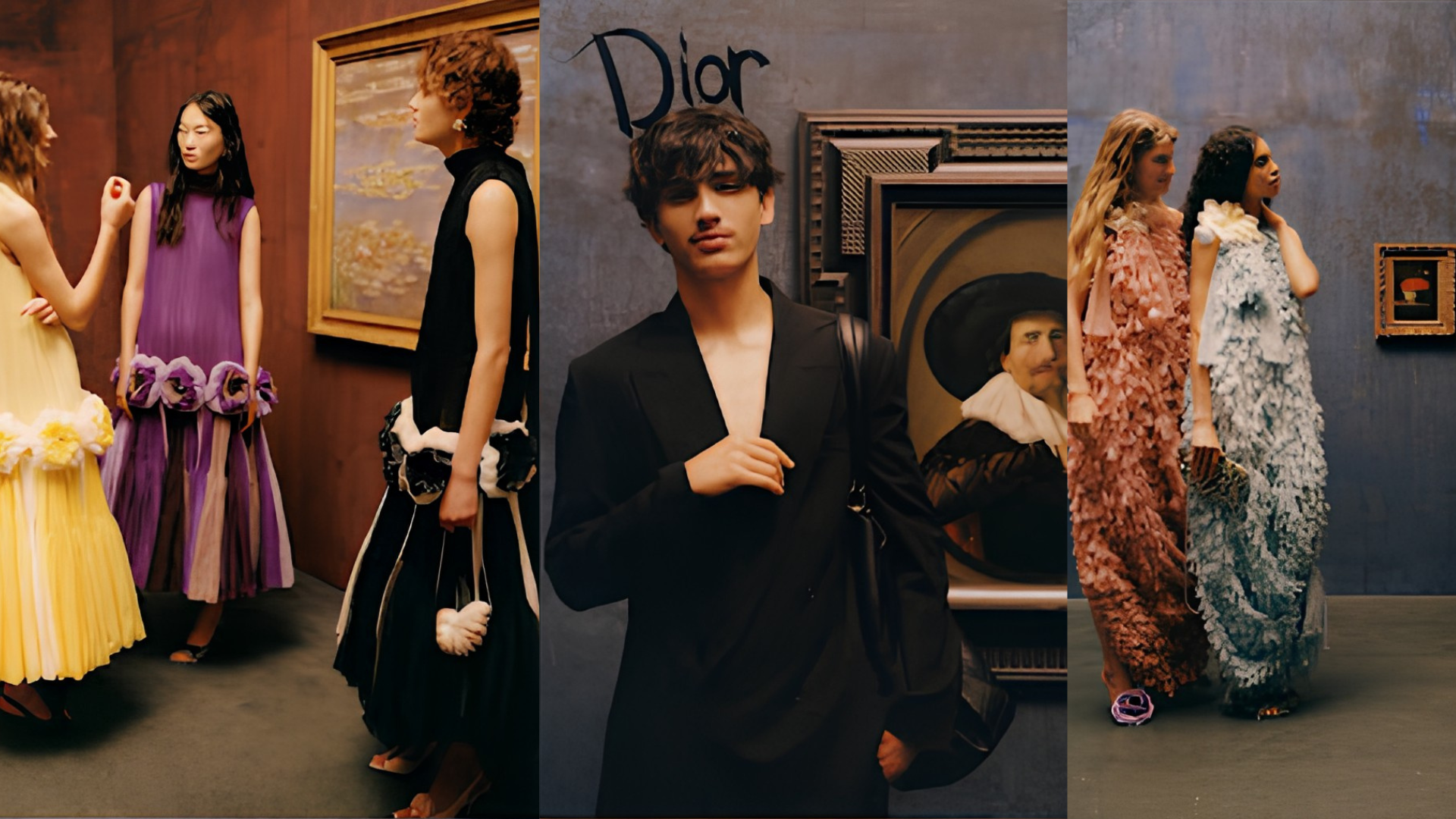
There was much to look at. Pleated chiffon dresses inspired by Californian poppies. Reimagined Bar jackets. Film noir lighting. References to Hollywood, Christian Dior, Marlene Dietrich, and the golden age of cinema. The collection unfolded like a carefully constructed narrative, moving between couture, costume, and memory.
Yet the most closely watched figure that evening was not walking the runway.

It was Jonathan Anderson.
His arrival at Dior has become one of the most closely followed creative appointments in recent luxury history. The attention surrounding the collection extended far beyond silhouettes, fabrics, or accessories. Industry observers, consumers, journalists, and investors were all asking a larger question: what happens when one of fashion’s most influential creative minds takes control of one of its most powerful maisons?
The question reveals something important about the luxury industry today.
Creative directors are no longer viewed solely as designers. Increasingly, they are treated as strategic assets capable of shaping cultural relevance, media attention, and commercial performance.
When Creative Directors Became Brands
Luxury fashion has always celebrated designers, but the balance of power has shifted noticeably over the past decade.
Historically, the house itself was the primary source of prestige. Consumers bought into Dior, Chanel, Gucci, or Louis Vuitton. Individual designers mattered, but the brand remained the central story.
Today, the designer often becomes part of the brand’s value proposition.
Jonathan Anderson, Matthieu Blazy, Miuccia Prada, Alessandro Michele, Demna, and Pharrell Williams command audiences that extend well beyond the fashion industry. Their appointments generate headlines, social media discussions, analyst commentary, and consumer anticipation months before a single product reaches stores.
In many cases, the appointment of a creative director now receives more attention than a company’s financial results.
Luxury groups understand this dynamic. In an economy increasingly driven by visibility and cultural relevance, creative leadership has become a competitive advantage.
The designer is no longer simply responsible for clothes. The designer helps determine whether a brand remains culturally desirable.
Why Dior Chose Jonathan Anderson
Viewed through that lens, Dior’s decision becomes easier to understand.
Anderson arrives with one of the strongest reputations in contemporary fashion. During his tenure at LOEWE, he transformed the Spanish house into one of the industry’s most admired brands. Under his creative direction, LOEWE became synonymous with craftsmanship, artistic collaboration, and intellectual storytelling.
The success was not merely aesthetic.
LOEWE became a recurring presence in discussions surrounding desirability rankings, cultural influence, and luxury innovation. The house successfully attracted both traditional luxury consumers and younger audiences seeking brands with a stronger creative identity.
What Anderson demonstrated at LOEWE was his ability to create meaning around products.
Luxury consumers rarely purchase objects alone. They purchase narratives, values, symbols, and aspirations. Anderson consistently proved capable of building those narratives.
For a house like Dior, whose heritage is among the richest in fashion history, that ability carries immense value.
The challenge is not preserving heritage.
The challenge is making heritage feel alive.
The Jonathan Anderson Playbook
The Dior Cruise 2027 collection offered an early glimpse into Anderson’s approach.
One of the most striking aspects of his work is his relationship with history. Rather than treating archives as sacred objects, he treats them as material for reinterpretation.
Throughout the collection, references to Christian Dior’s original designs appeared alongside cinematic influences, contemporary styling, artistic collaborations, and subtle acts of deconstruction.

The iconic Bar jacket returned repeatedly, not as a museum piece, but as a framework for experimentation. Fabrics inspired by Dior’s 1950s archives were rewoven. Hollywood references surfaced throughout the collection. Film noir shadows became part of the visual language of the show itself.
Anderson’s collaboration with American artist Ed Ruscha further illustrated his method. Art, typography, cinema, costume design, and fashion existed within the same conversation.
What emerges from this approach is a form of cultural curation.
Anderson approaches fashion less as trend creation and more as cultural editing.
He assembles references, histories, disciplines, and visual languages into something that feels both familiar and new. The result is not nostalgia. It is a reinterpretation.
That distinction matters.
Many brands possess archives.
Far fewer possess the creative leadership necessary to transform archives into contemporary relevance.
Why Creative Directors Matter More Than Ever
The growing influence of creative directors reflects broader changes within the luxury sector.
Consumers increasingly engage with brands through stories, personalities, and cultural moments. Social media rewards individual voices. Fashion media follows creative leadership with unprecedented intensity. Every appointment becomes a narrative capable of generating months of attention before any commercial performance can be measured.
The modern luxury consumer is also remarkably informed.
Customers know who designs the collections. They follow interviews, runway shows, collaborations, and creative transitions. They understand the significance of appointments and departures.
As a result, creative directors increasingly function as public-facing symbols of a brand’s ambitions.
This does not diminish the importance of executives, supply chains, merchandising teams, or financial performance. Luxury remains a business.
However, in an environment where desirability drives value, creative leadership has become one of the industry’s most powerful assets.
A successful designer can attract attention.
A successful designer can create aspiration.
A successful designer can reshape perception.
In luxury, perception often becomes reality.
Beyond the Runway

Whether Jonathan Anderson ultimately changes Dior remains to be seen.
Creative transitions are rarely judged after a single collection, no matter how closely watched. The true test will be whether his vision translates into sustained cultural relevance, commercial success, and long-term desirability.
What is already clear, however, is that the luxury industry increasingly views creative directors differently than it once did.
They are no longer simply designers responsible for seasonal collections.
They are storytellers, cultural interpreters, brand architects, and strategic assets.
The excitement surrounding Jonathan Anderson’s arrival at Dior says as much about the future of luxury as it does about the future of Dior itself.
—-
References :
- Dior Cruise 2027 Show Notes and Press Materials.
- Loïc Prigent, Dior & Jonathan Anderson Filment à Hollywood (2026).
- LVMH Annual Reports (LOEWE and Fashion & Leather Goods Division).
- Launchmetrics, Fashion Week Media Impact Value reports.
- Business of Fashion, coverage of Jonathan Anderson’s appointment at Dior.
- Vogue Business, coverage of creative director succession and luxury brand strategy.
- McKinsey & Company & Business of Fashion, The State of Fashion 2026.
FASHION LAW JOURNAL INSIDER
Join designers, brand founders and fashion lawyers who get the biggest brand battles, IP fights and career moves in fashion law, straight to their inbox.