

Most shoppers know Fabletics as Kate Hudson’s leggings brand. The company behind it is older and more complicated: a subscription retailer built by two internet entrepreneurs, Adam Goldenberg and Don Ressler, whose VIP membership model has drawn prosecutors, state attorneys general and class action lawyers for more than a decade. Here is who owns Fabletics as of 14 November 2026, how it grew out of the TechStyle group and where the subscription lawsuits stand.
Short answer: Fabletics is a privately held company run by its co-founders, CEO Adam Goldenberg and Don Ressler, who launched it in 2013 inside their JustFab group, later renamed TechStyle Fashion Group. Kate Hudson is a co-founder and shareholder, now a strategic adviser, and Kevin Hart is an equity owner. Fabletics has never gone public, and its ownership percentages are not disclosed.
Key takeaways
- Fabletics was co-founded in 2013 by Adam Goldenberg, Don Ressler and Kate Hudson as part of the JustFab group, renamed TechStyle Fashion Group in 2016.
- Hudson moved from public face to strategic adviser at the end of 2021 and stayed a shareholder; Kevin Hart is an equity owner and the face of Fabletics Men.
- Revenue passed $1 billion for the first time in 2025. A 2021 IPO plan reportedly valued the company above $5 billion, but no listing has happened.
- The FTC’s Click-to-Cancel rule was vacated in July 2025 and the FTC is back at the advance notice stage, so state auto-renewal laws and existing federal law now do the work.
Who founded Fabletics, and who owns it today?
Goldenberg and Ressler founded the company in 2010 as Just Fabulous Inc., a subscription business selling shoes and fashion online. In 2013 they launched Fabletics as an online-only activewear membership with Kate Hudson as co-founder and the face of the brand. In 2016 the parent was renamed TechStyle Fashion Group, and the JustFab name was kept for the women’s fashion business, the Los Angeles Business Journal reported.
Fabletics does not publish a shareholder list. What is on the record is this. Goldenberg is co-founder and chief executive, and Meera Bhatia is president, according to Forbes in August 2026. Ressler is the other co-founder; the two were named as co-CEOs of TechStyle when Fabletics Men launched in April 2020. Hudson announced in December 2021 that she would move from public face to a strategic adviser role and would remain a shareholder. Kevin Hart, who has fronted Fabletics Men since 2020, is described as an equity owner in a 2025 advertising industry decision discussed below. The group’s early funding came from venture firms; reports at the time named Matrix Partners and Technology Crossover Ventures among the backers.
FLJ Insider Pro is open: live fashion law jobs and internships, five career guides and two roadmaps. Early bird USD 12/month. See what's inside
The figure often quoted online, that Hudson owns about 20%, traces back to reporting from around 2015 and has never been confirmed by the company. We have left it out of the short answer for that reason. FLJ’s piece on celebrity fashion brands and their contracts explains why founder equity, rather than a flat fee, has become the usual structure in deals like Hudson’s and Hart’s.
What was TechStyle, and how did the group split up?
TechStyle was a stable of membership brands sharing a back office. Besides JustFab and Fabletics, it bought FabKids and ShoeDazzle in 2013 and launched Savage X Fenty with Rihanna in 2018. Over time the brands drifted apart. By late 2021 Fabletics had separated from the rest of the group and moved into its own 110,000 square foot headquarters in El Segundo, California, while JustFab, ShoeDazzle and FabKids were combined under a business called Global Fashion Brands. Savage X Fenty raised $115 million in a February 2021 round led by private equity firm L Catterton that valued it at about $1 billion.
Today the entities are named separately in legal papers. The 2025 multistate settlement described below was made with TFG Holding, Inc., which operates JustFab, ShoeDazzle and FabKids. Lawsuits against the activewear brand name Fabletics, Inc. as defendant. The website also sells YITTY by Fabletics and a scrubs line under the same membership model.
How big is Fabletics in 2026, and is an IPO coming?
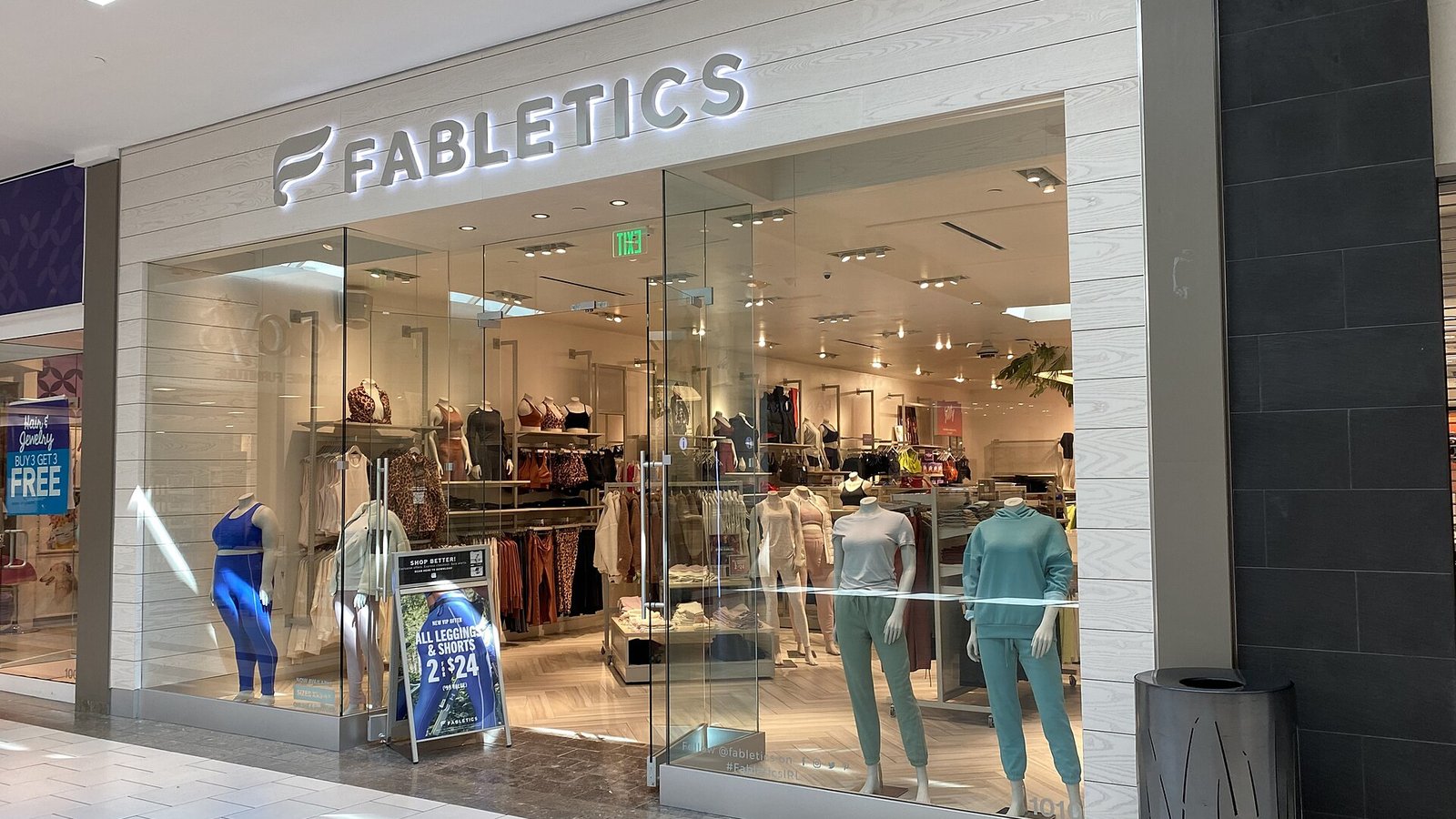
Fabletics passed $1 billion in annual revenue for the first time in 2025, with growth of roughly 20%, and is targeting $2 billion within five years. It had 120 stores worldwide in January 2026, 114 of them in the United States, and announced plans in August 2026 for about 45 more over the following year, roughly 20 of them outside the US. It reports more than three million active customers, with members accounting for more than 90% of sales.
The IPO question has hung over the company since July 2021, when the Wall Street Journal reported that Fabletics was working with banks on a listing that would raise about $500 million at a valuation above $5 billion. No listing followed. In August 2026, asked about a potential IPO in a Bloomberg interview, Goldenberg declined to comment. As of 14 November 2026 there is no public filing. FLJ’s background on the rise of athleisure explains the market it is betting on.

How does the Fabletics VIP membership work?
The VIP membership is the business model and the source of most of the legal risk. In November 2026 Fabletics’ own pages say members are charged $69.95 on the 6th of each month unless they log in and choose “Skip the Month” between the 1st and the 5th. Each charge becomes a member credit that can be used on one item or a two-piece outfit up to $100, and unused credits expire after 12 months. VIP members also get discounted prices compared with the listed non-member price. The site says members can cancel online, by live chat or by phone.
That structure is a “negative option”: silence is treated as consent to be charged. It is lawful, but every element, from how the enrolment is disclosed to how hard cancelling is, is regulated. The comparison between member and non-member prices also brings in reference pricing law, which FLJ covers in fake discounts and anchor-pricing lawsuits.
What lawsuits and settlements have hit Fabletics and its sister brands?
The first big one predates the TechStyle name. In October 2014 JustFabulous Inc. agreed to pay $1,875,000 in penalties and costs to settle claims by the Santa Clara and Santa Cruz County district attorneys that it buried subscription fees in fine print, ABC7 reported, and agreed to bring its websites into line with California’s disclosure rules by 10 November 2014. In November 2022 Savage X Fenty’s operating company paid $1.2 million under a stipulated judgment with California prosecutors over VIP auto-renewal disclosures, consent and store credit claims.
In October 2025 TFG Holding, the operator of JustFab, ShoeDazzle and FabKids, settled with a coalition led by Maryland’s attorney general and 32 other jurisdictions. It agreed to pay $1 million to the states, refund recurring charges from the previous year, obtain express informed consent before enrolment, drop fake countdown timers and offer a simple online cancellation route. Fabletics was not a party.
Fabletics itself has faced private suits. Carter v. Fabletics, Inc., filed in Los Angeles Superior Court in June 2024, was dismissed without prejudice by the plaintiffs in March 2025. Days earlier, on 12 March 2025, eleven plaintiffs filed Bateman v. Fabletics, Inc., No. 2:25-cv-02200, in the Central District of California; Megan Carter is one of them. They allege that the “$100” member credit is misleading because most items cost less than the then $59.95 monthly fee, that credits unlawfully expire under California’s gift certificate statute, and that renewal terms and cancellation were not presented as the Automatic Renewal Law requires. The claims run under California’s Unfair Competition Law and False Advertising Law and Florida’s consumer statute. We could not confirm a ruling or settlement as of 14 November 2026; these are allegations, not findings.
In 2026 Fabletics was also named in proposed class actions claiming it kept tariff surcharges charged at checkout after the Supreme Court struck down the IEEPA tariffs in Learning Resources, Inc. v. Trump on 20 February 2026. Those claims are also unproven. FLJ has tracked similar marketing suits such as the Fashion Nova TCPA class action.
Why did the ad industry’s watchdog look at Kevin Hart’s posts?
Celebrity owners create their own disclosure problem. In a decision announced on 20 February 2025, BBB National Programs’ National Advertising Division looked at Instagram posts by Hart that tagged @fabletics or @fableticsmen below the “more” button. Fabletics argued that Hart’s link to the brand was well known. NAD disagreed, reasoning that a significant part of the audience might not know he is an equity owner. Hart added clear disclosures such as #FableticsPartner above the fold, and Fabletics said it would require them in future posts. The point applies to any founder or investor who promotes their own brand; see FLJ’s guide to influencer marketing and endorsement laws.
What happened to the FTC’s Click-to-Cancel rule?
The FTC announced its amended Negative Option Rule, branded Click-to-Cancel, on 16 October 2024. It would have required simple cancellation and separate consent to the negative option feature. On 8 July 2025, days before key parts were due to take effect, the Eighth Circuit vacated the rule because the FTC had not followed required rulemaking procedures. The FTC did not appeal, and in February 2026 it published a notice restoring the older 1973 rule text, which covers only prenotification plans.
On 11 March 2026 the FTC issued an advance notice of proposed rulemaking, published on 13 March with a 30-day comment period, asking whether to keep the current rule, revive parts of the 2024 rule or rely on education. As of 14 November 2026 no proposed rule has followed. The FTC still enforces the Restore Online Shoppers’ Confidence Act (ROSCA): in September 2025 Amazon agreed to a $2.5 billion settlement over Prime enrolment and cancellation, including a $1 billion civil penalty.
Which state auto-renewal laws matter most for subscription fashion?
With the federal rule gone, the states set the standard. California’s Automatic Renewal Law is the model, and its amendments under AB 2863, in force since 1 July 2025, require express consent to renewal terms, cancellation through the same medium used to sign up and a cancel button on the same page as any retention offer. Several states have followed.
| Jurisdiction | Rule | In force | What it requires |
|---|---|---|---|
| Federal | ROSCA and FTC Act section 5 | In force | Clear disclosure, express informed consent and simple cancellation for online negative options |
| Federal | FTC Negative Option Rule (2024 amendments) | Vacated 8 July 2025 | New advance notice issued March 2026; no proposed rule yet |
| California | Automatic Renewal Law as amended by AB 2863 | 1 July 2025 | Express consent, same-medium cancellation, cancel option next to retention offers, notice of price rises |
| Colorado | SB 25-145 | 6 August 2025 | One-step online cancellation link |
| New York | S-3008, Part W | 5 November 2025 | Disclosures before billing details are taken; consent or refund route for price increases |
| Maryland | Chapter 204 | 1 June 2026 | Notice before longer trials and discounts end; alternative cancellation route |
| Connecticut | SB 3 | 1 July 2026 | Annual reminders; immediate processing of clear cancellation requests |
Sources: FTC, state legislation as summarised by ZwillGen, Kelley Drye and Crowell. Effective dates as reported; check the statute before relying on them.
Lawsuit descriptions reflect allegations in complaints, not findings by any court. This article is general information, not legal advice.
Frequently asked questions
Who owns Fabletics?
Fabletics is privately held and run by its co-founders, CEO Adam Goldenberg and Don Ressler. Kate Hudson is a co-founder and shareholder, and Kevin Hart is an equity owner. Exact stakes are not public.
Does Kate Hudson still own part of Fabletics?
Yes. When she moved from public face of the brand to a strategic adviser role in December 2021, Fabletics said she would remain a shareholder. Her current percentage has not been disclosed.
Is Fabletics still part of TechStyle?
Fabletics grew up inside TechStyle Fashion Group but has operated separately since about 2021, with its own headquarters. JustFab, ShoeDazzle and FabKids are now operated by TFG Holding, Inc., and Savage X Fenty has its own investors.
Is Fabletics a public company?
No. Reports in 2021 said it was preparing an IPO at a valuation above $5 billion, but no listing happened, and in August 2026 its CEO declined to comment on IPO plans.
Has Fabletics been sued over its VIP membership?
Yes. Bateman v. Fabletics, filed in federal court in California in March 2025, alleges the member credit and auto-renewal terms are misleading. The claims are unproven, and an earlier 2024 state case was voluntarily dismissed.
Is the FTC Click-to-Cancel rule in effect?
No. The Eighth Circuit vacated it on 8 July 2025. The FTC issued a new advance notice in March 2026 but has not proposed a new rule as of 14 November 2026. ROSCA and state laws still apply.
Featured image: Photo: Phillip Pessar via Wikimedia Commons, CC BY 2.0, adapted
FASHION LAW JOURNAL INSIDER
Join designers, brand founders and fashion lawyers who get the biggest brand battles, IP fights and career moves in fashion law, straight to their inbox.