


The year 2025 emerged as a landmark moment for fashion law, with courts across jurisdictions grappling with questions of intellectual property protection, unfair competition, resale rights, and innovation in a rapidly evolving fashion ecosystem. From luxury heritage brands defending iconic designs to fast-fashion giants locked in global battles, these cases collectively underscore how law is increasingly shaping the future of fashion.
Chanel v. What Goes Around Comes Around (WGACA) LLC, (1:18-cv-02253, (S.D.N.Y.):
One of the most impactful fashion law judgments of the year emerged in Chanel v. What Goes Around Comes Around (WGACA), a case that sharply spotlighted the thriving luxury resale market. A jury awarded Chanel $4 million in damages after determining that WGACA engaged in unfair competition, sold counterfeit Chanel products under the brand’s trademark, and falsely suggested an official partnership with the iconic brand.
While reselling authentic luxury items is generally permitted under the exhaustion doctrine, this case clarified that implied affiliations, false authentication claims, and trademark misuse cross a legal boundary. Chanel has sought a permanent injunction to prevent WGACA from using its trademarks in advertising in a way that implies endorsement or approval by Chanel. The decision sends a clear message that resale platforms must operate transparently and cannot exploit the prestige of luxury brands without facing accountability.
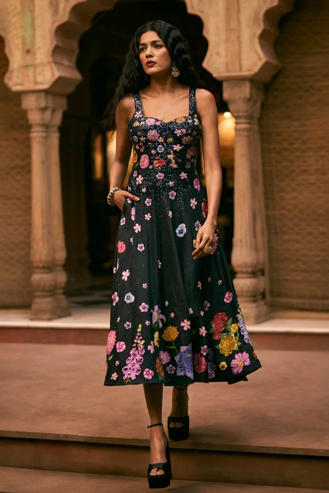
Rahul Mishra & Anr. v. John Doe & Anr. (CS/COMM 1194/2024)
In a significant win for Indian fashion and intellectual property rights, the Delhi High Court recently ruled firmly in favour of celebrated designer Rahul Mishra, sending a clear message to counterfeiters operating in the digital space. Faced with rampant misuse of his name and designs through rogue websites selling look-alike products, the Court granted an injunction, a remedy tailored for the ever-shifting online world. This order not only restrained the infringing website from using the RAHUL MISHRA mark and copyrighted designs but also empowered authorities to block future mirror or redirect websites that might spring up to evade enforcement. The judgment recognises the unique vulnerability of luxury and designer brands online. It reinforces that creativity, reputation, and craftsmanship deserve robust legal protection, especially in an era where imitation can travel faster than originality.
Adidas v. Steve Madden & Aviator Nation, 3:24-cv-00740, (D. Or.):
Adidas continued the aggressive enforcement of its iconic three-stripe trademark, filing suits against Steve Madden and Aviator Nation for using allegedly confusingly similar four- and five-stripe designs. These cases revived long-standing debates about the scope of trademark protection for simple design elements.
In a notable counteroffensive, Steve Madden filed an antitrust lawsuit, accusing Adidas of attempting to monopolize standard design features and stifle competition. The litigation put trademark and competition law on a collision course, forcing courts to balance brand protection against the risk of overreach in monopolising basic aesthetic elements.
PIL for Protection of Kolhapuri Chappal in India (2025 SCC OnLine Bom 2681):
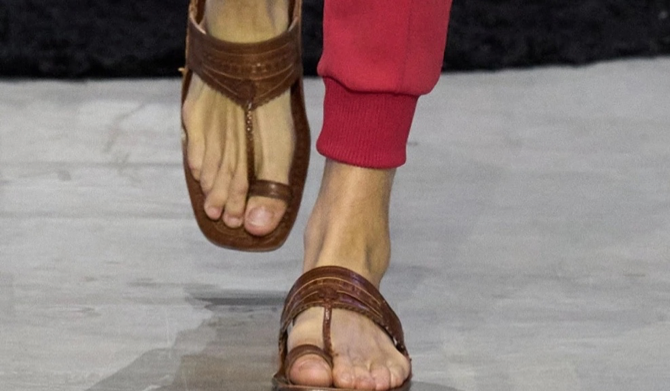
In July 2025, the Bombay High Court dismissed a Public Interest Litigation (PIL) challenging Italian fashion house Prada for allegedly using a design “deceptively similar” to the GI-tagged Kolhapuri Chappal in its Spring/Summer collection, holding that such claims cannot be pursued by way of a PIL under Article 226 and that only the registered proprietors of the GI—Rohidas Leather Industries & Charmakar Development Corporation Ltd. (LIDCOM) and Dr. Babu Jagjivan Ram Leather Industries Development Corporation Ltd. (LIDKAR)—are entitled to seek relief under the Geographical Indications of Goods (Registration and Protection) Act, 1999 through appropriate civil remedies. The Court emphasised that issues of GI infringement involve disputed questions of fact and statutory rights that must be enforced by the GI owners rather than through a PIL. However, it did not preclude the registered proprietors from initiating their own action under Sections 21–22 of the Act.
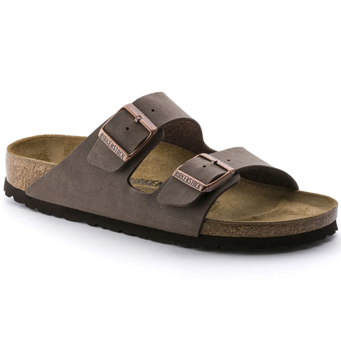
Birkenstock v. White Mountain Footwear LLC, 747 F. Supp. 3d 292:
In Birkenstock v. White Mountain Footwear, the German footwear brand accused White Mountain of producing “knockoffs” of its iconic clogs and sandals. The case spotlighted the challenges of trade dress protection for long-standing designs.
White Mountain’s defence- that Birkenstock waited nearly 30 years to enforce its rights- raised issues of delay, acquiescence, and laches. The outcome of this dispute has the potential to significantly influence how courts assess trade dress claims for legacy products that have existed in the market for decades without aggressive enforcement.
Hermès International & Anr. v. Macky Lifestyle Pvt. Ltd 2025 (SCC OnLine Del 8581):
In a trademark infringement suit brought by Hermès International & Anr. v. Macky Lifestyle Pvt. Ltd., the Delhi High Court on 24 November 2025 recognised the three-dimensional shape of the iconic Birkin bag, the “Hermès” word mark and two associated stylised marks as well-known trademarks under Section 11(6) of the Trade Marks Act, 1999, noting their extensive public recognition, long-standing use, global registrations and consistent enforcement efforts, and thereby granted the plaintiff’s prayer to have these marks formally declared well-known in India.
Van Cleef & Arpels v. Silversmiths (2:25-cv-01204 (D.N.J.)):
Luxury jewellery also saw strong judicial protection in Van Cleef & Arpels v. Silversmiths, where Richemont sued for alleged copying of the iconic Alhambra motif. The case reinforced the value of protecting non-conventional and iconic designs, even when they are simple, repetitive, or inspired by historical forms.
It underscored how luxury brands rely heavily on visual identity and how courts are increasingly willing to recognise and protect such distinctiveness against imitation.
Conclusion: 2025 as a Turning Point for Fashion Law
Together, these cases defined 2025 as a transformative year for fashion law. They demonstrated that fashion is no longer legally confined to questions of design copying alone but now intersects with competition law, consumer protection, data privacy, resale ethics, and technological innovation.
As fashion becomes faster, more digital, and more global, legal frameworks are evolving to ensure accountability without stifling creativity. The jurisprudence emerging from 2025 will likely shape how brands, designers, and platforms navigate rights, responsibilities, and reputations in the years to come.