

Dior commissioned Sylvain Chomet to draw its Christmas film by hand, reviving methods from the 1940s. Within days, animators were pausing it frame by frame and counting fingers. Prada, which published footage of its artists at work, has had no such week. In the year that images became free, proof turned out to be the expensive part.
In the winter of 1949, in a house at 30 Avenue Montaigne, a man takes a telephone call from Hollywood and is told that the world has decided to start seeing in colour.
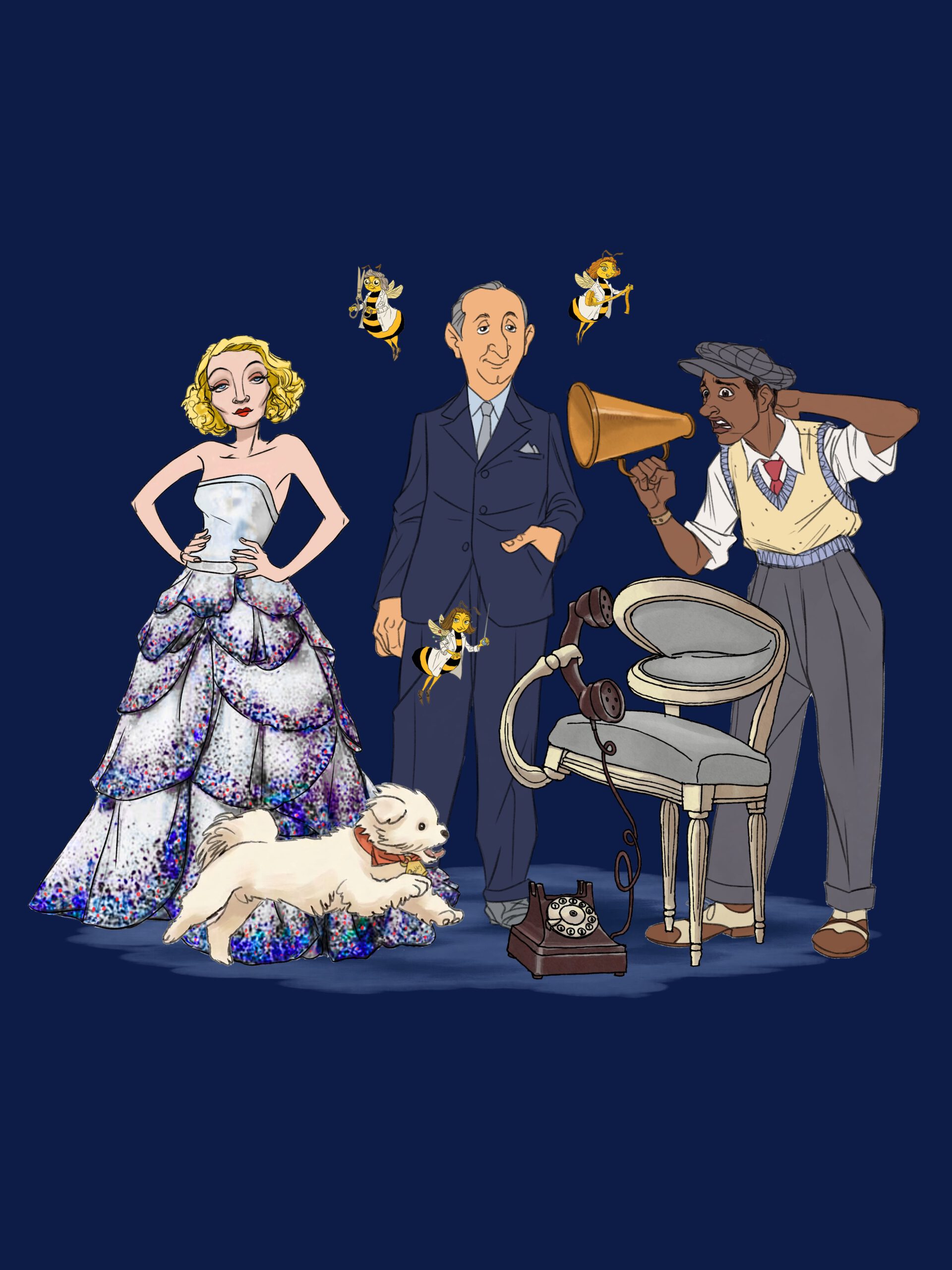
A director has abandoned black and white. His leading lady therefore requires a dress, and requires it before Christmas, and has made it plain that there is exactly one house she will accept. So the man climbs to the workrooms at the top of the building, where the lamps are still on, and asks a favour of the women he affectionately calls his bees. They work through the night. By morning there is a gown standing in the middle of the room that did not exist at dinner.
This is the plot of Christian Dior’s Night in Color, and it is a fairy tale of the oldest and strictest construction. An impossible commission. A deadline before daybreak. Helpers who labour while the world is asleep. Robert Pattinson narrates, Louis Garrel voices Dior and Camille Cottin voices Marlene Dietrich. Josh O’Connor plays a chair. Rihanna plays a lucky star, which is the sort of casting that only quite makes sense inside a story where a gown can be built in nine hours.
FLJ Insider Pro is open: live fashion law jobs and internships, five career guides and two roadmaps. Early bird USD 12/month. See what's inside
The woman waiting for it had form. Dior dressed Dietrich for Hitchcock’s Stage Fright, and she is said to have settled the matter with him during negotiations in four words. No Dior, no Dietrich. The gown in the film is drawn from Junon, autumn-winter 1949, which was silk tulle over horsehair with its flounces embroidered to suggest the eye in a peacock’s feather. The San Francisco Examiner, reaching for it that year, settled on petal after petal of green to royal sequins on pale blue tulle.
The bees were not a flourish either. Dior really did call his seamstresses that.
That is the story the house told. The trouble started with a hand.
What are the AI allegations against Dior’s Christmas film?
Within days of release, viewers began pausing the six-minute film and posting what they found. Warped lettering. A character with a lazy eye. A misplaced finger joint. Movement that ran choppily in places, as though frames were missing or had been filled in by something other than a person. The detail that travelled furthest was a woman’s hand that appeared to carry an extra half digit, and a film about handwork undone by a hand is the sort of irony the internet does not let go of.
Several of the people making the observation were professional animators, which is the part that gives it weight. An audience notices that something looks wrong. An animator can say which stage of the process it went wrong at.
None of this is established. Dior has not confirmed that any artificial intelligence was used, and the allegations remain allegations, assembled from screenshots by people with no access to the production. It is worth saying plainly, because the distance between a suspicion and a finding is the whole of the law of defamation and most of the practice of journalism.
What can be stated is the shape of the claim the house made. Jonathan Anderson described the film as all hand-drawn using techniques that go back to the 1940s. Chomet described the method himself: everything is cut out, and each character is animated separately. The end credits list a team of animators and make no mention of any AI tool. The behind-the-scenes material released alongside the film shows sketches.
And that, rather than the fingers, is where the week actually went wrong. The grievance running through the commentary turns on silence rather than on machinery. The credits, the captions and the behind-the-scenes film all decline to address the question, and a house that has spent this much to be seen working by hand might have found room for a line on the subject. One industry write-up reached for stolen valour, a phrase borrowed from people who wear medals they did not earn, which tells you precisely how the charge is being understood. What is being alleged is a false provenance claim, and provenance is the one thing this industry has spent two hundred years learning to police everywhere except in its own advertising.
Why luxury brands are hand-drawing their campaigns in 2026
Step back from Dior and the season looks less like a single misstep and more like a stampede.
Prada put out Drawing Prada, hand-animated by John Pomeroy, who animated at Disney on The Rescuers and The Fox and the Hound, left to help build Don Bluth Productions and make The Secret of NIMH, then returned for Pocahontas and Fantasia 2000. Glen Luchford shot the live action, and Pomeroy’s team drew the characters over it. Pomeroy, on why: I learnt my craft with pencil and paper, through traditional, analogue drawing.
Hermès rebuilt its website around hand illustrations by the French artist Linda Merad and left the grain of the paper visible, along with the unevenness in the colouring. Oribe gave its entire holiday collection over to the French mosaic artist Mathilde Herrero. Balenciaga, Rimowa, Loewe, Lemaire and Bottega Veneta have all spent this season’s budget in roughly the same direction, to the point where one trade assessment described animation and illustration as the key weapons in craft marketing.
The most revealing line in any of it comes from Merad, describing what Hermès actually asked her for. They wanted to create the impression that the art was made by a human.
Sit with the shape of that sentence. A house commissioned a living illustrator, in ink, on paper, in order to produce the impression of a living illustrator. The grain was not left in because paper has grain. The grain was the deliverable. Merad’s own explanation is that there is more charm and humanness in the imperfections than in something that looks more robotic, which means the flaws have been promoted from a by-product of handwork into the reason for buying it.
Authenticity has become an effect, with a budget and a brief. Dior’s week is what happens when the effect is purchased, and the thing it stands for is not independently verifiable.
Why a technology stops being useful to luxury once it is free
The mechanism underneath all of this has very little to do with taste.
A technology is useful to luxury for exactly as long as most people cannot have it.
Photography qualified for the better part of a century. In 1913 Vogue appointed Baron Adolph de Meyer as its first official fashion photographer, which tells you roughly what the medium cost at the time. The job appeared to require a camera and a title. By August 19,55 Richard Avedon was standing in the Cirque d’Hiver in Paris with live elephants, a Dior gown by a nineteen-year-old Yves Saint Laurent, among the first he was permitted to submit at the house, and Dovima, who was paid sixty dollars an hour when the top rate in the business was twenty-five and who was known accordingly as the Dollar-a-Minute Girl. Avedon’s own account of how it came about is that he saw the elephants under an enormous skylight and in a second knew that he then had to find the right dress. Every element in that frame was expensive, and the expense is most of why the picture still works. Nobody has ever looked at it and thought it was easy to get.
Computer-generated imagery had a shorter run on the same logic. In January 2016 Louis Vuitton cast Lightning, a character from Final Fantasy XIII, in its Series 4 campaign, and much of the point was that almost nobody else was in a position to do it. A convincing woman who did not exist took a studio, a licence and a budget.
Generative imagery collapsed that interval to roughly eighteen months. It went from novel to ubiquitous to free before the industry had finished drafting its guidelines, and the moment a fifteen-year-old can make the same picture on a bus, the picture stops being able to say anything whatsoever about the person who commissioned it.
So the houses have done the only arithmetic left to them. If the cheap tool cannot signal, buy the expensive one. And the most expensive image-making still standing, the one thing that cannot be compressed or accelerated or handed over to a machine, is a person drawing the same woman four hundred times until she appears to walk across a room.
For a few decades, the cost of an image sat inside the equipment, where nobody could see it. It has gone back into hands, where you can. Which is precisely why anyone can now go looking to see whether it is actually there.
Why Prada’s behind-the-scenes footage matters more than its film
Prada has had a serene week, and the reason is instructive.
It released its campaign with footage of the animation process attached. Pencils, paper, the artists at the desk, the drawings accumulating. That material functions as evidence, published alongside the claim it supports, and it is the reason nobody is pausing Prada’s film to count anything.
Dior’s behind-the-scenes material showed sketches, which demonstrates that drawings exist. It does not demonstrate that the finished frames came from them, and that gap is the entire argument of the past week.
So the deliverable has quietly changed. For most of advertising history, the image was the product and the making of it was a secret worth keeping, because an audience that saw the lights and the wires would enjoy the picture less. Craft marketing inverts that completely. If the selling point is that human beings made this, then the film is merely the claim, and the proof has to ship with it.
Which gives the houses a problem they have never had to solve before. Fashion has spent two centuries building apparatus to authenticate objects. Hallmarks, serial numbers, certificates, the Gübelin report, the little card in the box. It has built nothing whatsoever to authenticate its advertising, because nobody ever thought to ask whether an advertisement was really made the way it said it was. Prada’s making-of video is, functionally, a hallmark. It is also entirely voluntary, unstandardised, and no more verifiable than anything else a brand publishes about itself.
What AI actually threatens in the luxury business
The anxiety here was never about advertising.
Luxury rests on one claim, which is that human hours are worth paying for. The hand-rolled hem. The eight hundred hours. The woman in Solomeo or the Marais who has done a single thing for thirty years and does it better than any machine can. Take that away, and a four-thousand-euro coat is a pricing decision with nothing underneath it.
Artificial intelligence has no quarrel with the dress. Its quarrel is with the sentence that justifies the dress. If a house will sell you an image made by a machine and expect you not to mind, the obvious next question is what else it has already decided you will fail to notice, and whether the hours you are paying for are still in the garment.
That is why the finger matters so far out of proportion to its size. Nobody genuinely believes that a half-rendered knuckle in a Christmas cartoon is a scandal. What it does is invite a customer to extend the question inward, from the advertisement to the atelier, and that is a direction no luxury house wants a customer’s mind travelling in December.
Which is also why the silence is expensive. A house that can say the film was drawn by people, and say it precisely, has a very short path out of this. Every day it does not is a day the audience spends assuming the answer is complicated.
Fashion Illustration History: Drawing Fashion Before Photography
The magazine covers were illustrations into the 1930s. The houses opened with sketches. Dior himself worked as a freelance sketch artist from 1934 to 1937, selling drawings of hats and then of dresses to milliners and couture houses, and his first public recognition came when Le Figaro printed them. The thing being described this season as a radical creative choice is the oldest method this industry has for telling you what it has made.
It took a machine capable of drawing anything, instantly, for nothing, to send the whole business back to a man with a pencil and several months.
The trade has a phrase for the people who do that kind of work. Not the designers, not the houses, and never the name that ends up on the label. Petites mains. Little hands.
The bees in the film have names. Paulette. Yvonne. Madame Marguerite. Each one is taken from a real craftsperson, and the credits roll past a list of animators, and whether every frame between them was made by a human being is a question the house could settle in a sentence and has not.
In the meantime, the argument is being conducted a finger at a time, by people stopping a six-minute film on a laptop and leaning in, which is very close to the amount of attention Dior was asking for.
FASHION LAW JOURNAL INSIDER
Join designers, brand founders and fashion lawyers who get the biggest brand battles, IP fights and career moves in fashion law, straight to their inbox.