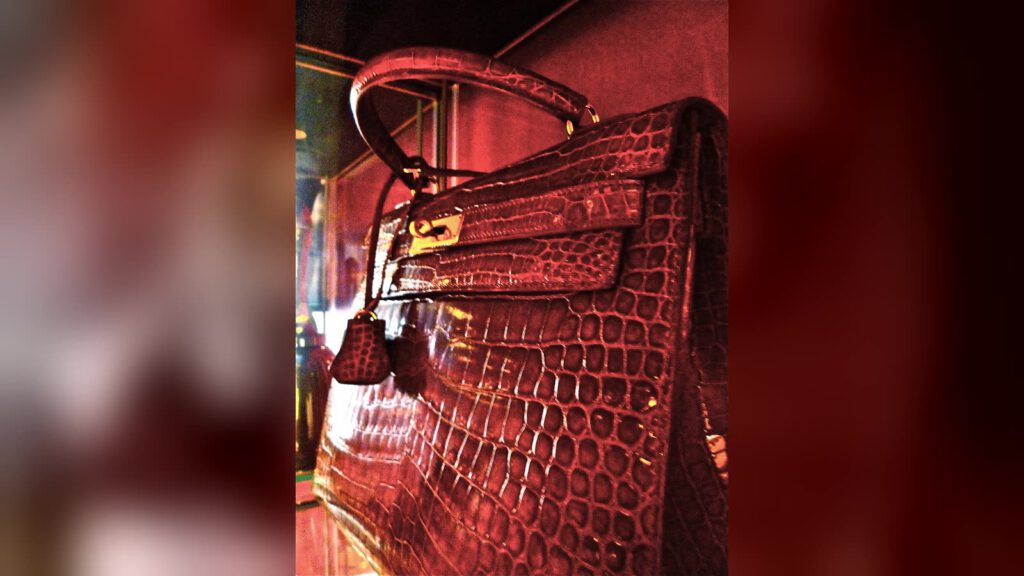
Most counterfeit cases end with a default judgment against an online seller who never turns up in court. Richemont v Malidani is different. The defendant was a real jewellery business that hired a lawyer, filed an answer and denied everything, and then, eleven months later, signed a consent judgment admitting Cartier’s and Van Cleef & Arpels’ rights, paying $205,000 and agreeing to destroy its stock. The products were not cheap fakes either: according to the complaint, as summarised by the law firm Foley, they sold for $1,500 to $9,000. This article explains what the case was about, what the final judgment says, and what it tells brands, retailers and buyers about the high end of the counterfeit market.
Short answer: Richemont v Malidani was a federal trademark, trade dress and design patent case in New York over jewellery that copied Cartier’s LOVE and Juste un Clou designs and Van Cleef & Arpels’ Alhambra motif. It ended on 7 July 2026 with a final judgment on consent: Malidani paid $205,000, accepted a permanent injunction and agreed to destroy its remaining stock.
Key takeaways
- Richemont International SA, Cartier and Van Cleef & Arpels sued Malidani Jewelry Corp. in the Southern District of New York on 30 July 2025 (No. 1:25-cv-06284), before Judge Loretta A. Preska.
- The claims covered trademark counterfeiting, registered trademark and trade dress infringement, unfair competition and infringement of two Alhambra design patents.
- The final judgment on consent, filed 7 July 2026, orders a $205,000 payment, destruction of inventory and a permanent injunction, with $7,500 in liquidated damages for each different product sold in breach.
- Malidani admitted it never made the jewellery itself. Buying and reselling lookalikes was enough to expose it to liability.
What was Richemont v Malidani about?
The plaintiffs were Richemont International SA, part of the Swiss-based Richemont group, and Van Cleef & Arpels and Cartier, both divisions of Richemont North America, Inc. The defendant was Malidani Jewelry Corp. FLJ’s explainer on who owns Cartier sets out how the group and its maisons fit together.
The complaint targeted four of the most recognisable designs in fine jewellery:
FLJ Insider Pro is open: live fashion law jobs and internships, five career guides and two roadmaps. Early bird USD 12/month. See what's inside
- Cartier LOVE: the screw-motif bracelet, plus rings and earrings in the same style, claimed as trade dress.
- Cartier Juste un Clou: the nail-shaped bracelet and related pieces, also claimed as trade dress.
- Van Cleef & Arpels Alhambra: the four-leaf quatrefoil shape, claimed as trade dress.
- Alhambra Guilloché design: the quatrefoil with a beaded edge and engraved centre, protected by US design patents D909,906 and D906,866.
According to Foley’s summary of the complaint, Richemont’s representatives visited Malidani’s store and found bracelets, rings and pendants that copied these designs, priced from $1,500 to $9,000, with many between $2,800 and $6,000. The complaint also alleges that a store representative suggested the investigator visit a Cartier boutique to “compare prices and confirm that the differences are undetectable”. Those are allegations from the complaint, not findings of the court.
That price point is why lawyers watched the case. Reed Smith used it as an example of brands focusing enforcement on high-tier imitations, the so-called superfakes that sell for thousands rather than tens of dollars. A copy priced close to the original competes for the same buyer, which makes the confusion argument stronger. FLJ’s guide to the fake Rolex trade shows the same shift in watches.
What claims did Cartier and Van Cleef & Arpels bring?
The judgment lists the claims in full. They were trademark counterfeiting and infringement of registered trademark and trade dress under Section 32(1) of the Lanham Act (15 U.S.C. § 1114(1)), unfair competition under Section 43(a) of the Lanham Act, design patent infringement under 35 U.S.C. § 271, and common law trade dress infringement and unfair competition.
Pairing trade dress with design patents is a deliberate strategy for jewellery. Trade dress protects a product shape that consumers recognise as coming from one source, but the owner must prove that recognition (secondary meaning) and that the shape is not functional. A design patent protects the ornamental look of an article for a fixed term without any need to prove consumer recognition. Using both gives the brand two routes to the same result. FLJ’s piece on trade dress in fashion explains the tests in more detail.
Malidani did not roll over. It answered on 19 September 2025, denied the allegations and raised seven affirmative defences. According to Reed Smith, these included arguments that the designs were functional and lacked secondary meaning, and that any resemblance was descriptive or fair use. Those are the standard attacks on shape protection, and the consent judgment means no court ever ruled on them.

How did the case unfold?
The court docket shows a case that moved quickly into settlement-focused discovery.
| Date | Event |
|---|---|
| 30 July 2025 | Complaint filed in the Southern District of New York, with exhibits of the registrations and a design patent |
| 31 July 2025 | Case assigned to Judge Loretta A. Preska |
| 19 September 2025 | Malidani files its answer, denying the claims, with a jury demand |
| 7 October 2025 | Initial pretrial conference |
| 6 November 2025 | Stipulated confidentiality agreement and protective order signed |
| 13 April 2026 | Status conference; parties ordered to report by 20 April on settlement-related discovery |
| 7 July 2026 | Final judgment on consent filed |
Foley noted in March 2026 that the protective order appeared to relate to limited discovery into Malidani’s accounting, and suggested a settlement might follow. That is how it played out. The signature pages show the parties signed in June 2026 in Geneva and New York, and the judge entered the judgment in July.
What does the final judgment on consent require?
The final judgment on consent is eight pages long. Judgment is entered for the plaintiffs on every claim. Before the operative terms, Malidani makes admissions that the judgment describes as material terms the court relied on:
- it acknowledges the plaintiffs’ exclusive rights in the Alhambra trade dress, the Alhambra Guilloché design, the LOVE trade dress and the Juste un Clou trade dress;
- it has stopped selling products bearing those designs, or the CARTIER, VAN CLEEF or VCA names;
- it never manufactured any of the infringing products; and
- it has stopped buying infringing products from anyone.
| Term | What it says |
|---|---|
| Payment | $205,000 to the plaintiffs within five business days, on pain of contempt |
| Destruction | Sworn certificate within five days that all remaining infringing stock is destroyed; photos or video within seven days |
| Injunction | Permanent ban on copying the four designs or using the Cartier and Van Cleef & Arpels names, in any store, website or social media |
| False statements | $5,000 for each representation the court finds materially false |
| Future breaches | $7,500 liquidated damages per different product sold in breach, plus profits, investigation costs and legal fees |
| Costs and appeal | Each side pays its own costs; both waive any right to appeal |
The breach provisions do as much work as the payment. The profit formula is set out in advance: Malidani must list what it bought from third parties and what it sold it for, and the plaintiffs take the difference. The court keeps jurisdiction to enforce the judgment, so a repeat would go back to Judge Preska as contempt rather than starting a new lawsuit.
Why is $205,000 a meaningful number?
It can look modest next to headline counterfeit awards. Under 15 U.S.C. § 1117(c), a brand can elect statutory damages of $1,000 to $200,000 per counterfeit mark per type of goods, rising to $2 million where the counterfeiting is wilful. Those big numbers usually come in default judgments against sellers who never defend and never pay.
A consent judgment against a defended, identifiable business works differently. The money is likely to be paid, the defendant has admitted the brand’s rights on the record, and the liquidated damages clause makes any relapse expensive and simple to prove. For a brand, a signed admission that the LOVE, Juste un Clou and Alhambra designs are its exclusive trade dress is useful against the next seller too, even though it binds only Malidani.
What does the case mean for jewellers and resellers?
The most practical lesson sits in Malidani’s admission that it never made the jewellery. US trademark law does not excuse a retailer because someone else manufactured the goods. Selling and offering for sale are enough. If a store buys lookalike pieces from a supplier and sells them, it carries the risk.
- Jewellers: a design that recreates a famous shape, even unbranded and even in real gold, can infringe trade dress or a design patent. “Inspired by” is not a defence if the overall look causes confusion.
- Resellers: keep records of where stock comes from. A supplier’s word is not a defence, and the judgment shows how a brand can claw back the margin on every piece.
- Buyers: a high price does not prove authenticity. Superfakes are priced to look plausible. Buy from the brand or a reseller that authenticates and offers refunds.
The line between a lawful lookalike and an infringing copy is explained in FLJ’s guide to dupes vs counterfeits. Cartier has also fought over LOVE in Europe; FLJ covered a separate Paris case in Société Cartier International AG v Goussin. For a wider view of how Cartier builds and protects its icons, the Brand Case Study Pack includes a full Cartier chapter.
What does the case not decide?
Because the parties settled, there is no ruling on Malidani’s defences of functionality, lack of secondary meaning or fair use, and no finding on how many pieces were sold. The judgment is not a precedent that binds other courts. Its value is practical: it shows how a luxury group can take a defended high-end copyist from complaint to admission, payment and destruction in under a year, and it gives other retailers a clear picture of what that outcome costs.
Frequently asked questions
Who won Richemont v Malidani?
Richemont, Cartier and Van Cleef & Arpels. On 7 July 2026 the court entered a final judgment on consent in their favour on every claim, including trademark counterfeiting, trade dress infringement and design patent infringement.
How much did Malidani have to pay?
$205,000, within five business days of the judgment. Each side bears its own legal costs. Future breaches carry $7,500 in liquidated damages per different product, plus profits and enforcement costs.
Which Cartier and Van Cleef & Arpels designs were involved?
Cartier’s LOVE and Juste un Clou collections and Van Cleef & Arpels’ Alhambra motif, including the Alhambra Guilloché design protected by US design patents D909,906 and D906,866.
Was Malidani the manufacturer of the fakes?
No. Malidani admitted in the judgment that it never manufactured the infringing products and had stopped buying them from third parties. Selling them was enough to make it liable.
Is Richemont v Malidani a precedent?
Not in the usual sense. A consent judgment records what the parties agreed and the court approved; it does not decide contested legal questions such as functionality or fair use, so it does not bind other courts.
What are superfakes?
High-quality copies of luxury goods that closely match the originals and often sell for thousands of dollars. Brands increasingly target the sellers of these goods because the higher price makes buyer confusion more likely.
This article describes court filings as of 11 November 2026. Allegations in the complaint were not tested at trial. This article is general information, not legal advice.
Featured image: Photo: Kidfly182 via Wikimedia Commons, CC BY 4.0
FASHION LAW JOURNAL INSIDER
Join designers, brand founders and fashion lawyers who get the biggest brand battles, IP fights and career moves in fashion law, straight to their inbox.