






In the endeavor to promote sustainability in the fashion industry, upcycling has risen as a trend. It is indubitable that we live in an age of overproduction and overconsumption. However, with customers becoming more environmentally conscious, new ways to create and consume fashion have emerged. Upcycling is an especially popular one.
The term upcycling refers to the process that has the objective of modifying an existing product in a way that adds value to it. This practice promotes sustainability by amplifying the life of existing products and minimizing the demand for resources required to manufacture new ones.
Upcycling should not be confused with recycling; although both practices contribute to sustainable production, upcycling carries a greater potential for infringing intellectual property laws. While recycling involves breaking down materials into their basic components, upcycling repurposes items without altering the substance of their external characteristics.
In the fashion industry, the implementation of upcycling involves using pre-existing garments or components of them -such as a textile or an ornament- and reimagining them into new pieces.
The Facts: Hermès v. Maison R&C
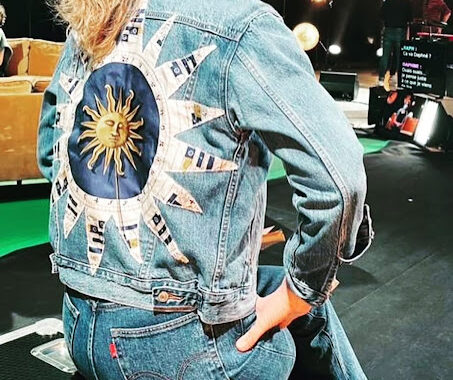
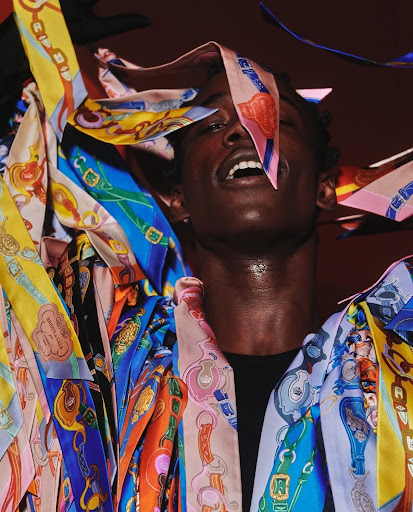
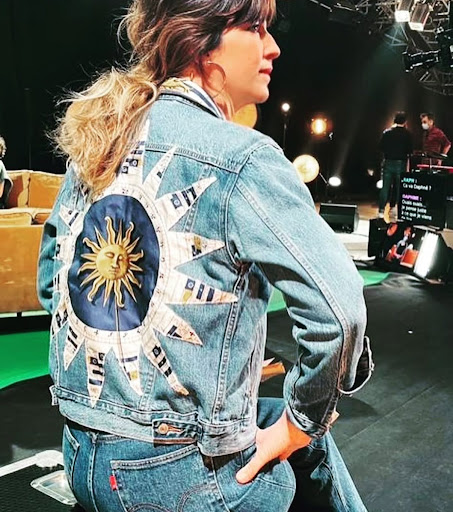
In April 2025, the Paris Judicial Court delivered a landmark decision in a case that opposed luxury powerhouse Hermès against the independent Parisian label Maison R&C. The dispute arose after Maison R&C released denim jackets made from repurposed Hermès silk scarves, in an attempt of commercializing upcycled pieces that contained materials created by Hermès and printed with the brand’s designs such as “Astrologie” and “Brides de gala”.
Hermès alleged copyright and trademark infringement, arguing that brand identifiers were reproduced without authorization. The luxury brand also claimed unfair competition, asserting that Maison R&C’s marketing exploited Hermès’ reputation in acts such as using “#Hermes” for their online posts.
Maison R&C denied any infringement and questioned the originality of Hermès’s designs, therefore challenging the existence of rights derived from copyright recognition. The label also implicitly relied on the exhaustion of rights principle, suggesting that once the scarves had been lawfully sold, Hermès’s control over their resale had ended.
The Court’s Reasoning
The tribunal rejected the application of the exhaustion of rights principle because the scarves were materially altered, creating new reproductions. The court found that exhaustion applied only to the original, unaltered scarves.
It was also held that the “Hermès” mark displayed on the jackets and the Instagram hashtag were identical to the registered sign and used in the course of business, therefore constituting trademark infringement.
Bigger Picture: When Sustainability Meets Exclusivity
Here’s where things get complicated.
Upcycling is the golden child of sustainable fashion; it is creative, conscious, and circular. But luxury houses like Hermès have spent over a century building not just products, but recognition of craftsmanship. Every print and every logo is part of that story; even every stitch comes with an expectation of quality.
So when an independent label starts cutting up Hermès silk and turning it into denim jackets, it’s not just fabric on trial, it’s the idea of who gets to redefine luxury.
Hermès didn’t sue because of denim. The reason for the litigation is that the upcycling of the brand’s products came with the question of: who gets to decide what counts as a Hermès creation?
The court’s answer was clear: not the upcycler.
This case highlights the tension between artistic freedom and brand control. Designers often see upcycling as a form of creative expression, while luxury brands perceive it as a threat to the public’s perception of the brand and consequently to the integrity of its image. The debate exposes the deep philosophical discrepancy of whether fashion should remain an exclusive art form guarded by trademarks or evolve into a more open field where creativity can thrive on reinvention.
A Comparative and Future Perspective
Other courts may encounter similar disputes soon as sustainable fashion expands. In the United States, for instance, the doctrine of “fair use” might provide limited flexibility for transformative uses, though outcomes often depend on the commercial purpose and degree of transformation.
As for the present, there hasn’t been a similar case that generates an understanding of the United States’ courts’ perspective on upcycling. Cases like Chanel v. up‐cycling jeweler Shiver + Duke in 2021 and Levi’s v. Coperni in 2023 would have resulted in an American precedent on the dilemma; however, both of them were settled.
As sustainability increasingly becomes a subject of legal dispute in the fashion industry, lawmakers may eventually need to define clearer standards for upcycled creations, and therefore determine when transformation becomes sufficiently original to stand on its own and become a completely new product. In this context, the Hermès v. Maison R&C case may become an early precedent that influences how courts worldwide interpret the intersection between ethical production and proprietary rights.
Implications for Sustainable Fashion
Although Hermès v. Maison R&C concerned copyright and trademark infringement, its consequences reach far beyond the courtroom.
Even if the defendants did not invoke arguments related to environmental intent as a defense, the judgment’s implications for sustainable fashion are significant.
For designers pursuing upcycled models, this judgment serves as a caution: sustainability and legality must evolve together. Moving forward, innovation in fashion will require not only ecological awareness but also legal literacy that allows further knowledge about obtaining licenses and seeking permissions.
The judgment also raises essential questions for the industry: Is it fair to expect a fashion industry that advances towards sustainability when the protection of the image of luxury brands overlays that intent? Or must the law evolve to recognize new forms of transformation as legitimate creative acts in favor of sustainability?
Ultimately, the tribunal established a crucial boundary: sustainability cannot override authorship. The future of circular fashion will depend on finding harmony between ethical production and legal protection.
References:
Calboli, I. (2023, July 28). Upcycling, sustainability and IP: What it means for the world of fashion. WIPO Magazine. https://www.wipo.int/en/web/wipo-magazine/articles/upcycling-sustainability-and-ip-what-it-means-for-the-world-of-fashion-56361
Fordham Intellectual Property, Media & Entertainment Law Journal. (2022, April 11). Upcycling × first-sale doctrine.https://www.fordhamiplj.org/2022/04/11/upcycling-x-first-sale-doctrine/
The Fashion Law. (2023, September 11). Levi’s is suing Coperni over tab trademarks, reworked jeans.https://www.thefashionlaw.com/levis-is-suing-coperni-over-tab-trademarks-reworked-jeans/
Tribunal judiciaire de Paris. (2025, April 10). Hermès International & Hermès Sellier v. Maison R&C, Atelier R&C & Mme Géraldine Lugassy Demri, No. 22-10720. https://cdn.prod.website-files.com/601987a724bdae251872ed2c/682371ab47c5a7cbfcb5bfee_TJ%20Paris%2C%2010%20avril%202025%2C%20n%C2%B022-10720.pdf
U.S. Copyright Office. (s. f.). 17 U.S.C. § 107: Limitations on exclusive rights: Fair use (Title 17 of the United States Code). Recuperado el 31 de octubre de 2025, de https://www.copyright.gov/title17/92chap1.html#107
Author: Viviana Sofía Chavarría Medrano

Viviana is a law student at the University of Costa Rica (UCR). She is passionate about fashion law and human rights, and how these two fields connect through the legal promotion and oversight of sustainable production in the fashion industry. She loves books, learning, hiking, tennis, and, above all, fashion design.











Loved this take. Such a great article!!