

Karl Lagerfeld ran two of Europe’s biggest fashion houses at once for more than three decades, launched a label under his own name, and turned his ponytail, dark glasses and high white collar into a character as recognisable as any logo. When he died in Paris on 19 February 2019, he left behind a set of legal questions that are still being answered: what exactly his deals with Chanel and Fendi said, who owns the name “Karl Lagerfeld”, and who gets his fortune. Some of those answers are on the public record. Many are not, and a lot of what circulates online is guesswork. This guide separates the two, as of 18 November 2026.
Short answer: Karl Lagerfeld was Chanel’s creative director from 1983 until his death on 19 February 2019, and Fendi’s from 1965. Reports say he held lifetime contracts at both, but the terms were never published. His own label is wholly owned by G-III Apparel Group since 2022. His estate, reported at about €200 million, faces a will challenge and a French tax inquiry.
Key takeaways
- Lagerfeld worked for Fendi from 1965 and became Chanel’s couturier in 1983, holding both roles until he died in 2019.
- CNN reported that he had lifetime contracts at Chanel and Fendi; no salary, fee or contract terms have ever been made public.
- The Karl Lagerfeld brand belongs to G-III Apparel Group, which bought the remaining 81% for €200 million in June 2022, so his name is a company asset.
- His 2016 will favoured his inner circle and made provision for his cat, Choupette; in February 2026 it was reported to be under challenge, with French tax authorities examining whether he really lived in Monaco.
Who was Karl Lagerfeld?
Lagerfeld was born in Hamburg, in 1933 or 1938 depending on the source; he was always vague about his age, and WWD’s obituary gives both years. After early work at Balmain and Patou, he made his name at Chloé, then began working with the Roman fur house Fendi in 1965. Chanel’s owners, the Wertheimer family, hired him in 1982, initially for couture, and he showed as the house’s couturier from 1983. A year later he launched his own label.
| Year | Event |
|---|---|
| 1965 | Starts working with Fendi in Rome; stays its creative director until his death |
| 1982 to 1983 | Hired by Chanel for couture; becomes the house’s creative director in 1983 |
| 1984 | Launches his signature fashion house |
| 2016 | Finalises the will now reported to be under challenge |
| 19 February 2019 | Dies in Paris, aged 85 by most reports; Chanel names Virginie Viard to lead its collections |
| December 2021 to May 2022 | Sotheby’s sells his possessions in Monaco, Paris and Cologne |
| June 2022 | G-III Apparel Group takes full ownership of the Karl Lagerfeld brand |
| May 2023 | The Met’s “Karl Lagerfeld: A Line of Beauty” exhibition and Met Gala |
Sources: WWD, CNBC, G-III Apparel Group, The Metropolitan Museum of Art, Evening Standard.
FLJ Insider Pro is open: live fashion law jobs and internships, five career guides and two roadmaps. Early bird USD 12/month. See what's inside
What do we actually know about his Chanel contract?
Very little, and that is normal. Chanel is a private company controlled by the Wertheimers, and neither the house nor Lagerfeld published his contract. The most specific reporting is that he had lifetime contracts at both Chanel and Fendi, which CNN said meant he “never worried about his standing in either company”. CNBC’s obituary confirms the basic structure: creative director of privately owned Chanel from 1983, and Fendi’s creative director from 1965 until his death.
Figures you may see online for his Chanel salary, bonuses or a share of profits are not on the record and should be treated as rumour. What can be said is what a contract of this kind usually has to deal with, because those issues apply to every creative director at a major house:
- Ownership of the work. Designs, sketches and collections created for the house normally belong to the house, by employment law or by assignment in the contract.
- Use of the designer’s name and image. Lagerfeld’s face appeared in Chanel campaigns and his own brand ran alongside. Any overlap has to be managed by contract.
- Exclusivity and side projects. Working for Chanel, Fendi and his own label at once required both houses to accept the other roles.
- What happens at the end. A “lifetime” arrangement shifts the question to succession: who takes over the studio and on what terms.
FLJ’s history of Coco Chanel, the Wertheimer deal and the fight for her name shows how differently the founder’s own arrangements with the same family turned out.
Who owns the Karl Lagerfeld brand and name?
Not his heirs. The label has changed hands several times. WWD’s obituary traces the history: Lagerfeld signed with Bidermann Industries in 1983 and launched his house in 1984; Dunhill acquired the business in 1992 and he later bought it back for a symbolic franc; Tommy Hilfiger then bought the signature business for around $30 million, and in 2010 the brand was repositioned in the more affordable “masstige” segment with a focus on online sales.
The latest owner is G-III Apparel Group, the New York company behind DKNY and Donna Karan. On 2 June 2022 it completed the purchase of the remaining 81% of the brand for €200 million, subject to adjustments, from investors led by Fred Gehring of Amlon Capital. G-III says the brand is “wholly owned by subsidiaries” of the group.
This is the central legal point about designer names. Once a name is registered as a trade mark and sold with the business, it belongs to the business, even if the designer is alive and working elsewhere. In the EU, the Court of Justice confirmed in Emanuel v Continental Shelf 128 (2006) that a trade mark matching a designer’s name cannot be refused or revoked as deceptive for that reason alone after it has been assigned. FLJ’s analysis of what happens when the name remains but the house is gone looks at the same issue from the insolvency side.
What happened to Karl Lagerfeld’s estate?
Lagerfeld had no children and his sisters died before him. His estate has been widely valued at about €200 million. In February 2026 the Evening Standard, following a report in The Times, said an unidentified claimant had contested the will he finalised in April 2016. According to that report, the will benefits the people he called his “real family”: his long-time assistant Sébastien Jondeau, his godson Hudson Kroenig, and the models Brad Kroenig and Baptiste Giabiconi. It also made provision for his Birman cat, Choupette, and gave his former housekeeper, Françoise Caçote, a house and a reported $1.5 million and asked her to care for the cat.
The same report said tax authorities were examining whether his main residence was in Paris rather than Monaco, which could produce an unpaid bill of €20 million to €40 million. If the will were annulled, French inheritance rules would pass the estate to his next of kin, including nieces and nephews. As of 18 November 2026 no ruling on the challenge or the residence question has been reported.
Three legal points explain why this is complicated:
- Residence decides more than tax. Under the EU Succession Regulation, the law governing an estate is generally that of the state where the person was habitually resident at death. Monaco is not in the EU, so where he really lived matters for both the tax bill and the rules that apply.
- Pets cannot inherit. An animal cannot own property, so money “for Choupette” has to be held by a person or body charged with her care.
- No children, more freedom. French law reserves part of an estate for children. Lagerfeld had none, which gave him more room to leave his fortune to friends, and makes the validity of the will itself the main battleground.
What happened to his possessions?
His estate sold his personal collections through Sotheby’s in a series of auctions. The first, in Monaco in December 2021, brought in about €12 million, roughly four times its estimate, according to WWD. A Paris sale followed the same month; ARTnews reported that one Chanel lambskin bag sold for €94,500, an auction record for a Chanel bag, and that the Monaco and Paris sales together passed $18 million. A final round in Cologne followed in May 2022 and included Choupette memorabilia. The proceeds went to the estate, which is part of why its size matters to the people now arguing over it.
Who replaced Karl Lagerfeld at Chanel?
Chanel moved quickly. On the day of his death it said Virginie Viard, his studio director and collaborator of about 30 years, had been entrusted by chief executive Alain Wertheimer with the creative work for the collections. Viard left in June 2024. On 12 December 2024 Chanel named Matthieu Blazy, then creative director of Bottega Veneta, as its artistic director, and his debut came at Paris Fashion Week in October 2025. Blazy remains in the role as of November 2026.
Fendi is now part of LVMH; FLJ’s guide to every brand LVMH owns explains how the group bought it. Lagerfeld’s legacy was formally recognised in 2023, when the Metropolitan Museum of Art opened “Karl Lagerfeld: A Line of Beauty”, with more than 200 objects from Chanel, Chloé, Fendi and his own label, and made him the theme of the 1 May 2023 Met Gala. Chanel funded the exhibition, with support from Fendi and the Karl Lagerfeld brand. FLJ’s list of Met Gala themes by year puts that night in context.
What does his career teach fashion businesses?
- A designer’s name can outlive their control of it. Lagerfeld’s name was owned by a series of companies for most of his career, and now by G-III.
- Long contracts need succession plans. Chanel’s same-day announcement suggests the house had prepared for the moment.
- A designer’s estate is a business in its own right. Archives, images, collections and even pets need clear legal owners and instructions.
- Silence is not a contract term. Where deals are private, writers and buyers should say what is known and what is rumour.
This article is general information based on public reports as of 18 November 2026. It is not legal or tax advice, and it does not suggest wrongdoing by any person named.
Frequently asked questions
When did Karl Lagerfeld die?
Karl Lagerfeld died in Paris on 19 February 2019. Chanel announced his death the same day and named Virginie Viard to lead the creative work on its collections.
How long was Karl Lagerfeld at Chanel?
He was hired in 1982 for couture and served as Chanel’s creative director from 1983 until his death in 2019, about 36 years. He worked for Fendi from 1965 at the same time.
Did Karl Lagerfeld have a lifetime contract with Chanel?
CNN reported that he had lifetime contracts at both Chanel and Fendi. The contracts themselves, including pay and other terms, have never been published, so specific figures should be treated as unconfirmed.
Who owns the Karl Lagerfeld brand now?
G-III Apparel Group owns it. G-III bought the remaining 81% for €200 million in June 2022, and says the brand is wholly owned by its subsidiaries. His heirs do not own the name.
Did Choupette inherit Karl Lagerfeld’s fortune?
Not directly. A cat cannot own property, so his will reportedly made provision for her care, with his former housekeeper asked to look after her. The bulk of the estate was left to people in his inner circle.
Who is Chanel’s designer after Karl Lagerfeld?
Virginie Viard succeeded him in 2019 and left in June 2024. Matthieu Blazy was named artistic director in December 2024 and showed his first Chanel collection in October 2025.
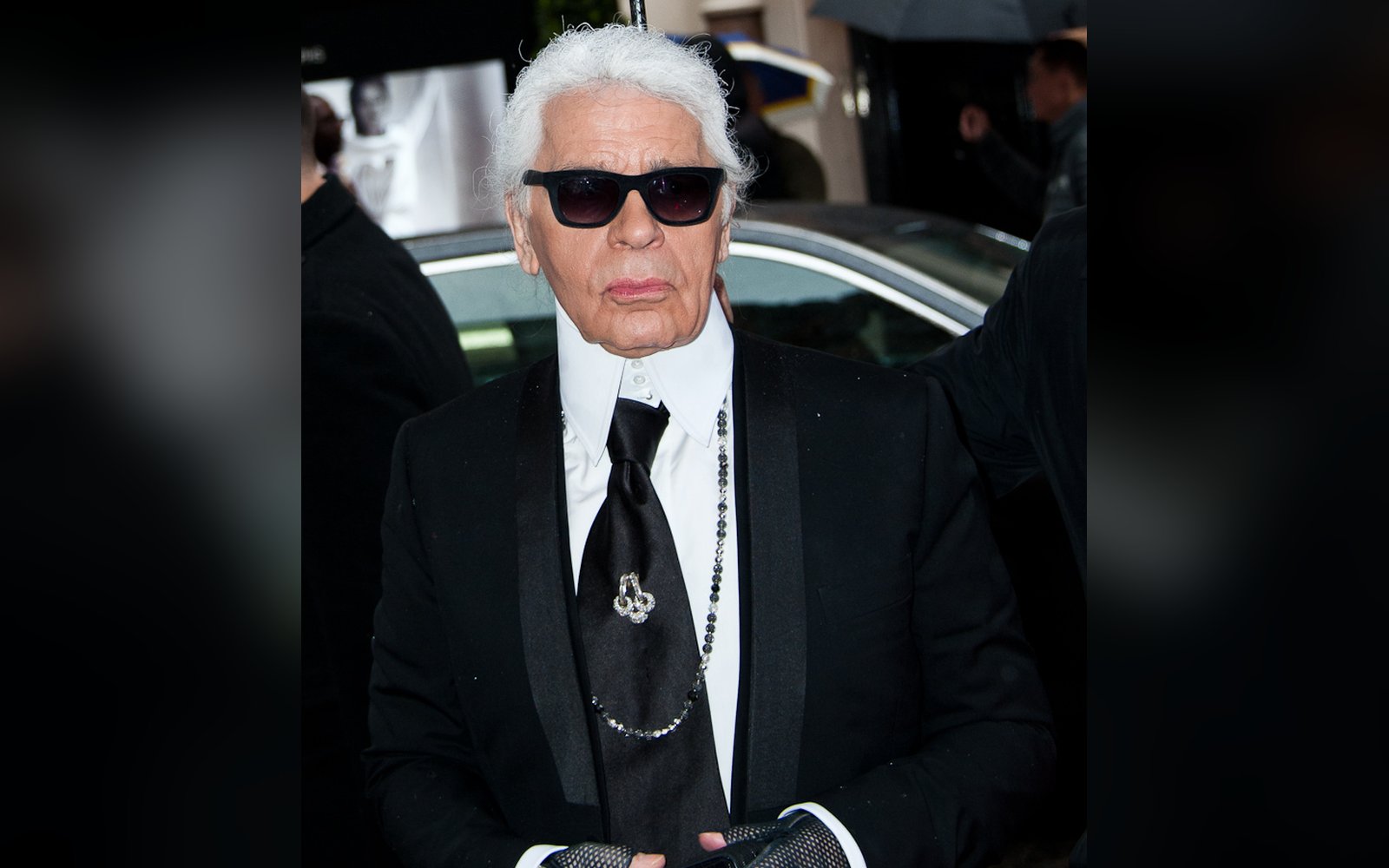
Featured image: Photo: Christopher William Adach via Wikimedia Commons, CC BY-SA 2.0 (adapted)
FASHION LAW JOURNAL INSIDER
Join designers, brand founders and fashion lawyers who get the biggest brand battles, IP fights and career moves in fashion law, straight to their inbox.