
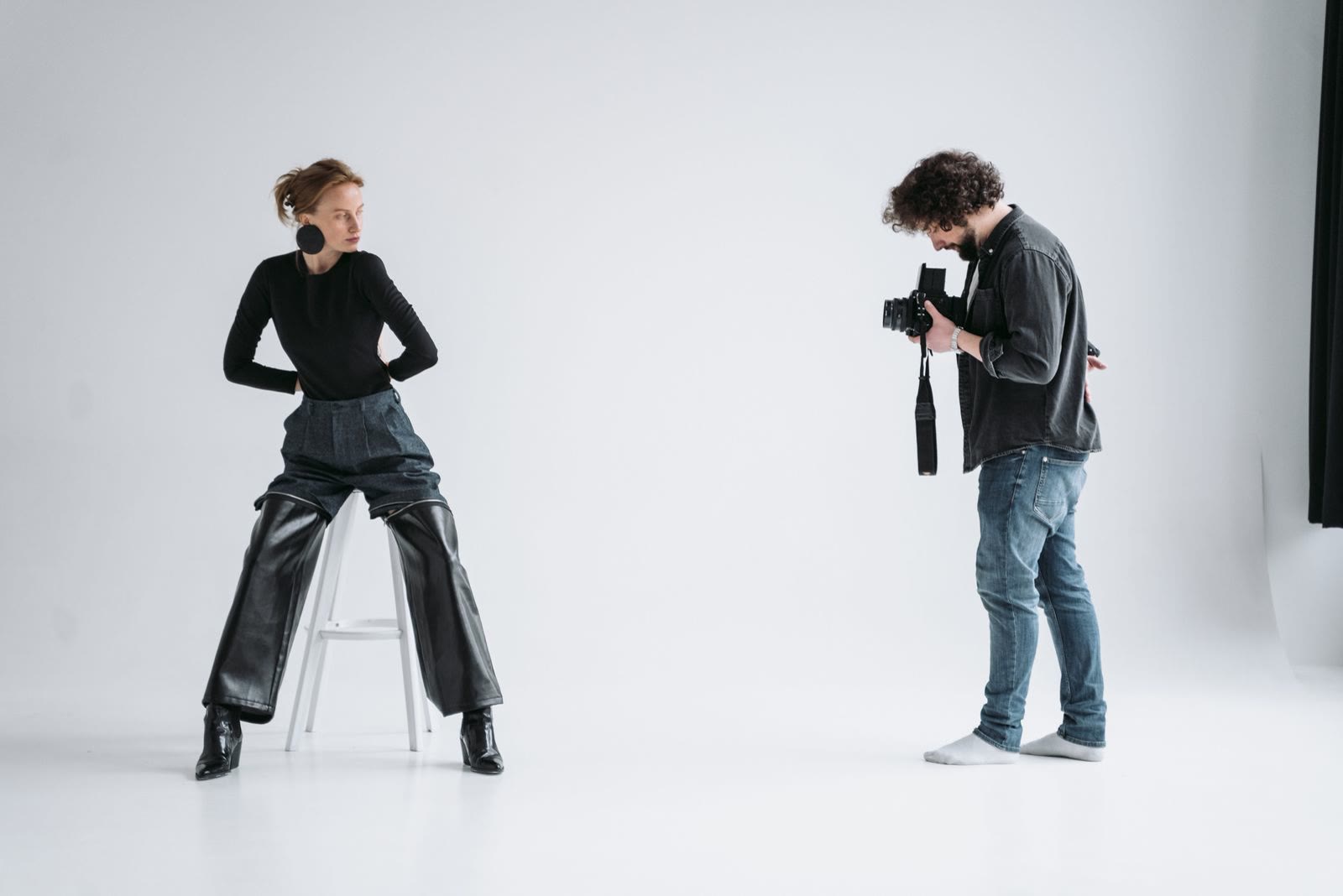
A model release is often the shortest document on a shoot and the one with the longest life. It is usually signed in a hurry, on a phone or a clipboard, between hair and make-up and the first frame. Years later it can decide whether a model’s face may appear on a billboard in another country, in a brand’s training data for an AI tool, or on a product the model would never have agreed to promote. This guide looks at the release itself: what it grants, what it does not, how it sits alongside the photographer’s copyright, and the clauses that models, photographers and brands should read before anyone signs.
Short answer: A model release is the model’s written permission for someone to use their name, face and likeness, usually for advertising or trade. It does not transfer copyright, which normally belongs to the photographer. A good release names the photographs, the media, the territory, the duration and the fee, and says expressly whether digital replicas or AI alterations are allowed.
Key takeaways
- A model release licenses the model’s right of publicity or image rights; it is a separate document from any copyright licence or assignment from the photographer.
- In New York, using a living person’s name or picture for advertising or trade without written consent is unlawful under Civil Rights Law sections 50 and 51, and a parent or guardian must consent for a minor.
- New York’s Fashion Workers Act, in force since 19 June 2025, requires clear written consent that sets out scope, purpose, pay and duration before a model’s digital replica is created or used.
- The UK has no general image right, but passing off, data protection law and the contract itself still limit how a model’s photographs can be used.
What is a model release, and what does it actually grant?
A model release is a consent and licence from the person in the picture. It allows the photographer, the client or both to use the model’s identity in the ways the document describes. It does not deal with ownership of the photograph as a piece of creative work. That is a copyright question, and it is answered by a different set of rules and, ideally, a different clause.
The distinction matters because the two rights can belong to different people at the same time. A photographer may own the copyright in a campaign image and still be unable to license it for an advertisement without the model’s consent. A model may have signed a broad release and still have no right to post the final images on her own website, because she owns no copyright in them. FLJ’s guide to modeling portfolios and who owns the photos covers that second problem from the model’s side; this article focuses on the release document.
FLJ Insider Pro is open: live fashion law jobs and internships, five career guides and two roadmaps. Early bird USD 12/month. See what's inside
Releases range from one-paragraph consents for “any lawful purpose” to full usage agreements that combine the release with the fee, usage period and buyout options. Agencies usually negotiate the latter on the model’s behalf. Our guide on what an agency contract should say explains how the two fit together.
Who owns the copyright in fashion photographs?
In the United States, the author of a work is its first copyright owner, and the author of a photograph is generally the photographer. There are two main exceptions. First, a photograph taken by an employee within the scope of employment is a work made for hire, so the employer owns it. Second, a specially commissioned work can be made for hire only if it falls within one of nine statutory categories, such as a contribution to a collective work like a magazine, and the parties agree in a signed writing that it is made for hire. The US Copyright Office’s Circular 30 lists all nine. Outside those cases, a brand that wants to own the images needs a written, signed assignment from the photographer.
The UK starts from the same place. Under section 11 of the Copyright, Designs and Patents Act 1988, the author is the first owner of copyright, and an employer owns works made by an employee in the course of employment, subject to any agreement to the contrary. A client who commissions and pays a freelance photographer does not become the owner by paying. The contract has to assign the copyright or grant a licence wide enough for the client’s plans.
None of this gives the model any copyright. The client needs both permissions: the photographer’s for the image and the model’s for her likeness. For the photographer’s side of the bargain, see FLJ’s piece on fashion photographers and their rights.
Which clauses in a model release matter most?
A release that says “for any purpose, in any media, worldwide, in perpetuity” is easy to sign and very hard to undo. These are the clauses worth reading line by line.
| Clause | What it controls | What to look for |
|---|---|---|
| Identification of images | Which photographs or footage are covered | The shoot date, client and job, not “all images taken now or in future” |
| Scope of use | Editorial, advertising, packaging, e-commerce, social media, out-of-home | A list of permitted uses; anything not listed needs fresh consent and a fee |
| Territory | Where the images can appear | Named countries or regions; worldwide use priced separately |
| Duration | How long the client can keep using the images | A fixed usage period with a renewal fee, rather than “in perpetuity” |
| Fee and buyout | What the model is paid for the usage | The day rate and any usage or buyout fee stated separately, with payment terms |
| Alterations and AI | Retouching, compositing, digital replicas, synthetic voice or body | Ordinary retouching allowed; digital replicas only with separate, specific written consent |
| Sensitive uses | Products or causes the model may not want to be linked with | Exclusions for categories such as tobacco, political campaigns or health claims, and no defamatory captions |
| Assignment and sublicensing | Whether the client can pass the rights on | No transfer to third parties without consent, or a clear list of affiliates |
| Minors | Who signs for a model under 18 | Parent or guardian signature, plus any local child-performer rules |
On unpaid time for prints shoots, the release should say the model is paid in edited images and may use them in a portfolio.
How does US right of publicity law treat a release?
In the US, the right to control the commercial use of one’s identity is a matter of state law, which is why releases are drafted with particular states in mind. Two states dominate fashion work.
New York. Civil Rights Law section 50 makes it a misdemeanour to use the name, portrait or picture of any living person for advertising or trade without first obtaining that person’s written consent, or a parent’s or guardian’s consent if the person is a minor. Section 51 gives the person a civil claim for an injunction and damages, and a jury may award exemplary damages where the use was knowing. Section 51 also lets photographers display samples of their work at their own premises unless the person shown objects in writing. The words “written consent” are why New York shoots almost always involve a signed release.
California. Civil Code section 3344 makes a person liable for knowingly using another’s name, voice, signature, photograph or likeness on products or in advertising without prior consent, again with parental consent required for minors. Damages are the greater of $750 or actual damages, plus profits from the use, punitive damages and attorney’s fees. The current text also allows a court to order removal of the content. California’s Labor Code section 927 adds a rule for performances fixed on or after 1 January 2025: a contract term allowing a digital replica of a person’s voice or likeness in place of work they would have done in person is unenforceable if it lacks a reasonably specific description of the intended uses and the person had neither a lawyer nor a union negotiating those terms.
Other states have their own rules, so a release used across the US should be specific enough to satisfy the strictest state in play. FLJ’s overview of the right of publicity in fashion gives the wider picture.
What does the New York Fashion Workers Act change about digital replicas?
The Fashion Workers Act was signed by Governor Kathy Hochul in December 2024 and took effect on 19 June 2025, according to the New York State Department of Labor. Model management companies have had to register with the department since 21 December 2025. The Act covers agencies and their clients, meaning the brands, retailers, designers and advertising agencies that book models.
For releases, the key change is digital replicas. As summarised by Morgan Lewis, clients must obtain clear, prior written consent before creating or using a model’s digital replica, and that consent must specify the scope, purpose, rate of pay and duration of use. Agencies must obtain the same consent separately from the representation agreement, and any power of attorney a model gives an agency must be optional and revocable. The Act defines a digital replica as a significant computer-generated or AI-enhanced representation of a model’s likeness that substantially replicates or replaces their appearance or performance; routine retouching and colour correction are excluded. Other protections include a 20% cap on agency commission, a three-year limit on agency contracts with no automatic renewal, and overtime and meal-break rules for clients.
A general “any media now known or later developed” clause is therefore not a safe basis for an AI campaign involving a New York model. The digital replica consent should be separate, signed and priced. FLJ’s article on AI-generated models and disclosure laws covers the advertising side.
How do the UK and EU protect a model’s image?
United Kingdom. English law has no free-standing image right. In Fenty v Arcadia, decided on 22 January 2015, the Court of Appeal confirmed there is no “image right” or “character right” allowing a celebrity to control the use of their name or image, but upheld Rihanna’s passing off claim because Topshop’s T-shirt suggested she had endorsed it. A model without public goodwill will rarely win on that basis, so in the UK the release and the booking contract do most of the work. The wider set of protections models can rely on is covered in FLJ’s piece on the rights of fashion models.
Data protection law adds a second layer. A photograph of an identifiable person is personal data under the UK GDPR. The Information Commissioner’s Office says consent is usually inappropriate where it is a precondition of a service, and that where processing is necessary to perform a contract, the contract basis is likely to be more appropriate. That is why many UK shoot contracts rely on the contract itself as the lawful basis rather than GDPR-style consent, which can be withdrawn at any time.
European Union. Several EU countries protect a person’s image directly. In Germany, section 22 of the Kunsturhebergesetz says portraits may be distributed or publicly shown only with the consent of the person depicted, and consent is presumed, in case of doubt, if the person was paid to be photographed. In France, the government’s Service-Public guidance says written consent is needed to use an image in which a person is recognisable, that it should specify the medium, purpose and duration, and that fresh consent is needed for a different use. A release drafted for a US shoot may be too vague for a European campaign.
Who signs a model release for a child?
A minor generally cannot give binding consent alone, and both New York section 50 and California section 3344 expressly require a parent’s or guardian’s consent for a minor. France’s guidance also requires written parental permission. Child models are usually covered by separate child-performer rules on work permits, hours and trust accounts, so the release is only one of several documents. See FLJ’s guides to New York’s Child Model Act and child modeling and Coogan accounts.
Frequently asked questions
Does signing a model release give away copyright?
No. The model never owned the copyright, which usually belongs to the photographer or the photographer’s employer. A release only licenses the model’s name, face and likeness. Copyright ownership is dealt with in a separate assignment or licence from the photographer.
Is a model release legally required?
For advertising or trade use in New York, written consent is required by statute, and California requires prior consent for advertising use. Editorial and news use is treated differently in most places. In the UK no statute requires one, but a release reduces the risk of passing off, data protection and contract disputes.
Can a model withdraw a signed release?
A release given as part of a paid contract usually cannot be withdrawn simply because the model changes her mind, though it ends when its stated term ends. Where the release relies on data protection consent, that consent can be withdrawn. Under New York’s Fashion Workers Act, how revocation affects existing digital replicas is not yet settled.
What is a usage buyout?
A buyout is a fee paid for broad or long usage, such as worldwide advertising for several years, instead of paying for each use separately. The release should state exactly what the buyout covers, including media, territory and duration, so that later uses outside it trigger a new fee.
Does a model release cover AI-generated versions of the model?
Only if it says so clearly, and in some places that is not enough. New York requires separate written consent setting out scope, purpose, pay and duration, and California can make vague digital replica terms unenforceable for people without legal or union representation.
Can a photographer post test shoot images without a release?
A photographer can usually show work in a portfolio, and New York law lets photographers display samples at their own premises unless the subject objects in writing. Using the images to advertise a product or service is different and needs the model’s written consent.
This article is general information, not legal advice. Right of publicity, image rights and data protection rules differ between states and countries and change over time. Models, photographers and brands should have a release reviewed by a lawyer in the place where the images will be used.
FASHION LAW JOURNAL INSIDER
Join designers, brand founders and fashion lawyers who get the biggest brand battles, IP fights and career moves in fashion law, straight to their inbox.