
A country of origin label is one of the few lines on a garment that is both a legal requirement and a marketing claim. In the US, almost every piece of clothing sold to consumers must say where it was made, and a “Made in USA” tag has to meet a strict standard that the Federal Trade Commission (FTC) enforces with civil penalties. In the EU and UK the position is reversed: there is no general duty to show where clothing was made, but any origin claim a brand chooses to make must not mislead. This guide covers the US rules, Customs origin tests, recent enforcement, the EU and UK position and the coming Digital Product Passport.
Short answer: In the US, clothing must carry a country of origin label under the Textile and Wool Acts, and imports must also be marked for Customs. “Made in USA” is allowed only if the garment is made in the US of US materials; otherwise the label must disclose imported content. The EU and UK do not require origin labels on clothing, but false origin claims are unlawful.
Key takeaways
- US textile labels must name the country where the garment was processed or manufactured, on the front of a label inside the centre of the neck for garments that have one.
- For imports, origin is decided by Customs rules in 19 CFR 102.21, which generally point to the country where the garment was wholly assembled, not where it was cut or designed.
- Violating the FTC’s Made in USA Labeling Rule can cost up to $53,088 per violation, and each mislabelled item can count separately.
- The EU’s textile regulation requires fibre composition, not origin, but misleading “made in” claims breach consumer law in both the EU and UK.
Does US law require a country of origin label on clothing?
Yes. The Textile Fiber Products Identification Act and the Wool Products Labeling Act require most clothing and home textiles sold in the US to show three things: fibre content, country of origin and the identity of the manufacturer or another business in the chain, by name or registered identification number (RN). The FTC’s rules for textiles sit in 16 CFR Part 303, and the origin rule is section 303.33. Imported products must be labelled with the name of the country where they were processed or manufactured, and naming a region such as “the European Union” is not enough. FLJ’s explainer on textiles and labelling law covers the fibre side of the same label.
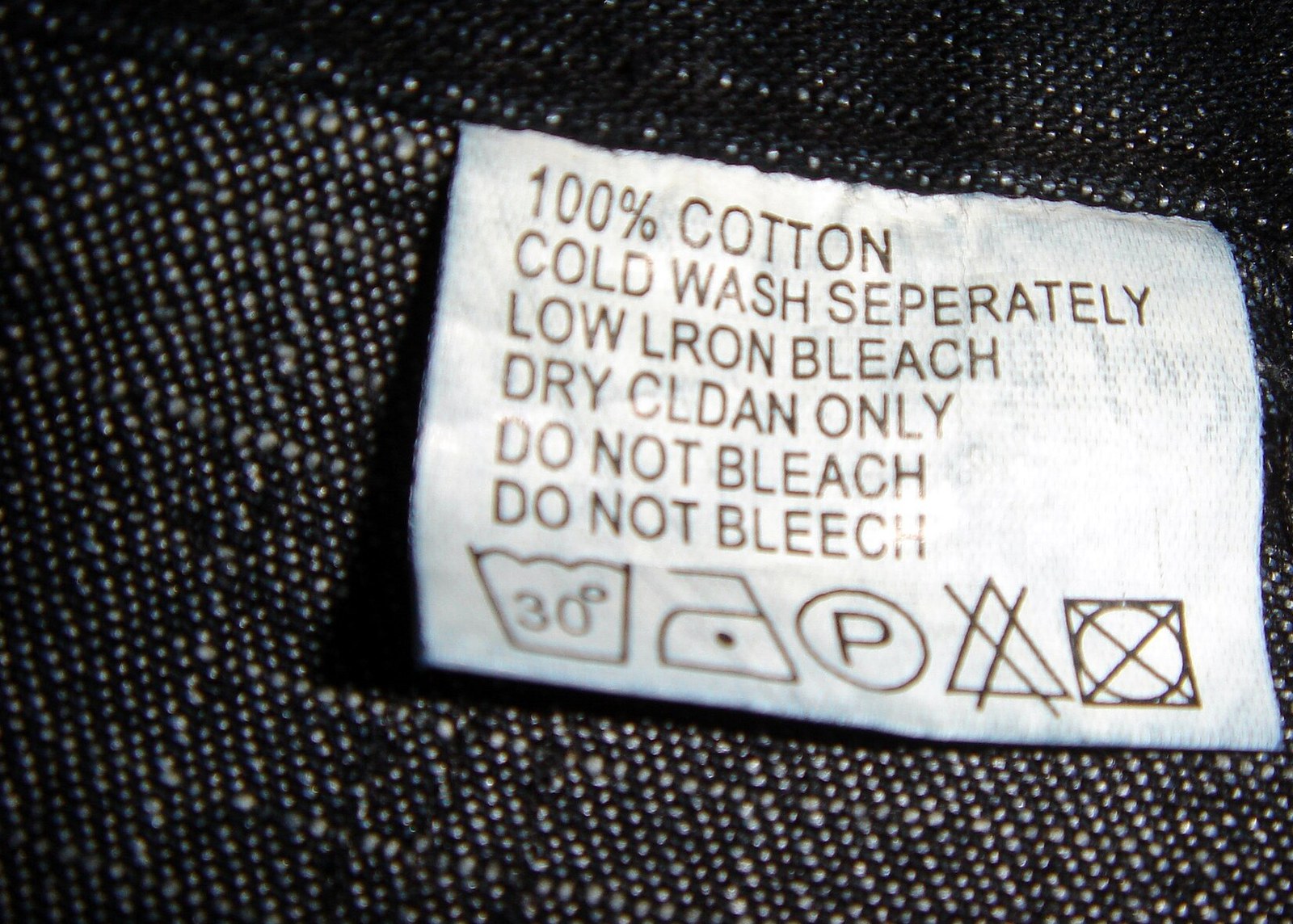
Placement is also regulated. According to the FTC’s guide, Threading Your Way Through the Labeling Requirements, a garment with a neck must show its country of origin on the front of a label attached to the inside centre of the neck, midway between the shoulder seams or next to another neck label. The fibre content and maker identity can go on the back of that label or elsewhere. Online and catalogue listings must state “Made in USA”, “Imported”, “Made in USA and Imported” or “Made in USA or Imported”, consistent with the label. Care instructions are a separate duty under the Care Labeling Rule, explained in FLJ’s guide to who must comply with the FTC Care Labeling Rule.
FLJ Insider Pro is open: live fashion law jobs and internships, five career guides and two roadmaps. Early bird USD 12/month. See what's inside
When can clothing say “Made in USA”?
For textile and wool products, the test is in the textile rules. A garment may be labelled “Made in USA” only if it is completely made in the US of materials that were made in the US. If it is made in the US from imported materials, the label must say so, for example “Made in USA of imported fabric” or “Knitted in USA of imported yarn”. If part of the work is done abroad and part in the US, both must be stated, for example “Sewn in USA of imported components”. The FTC applies a “one step removed” approach: a garment maker must disclose imported fabric, but need not trace where the fibre in a US-made fabric came from. An unqualified “Made in USA” is not allowed for imported greige goods that are only dyed, printed and finished in the US.
Outside those textile labels, the FTC’s Made in USA Labeling Rule, 16 CFR Part 323, took effect on 13 August 2021. It makes it an unfair or deceptive practice to label a product “Made in the United States” unless final assembly or processing happens in the US, all significant processing happens in the US, and “all or virtually all ingredients or components of the product are made and sourced in the United States”. That codifies the “all or virtually all” standard the FTC has applied for decades, and it covers seals, tags and claims in mail order and online catalogues. Because it is a rule under section 18 of the FTC Act, a first violation can attract civil penalties, without the FTC first needing a cease and desist order.
Enforcement is a stated priority. Executive Order 14392, “Ensuring Truthful Advertising of Products Claiming to be Made in America”, signed on 13 March 2026, directs the FTC to prioritise false American origin claims and to consider rules that would make online marketplaces responsible for verifying them.
How does US Customs decide where an imported garment was made?
Two systems meet at the border. Under 19 U.S.C. § 1304, imported articles must be marked “as legibly, indelibly, and permanently as the nature of the article” allows with the English name of their country of origin, so the final buyer knows it. If goods arrive unmarked and are not re-marked, exported or destroyed under Customs supervision, the importer owes an extra duty of 10% of their value. For textiles and apparel, origin is fixed by special rules in 19 CFR 102.21, which come from section 334 of the Uruguay Round Agreements Act and have applied since 1 July 1996.
Those rules replaced the older “substantial transformation” test for textiles with fixed processing rules. U.S. Customs and Border Protection’s informed compliance guide on textile rules of origin sets out the main ones:
- Assembly rule: for most garments, origin is the country where the parts were wholly assembled. Cutting “will almost never confer country of origin”, and minor attachments such as buttons or embroidery are ignored.
- Knit to shape: if the main parts were knitted to shape, origin is where that knitting took place.
- Fabric rule: for some flat goods, such as scarves, handkerchiefs and household linens, origin follows the country where the fabric was made, with a further exception for certain dyed and printed fabrics.
- Fallback: if those rules do not settle it, origin is the country of the most important assembly or manufacturing, and otherwise the last country where an important process took place.
The same origin is then used on the FTC label. So a shirt designed in New York, cut in China and sewn in Vietnam is “Made in Vietnam”. Origin also drives duty rates, as FLJ’s guide to the end of de minimis shows.
What happens when brands get “Made in USA” wrong?
The FTC has brought a run of cases against apparel and accessories sellers. In July 2022 it finalised an order against Lions Not Sheep Products, a Utah apparel company, and its owner Sean Whalen, who had added “Made in USA” labels to clothing imported from China and other countries; they paid $211,335, the FTC announced. In November 2024 the FTC sent more than $140,000 to 4,061 consumers who bought belts, bags, wallets and shoes from Chaucer Accessories, Bates Accessories and Bates Retail Group, New England companies that labelled imported goods “Made in USA” or “Hand Crafted in USA”, according to the FTC’s release. In April 2026 the FTC announced settlements with three more companies, including Oak Street Manufacturing, a maker of boots, loafers and moccasins, which agreed to pay $75,000 in consumer redress.
The maximum civil penalty is $53,088 per violation, the level set in January 2025. The Office of Management and Budget decided in April 2026 that there would be no inflation adjustment for 2026, so that figure still applies. Violations of the textile labelling rules are treated as unfair or deceptive practices under the FTC Act, and Customs can hold improperly labelled imports. State law is a separate exposure: the Made in USA Rule expressly leaves in place state origin laws that give consumers greater protection.
Is a country of origin label mandatory in the EU and UK?
No. The EU Textile Labelling Regulation, Regulation (EU) No 1007/2011, requires textile products to carry a label showing their fibre composition and any non-textile parts of animal origin, as the EU’s Your Europe guidance explains. It does not require a “made in” label, and there is no general EU rule that does. The UK kept the same regulation after Brexit, with no origin requirement either. Customs origin rules still apply to imports in both, but they decide duty, not what the consumer label says.
What both systems do control is misleading claims. Article 6(1)(b) of the Unfair Commercial Practices Directive lists a product’s “geographical or commercial origin” among the matters on which false or deceptive information is a misleading action. Since the 2019 Omnibus Directive, the maximum fine member states make available in coordinated cross-border enforcement cases must be at least 4% of the trader’s annual turnover in the countries concerned, or €2 million where turnover data is unavailable. Italy adds its own “Made in Italy” rules, covered in FLJ’s guide to what “Made in Italy” legally means, and origin disputes are not hypothetical, as the reaction to Gucci’s “Made in China” sneakers showed. Environmental claims got stricter rules too: the Empowering Consumers Directive applies from 27 September 2026, as set out in FLJ’s guide to the EU greenwashing ban.
In the UK, the Digital Markets, Competition and Consumers Act 2024 replaced the old unfair trading regulations from 6 April 2025. Under section 226, giving false or misleading information about a product is a misleading action, and the Competition and Markets Authority can now fine businesses directly, up to 10% of global turnover.
How do the US, EU and UK compare?
| Market | Is an origin label mandatory? | Main rule | Penalty |
|---|---|---|---|
| United States (FTC) | Yes, for textile and wool products | Textile Act and 16 CFR 303.33; Wool Act; Made in USA Labeling Rule, 16 CFR Part 323 | Up to $53,088 per violation of the Made in USA Rule or an FTC order; redress and injunctions |
| United States (Customs) | Yes, for imports | 19 U.S.C. § 1304; origin under 19 CFR 102.21 | Extra 10% marking duty; detention, penalties or seizure for repeated or deliberate breaches |
| European Union | No; fibre composition is mandatory | Regulation 1007/2011; Unfair Commercial Practices Directive for origin claims | Set by member states; maximum of at least 4% of turnover in coordinated cross-border cases |
| United Kingdom | No; fibre composition is mandatory | Retained Regulation 1007/2011; DMCC Act 2024 for misleading claims | CMA fines up to 10% of global turnover |
How will the Digital Product Passport change origin information?
The EU’s Ecodesign for Sustainable Products Regulation, Regulation (EU) 2024/1781, lets the Commission set product rules through delegated acts, including a Digital Product Passport that carries information about a product through a data carrier such as a QR code. Textile apparel is a priority group in the Commission’s 2025 to 2030 working plan, and the European Commission gives an indicative date of the fourth quarter of 2027 for adopting the textiles delegated act, warning that timelines may change. The regulation generally requires at least 18 months between a delegated act’s entry into force and its application, so on that timetable clothing passports would not become mandatory before 2029. The content is not final, but the Commission lists origin information, the identity of the relevant businesses and documents for compliance and traceability among the possible categories, alongside fibre composition and repair information. That would make origin claims far easier to check. FLJ’s guide to digital product passports follows the process.
Frequently asked questions
Is a country of origin label required on clothing in the US?
Yes. Under the Textile and Wool Acts and the FTC’s rules, most clothing must show the country where it was processed or manufactured, along with fibre content and the maker’s or seller’s name or RN. Imported goods must also be marked under Customs law.
What does “Made in USA of imported fabric” mean?
It means the garment was made in the US but from fabric produced abroad. The textile rules require this qualified wording, because an unqualified “Made in USA” is allowed only when the garment is made in the US from US-made materials.
Where must the country of origin label go on a shirt?
For garments with a neck, the FTC requires the country of origin on the front of a label attached to the inside centre of the neck, midway between the shoulder seams or next to another neck label. It must not be covered by another label.
If a garment is cut in one country and sewn in another, which country goes on the label?
Usually the country where it was sewn, or wholly assembled. Under the Customs textile rules in 19 CFR 102.21, cutting almost never decides origin, though knit-to-shape goods and some flat goods such as scarves follow different rules.
Do clothes sold in the EU or UK need a “Made in” label?
No. Both require a fibre composition label, but neither has a general duty to show the country of origin. If a brand does make an origin claim, it must be accurate, because misleading origin claims are banned under EU and UK consumer law.
What is the penalty for a false “Made in USA” label?
The FTC can seek civil penalties of up to $53,088 per violation of the Made in USA Labeling Rule, and each mislabelled item can be a separate violation. Recent cases have also required consumer refunds and orders that bar future misleading claims.
This article is general information, not legal advice. Labelling, customs and consumer rules change, penalty amounts are adjusted from time to time, and origin decisions for specific products should be checked with a customs broker or lawyer, or confirmed through a binding Customs ruling.
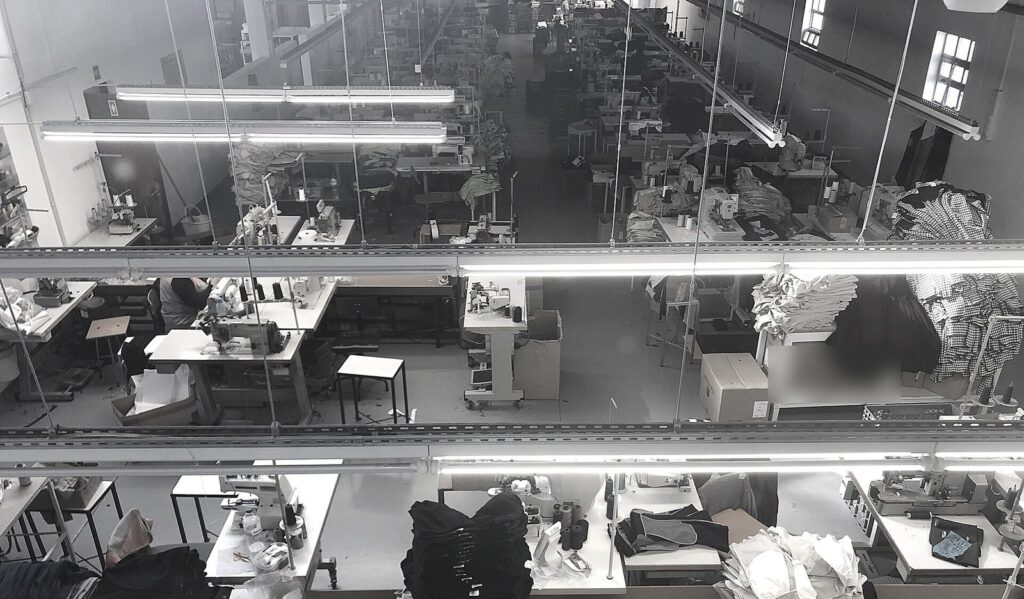
Featured image: Photo: 邰秉宥 from Changhua, Taiwan via Wikimedia Commons, CC BY-SA 2.0, adapted
FASHION LAW JOURNAL INSIDER
Join designers, brand founders and fashion lawyers who get the biggest brand battles, IP fights and career moves in fashion law, straight to their inbox.