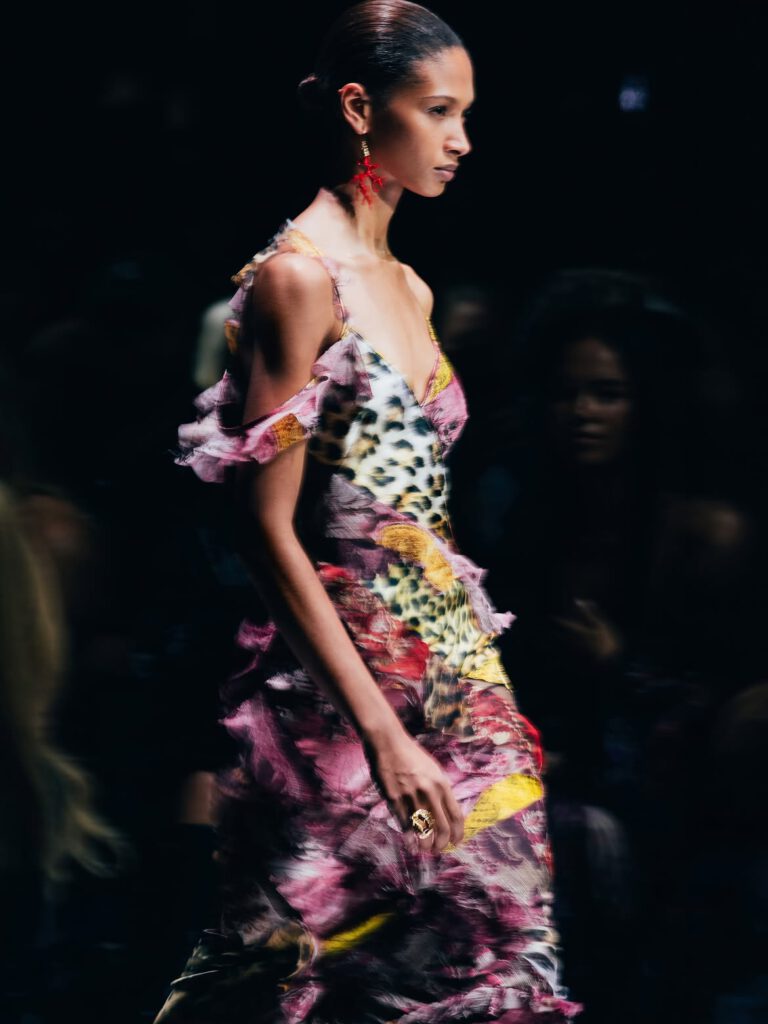

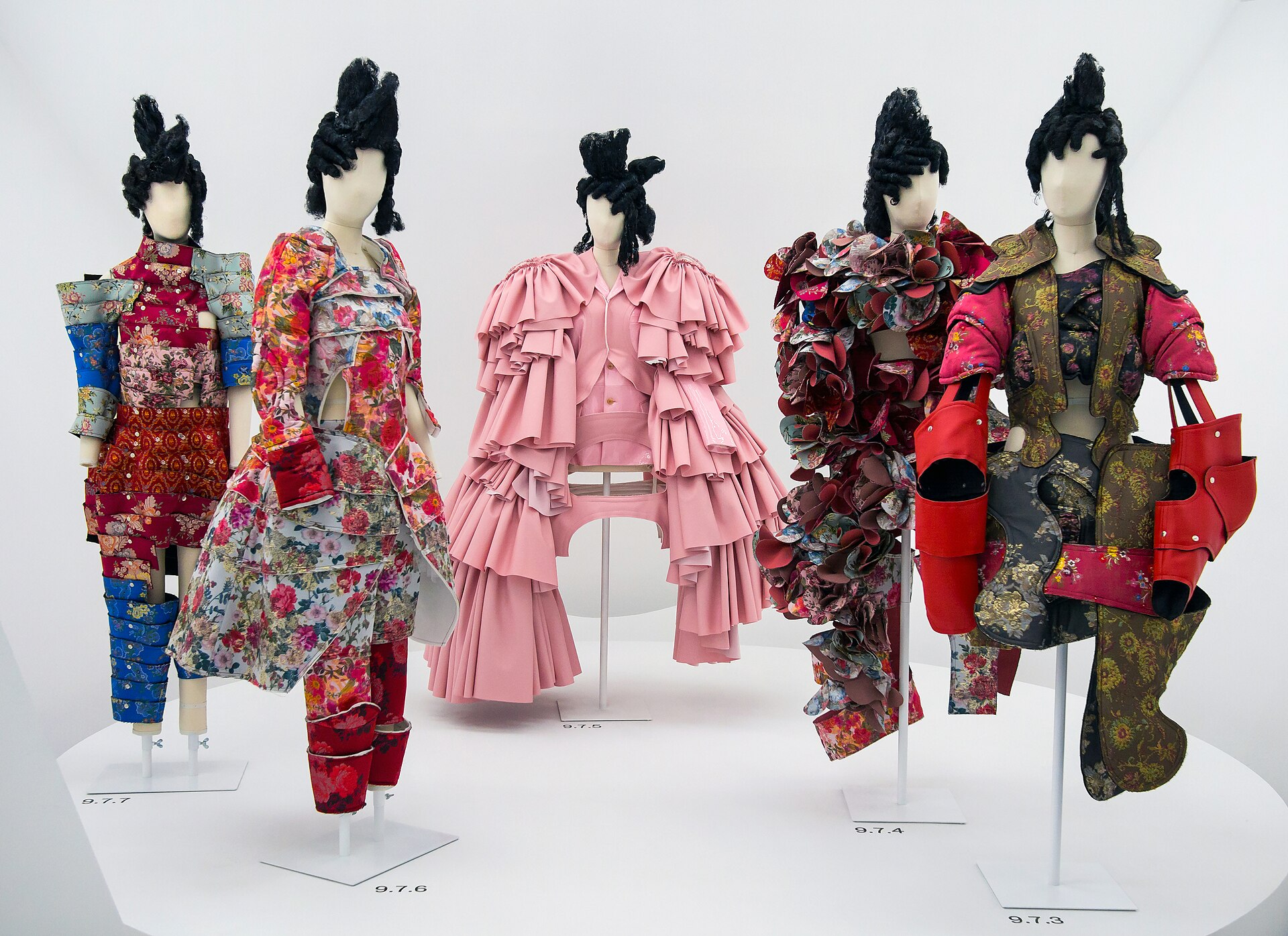
In October 1981, people entered a Paris showroom expecting a typical ready-to-wear season. Instead, they saw models in black torn sweaters, unfinished hems and coats cut asymmetrically. Clothes that hid the body rather than framing it. Some critics walked out mid-show, and those who stayed used the phrase ‘Hiroshima chic’, which would stick for years.
Critics writing for the Western press at the time considered Rei Kawakubo’s coats, palette and distressed fabrics absurd, calling them post-atomic and Hiroshima chic. Paris at the time worked by different rules where black was not worn by day, and clothes were designed to flatter the body. Kawakubo’s idea that clothing could express something other than sexuality broke these rules. She spent five decades treating fashion as a method of communication rather than flattery, and built a global business on her refusal to explain herself.
Rei Kawakubo’s Paris 1981 Debut
By the time it opened in Paris, Comme des Garçons had already been operating in Japan for over a decade, with more than a hundred stores and a loyal following nicknamed ‘the crows’ for their all-black clothing. The Paris 1981 debut was met with hostility, confirming the loyal following had not travelled with the label to France. The debut was described as a show that created a storm of controversy for its use of black and distressed materials. They also noted that Kawakubo had no formal training as a tailor, meaning her patternmakers were working with ideas which had no precedent in Western dressmaking.
The clothes favoured mobility over the sexual silhouette that defined French fashion at the time. Holes, frayed threads and torn fabric were left visible rather than repaired. Many in the press read this as an attack on the craft, rather than innovation. Kawakubo presented the question: what is clothing for other than to look visually appealing?
FLJ Insider Pro is open: live fashion law jobs and internships, five career guides and two roadmaps. Early bird USD 12/month. See what's inside
The Body Meets Dress, Dress Meets Body Collection
Sixteen years later, Kawakubo asked this question again, this time more literally. Her Spring/Summer 1997 collection, ‘Body Meets Dress, Dress Meets Body’ distorted how a garment was meant to fit, adding padded lumps into the shoulders, hips and backs of dresses. The show became known by a blunter name almost instantly.
According to MoMA’s notes on the collection, the press did initially recognise it as innovative, framing the padding as a commentary on bodies outside of the standard beauty ideal. At the same time, others sneered and likened the pads to tumours. This divide in opinion became central to the discussion Kawakubo was trying to stir up. She was not proposing a new silhouette to admire, but asking whether there is, or should be, a ‘correct’ female form. The pattern for female tailoring all read the same, nipped in at the waist and designed to flatter the body at all the right points. It had become a cultural agreement everyone had stopped questioning, but Kawakubo stood outside it. Her dresses did not photograph as beautifully, but they served as an argument.
Rei Kawakubo & Anti-Commercial Clothes
Under Kawakubo’s husband and business partner, Adrian Joffe, Comme des Garçons grew from a single Tokyo label into a major global group. Kawakubo’s clothing was designed to unsettle rather than sell, and yet the business flourished.
Two business decisions largely contributed to this success. The first being Dover Street Market, a multi-brand retail concept Kawakubo founded with Joffe in London. The retailer sells Comme des Garçons alongside labels like Gucci and Nike in gallery-like stores that are intentionally chaotic, in contrast to the formality of conventional luxury retail. Dover Street Market reportedly accounted for 30% of the group’s total sales in 2018.
The second was the Play line, launched in 2002 in collaboration with Polish artist Filip Pagowski. Pagowski drew the signature red heart graphic “independently of the creation of the Play line”, and now it is sold everywhere on T-shirts, through Converse collaborations and in airport shops. It is also what funds runway experiments that will never sell commercially. Instead of softening her designs to translate them into commercial sales, Kawakubo has built a separate uncomplicated line to carry the weight.
Rei Kawakubo’s Refusal to Explain
Kawakubo gives almost no interviews. She agreed to one with Andrew Bolton, a curator who spent thirteen years asking her to let the Met stage a show of her work, and she was reported to have opened by saying “I hate interviews”.
Speaking to Fashionista about curating the show, Bolton said Kawakubo “wants the work to stand for itself”. He explained that the two of them were rarely on the same page, since a curator’s job requires interpreting the work, and that is exactly what she resists.
Two decades earlier, Susannah Frankel sat down with Kawakubo to ask what ‘Body Meets Dress, Dress Meets Body’ meant. Kawakubo said nothing for several minutes, drew a circle in black ink on a scrap of paper and left the room. Frankel took this as a refusal, a confirmation the work was impenetrable, whereas Bolton interpreted the gesture as an instruction to look and understand without reaching for a statement first. Without a quote or soundbite, a critic has to build an argument from the clothes alone. Different critics will reach different arguments from the same collection. Kawakubo insists that meaning belongs to the clothes, not the designer’s summary or explanation.
Conclusion
Kawakubo has maintained her position over the decades. The 1981 Paris debut challenged what a beautiful garment had to look like. The 1997 padding challenged what a beautiful body had to look like. Dover Street Market challenged what a luxury shop had to look like. Finally, her silence challenges what a designer owes an audience by way of explanation.
Kawakubo does not shock for shock’s sake; she is a designer who recognises how clothing can carry a message and has refused to soften her arguments into something more likeable. She treats fashion the way a child in their early teens wishes to be treated as an adult. She gives it credit for holding its own and lets it speak for itself.
Author: Fiona Corcoran
FASHION LAW JOURNAL INSIDER
Join designers, brand founders and fashion lawyers who get the biggest brand battles, IP fights and career moves in fashion law, straight to their inbox.