







The award-winning scent. One of the most powerful beauty brands of the moment. Sephora’s biggest-ever body care seller. Let me introduce: Sol de Janeiro. For this iconic brand, summer has never been just a season, but a constructed aesthetic. From sun-drenched colour palettes and beach-ready packaging to its fragrance names that evoke warmth, self-love and joy, the brand’s identity has been built around the promise of an endless Brazilian summer. But as the temperature rises in the beauty market, so does the legal tension, placing Sol de Janeiro’s carefully curated ‘summer’ under an unusual kind of spotlight.
On 25 November, Sol de Janeiro filed a newly amended complaint and jury demand in the U.S. District Court for the Southern District of New York, bringing claims against MCoBeauty, an Australian beauty brand, for false advertising, trade dress infringement, and unfair competition. [Case No. 1:24-cv-08862-ER Amended Complaint and Jury Demand]
A Summer Brand Under Fire
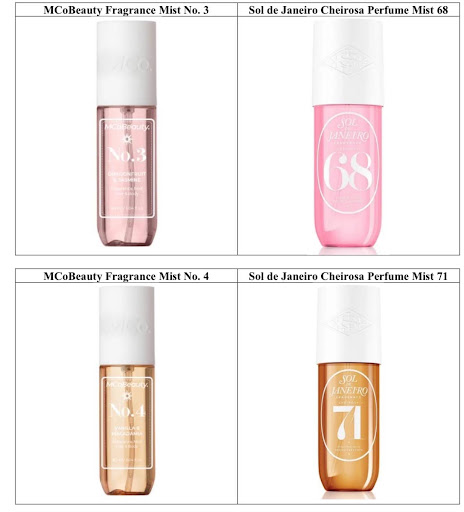
Sol de Janeiro first filed a lawsuit against MCoBeauty in November 2024, alleging that to seize on the popularity of Sol de Janeiro’s Cheirosa Perfume Mists, MCoBeauty created a line of cheap knockoffs. The original complaint targeted MCoBeauty Fragrance Mists No. 1, No. 2, No. 3, and No. 4. Sol de Janeiro alleged that these products clearly mimic the look and feel of the beloved Sol de Janeiro fragrances.
In response, MCoBeauty invoked a range of affirmative defences in June, maintaining that its marketing and product practices constituted fair use rather than false advertising. [Case No. 1:24-cv-08862-ER Defendant MCoBeauty Pty Ltd’s Answer and Affirmative Defences]
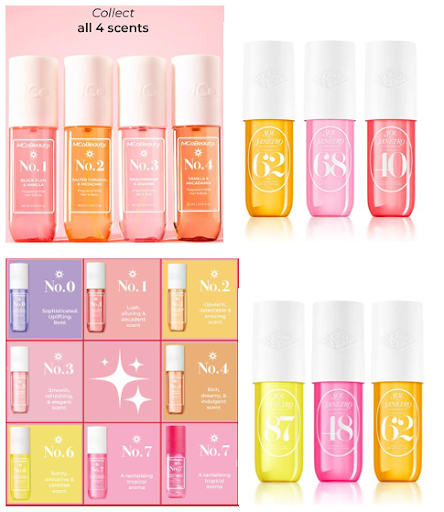
In a newly amended complaint filed later this year, Sol de Janeiro seeks to broaden the scope of the lawsuit. The brand claims that MCoBeauty has continued to expand its fragrance line since the initial complaint was filed and has introduced additional products – namely Fragrance Mists No. 0, No. 5, No. 6, and No. 7 – which, like the previous ones, infringe on Sol de Janeiro’s rights in the same way. As a result, the amended complaint now encompasses a total of eight allegedly infringing products, underscoring the escalating nature of the dispute. [Case No. 1:24-cv-08862-ER Amended Complaint and Jury Demand, p. 1.]
False Advertising: Selling the Hype
According to Sol de Janeiro, to promote these dupes, MCoBeauty actively publishes, endorses, sponsors, and highlights them across its website and social media, thereby positioning them as alternatives to seven of Sol de Janeiro’s most popular mist lines.
Sol de Janeiro also bases its false advertising claims on MCoBeauty’s influencer-led marketing. According to the complaint, beginning in February 2024, MCoBeauty promoted its fragrance mists on its YouTube channel through influencer testimonial videos, including a side-by-side comparison of MCoBeauty Fragrance Mist No. 1 and Sol de Janeiro’s Cheirosa Perfume Mist 40. In the video in question, the influencer allegedly said that the MCoBeauty product “smells exactly” like Cheirosa 40, “lasts most, if not all day long”, and “holds better” than the Sol de Janeiro fragrance. A similar incident happened in June 2024, when another influencer made comparable claims in an Instagram post showing MCoBeauty No. 2 next to Cheirosa 62. [Case No. 1:24-cv-08862-ER Amended Complaint and Jury Demand, pp. 13-17.]
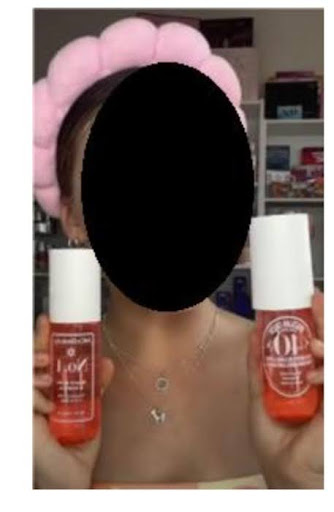
Sol de Janeiro takes issue with these claims, arguing that these statements are false and misleading. The brand also stated that MCoBeauty products are made from different ingredients, do not present the same fragrances or smell, and dissipate more quickly.
The complaint further emphasises that Federal Regulations governing place the burden of monitoring and correcting misleading claims on brands. Rather than taking corrective action, Sol de Janeiro alleges that MCoBeauty reinforced the Instagram post by engaging directly with it and continues to host customer reviews on its website that describe the products as dupes, thereby contributing to the dissemination of unsubstantiated comparative claims.

Trade Dress Infringement – The Power of Aesthetic
Sol de Janeiro claims that the brand’s Cheirosa Body Mists have a distinctive and unique look that immediately identifies the source of the product to consumers. This appearance is non-functional and solely associated with the company. Sol de Janeiro holds trade dress rights to the combination of its signature bottle, cap, and label, including its unique use and selection of elements, text, and graphics. Beyond that, the brand owns numerous registered and pending trademark applications worldwide, which reinforce its intellectual property portfolio. [Case No. 1:24-cv-08862-ER Amended Complaint and Jury Demand, pp. 7-8.] However, the colouring, packaging, bottling, labelling, and presentation of MCoBeauty products are intended to infringe and unfairly copy the Sol de Janeiro trade dress.
Dupes Take Over
As you may have read in a previous full-length Fashion Law Journal article, [https://fashionlawjournal.com/the-rise-and-impact-of-dupe-culture-in-fashion/], a ‘dupe’ refers to a product that is designed to replicate the look and feel of another, typically higher-priced item without copying its exact branding or directly violating intellectual property rights. Unlike counterfeit goods, [https://fashionlawjournal.com/dupes-vs-counterfeits/] which intentionally mislead consumers by replicating brand logos and trademarks, dupes fall into a legal grey area, emphasising aesthetic similarity over brand identity. This distinction allows dupes to capitalise on the popularity and elements of established, well-known designs while offering consumers a cheaper alternative.
The rapid rise of copycat culture, as reflected in the Sol de Janeiro complaint, is closely linked to the social media-driven democratisation of fashion and beauty. Platforms such as TikTok, Instagram, and YouTube have evolved into powerful trend accelerators, where influencer endorsements and viral content can quickly normalise and popularise dupe recommendations among potential buyers.
The Road Ahead
The case is still ongoing. Although no judicial decision has been made to date, the complaint highlights the tension between the carefully curated aesthetics of market-leading companies and the rapidly growing ecosystem of imitations fueled by social media, influencer marketing, and algorithm-driven consumption. As beauty- and fashion trends accelerate and imitation becomes increasingly normalised and commonplace, the Sol de Janeiro case serves as a timely reminder that while hype may be fleeting, brand identity remains a legal asset, one that, when pushed too far, can turn summer heat into courtroom fire.
Author: Dr. Kata Zsófia Prém

Dr. Kata Zsófia Prém is a PhD candidate at the University of Miskolc, Deák Ferenc Doctoral School of Law. Her research focuses on Intellectual Property Law, particularly copyright originality in fashion products. Her academic interests also encompass trademarks, designs, and various aspects of Fashion Law. She obtained her law degree in 2022. Fashion is her passion, and in her free time, she loves reading, baking, traveling, and spending quality time with her family and friends.