
“There is no such thing as a new idea. It is impossible. We simply take a lot of old ideas and put them into a sort of mental kaleidoscope.”
— Mark Twain
In the summer of 1923, an American couple asked a hotel proprietor on the French Riviera to do something unprecedented: keep the hotel open. It was May. Every establishment on the Côte d’Azur had already shuttered for the season, as they always did, as they had always done. The Mediterranean coast in summer was not a destination. It was a gap in the calendar, a dead zone between the European aristocracy’s arrival in January and their departure in spring. The couple’s names were Gerald and Sara Murphy. The hotel was the Hotel du Cap in Antibes. The proprietor, persuaded by their particular kind of American confidence and disposable income, agreed.
What followed that summer was, by any measure, extraordinary. Pablo Picasso came. F. Scott Fitzgerald came. Ernest Hemingway came. Diaghilev came. Gerald cleared a four-foot layer of seaweed from La Garoupe beach so they could swim. They sunbathed, which was so alien a behavior that locals reportedly stood at a distance to watch. They played jazz from a portable phonograph on the sand. Sara wore almost nothing. Picasso painted. Fitzgerald absorbed everything into his nervous system and would later exhale it as Tender Is the Night.
None of this, on its surface, sounds like the founding act of a commercial mythology worth hundreds of billions of euros. But that is precisely what it was. The Murphys did not invent leisure. They invented a specific grammar of leisure: sun, coast, intellectual adjacency, the performance of beautiful idleness, the suggestion that to be here, in this particular light, wearing these particular clothes, constitutes a form of arrival. That grammar has not changed in a century. Every Euro Summer collection produced today, every resort show staged at Cap d’Antibes or Capri or the Amalfi Coast, every TikTok video tagged with that phrase and shot in golden-hour linen is, in its essential structure, a quotation of what the Murphys assembled on that beach in 1923.
The question worth asking in 2026 is not why the Euro Summer looks the way it looks. It is why it never stops being relevant, never stops generating revenue, never succumbs to the forces of obsolescence that claim almost every other aesthetic category the fashion industry produces. The answer is not sentimental. It is architectural.
A Hotel That Was Never Supposed to Be Open
To understand the Euro Summer’s commercial permanence, you need to understand what it is not. It is not a trend. Trends are temporally bounded; they emerge in response to a specific cultural moment and expire when that moment passes. The coastal grandmother trend of 2022, the quiet luxury cycle of 2023, the mob-wife maximalism of early 2024: all were trends, all had identifiable peaks, all showed signs of deceleration within twelve to eighteen months of their emergence. The Euro Summer has been ‘trending’ since approximately 1923 with no meaningful interruption. This is not trendiness. This is something else entirely.
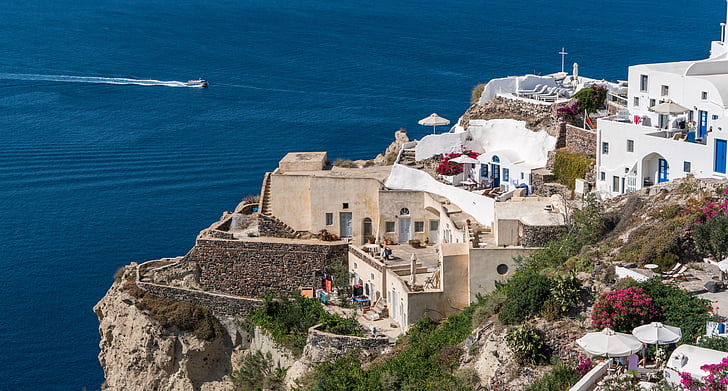
What separates the Euro Summer from every trend it superficially resembles is its geographical anchoring. Its commercial value does not derive from a design vocabulary — the linen, the espadrilles, the straw bag, the gold-tone ring. Those are symptoms, not causes. Its value derives from a set of specific physical places, the Côte d’Azur, Capri, Positano, Mykonos, the Amalfi Coast, whose characteristic qualities cannot be manufactured elsewhere, substituted with equivalents, or rendered obsolete by changing taste.
The Euro Summer sells the one thing intellectual property law has never figured out how to protect: the irreducible charge of a specific geography.
You can copy the dress. You can copy the silhouette, the colorway, the weight of the fabric, and the construction of the sandal. What you cannot copy is the specific angle of Mediterranean light at six in the evening, the thermal quality of that particular sea, the accumulated cultural sediment of Picasso and Bardot and Kennedy and every Grand Tourist who wrote rapturously about the coast of southern France since Tobias Smollett did so in 1764. Geography does not depreciate. It does not go out of season. And this is why the fashion industry’s most enduring commercial mythology is also, at its root, a story about real estate.
There is a legal concept that illuminates this dynamic with unusual precision: the geographical indication, or GI, protected under Article 22 of the TRIPS Agreement and elaborated extensively in European law, most recently through EU Regulation 2024/1143. A geographical indication identifies a good as originating in a territory where a given quality or reputation is essentially attributable to its geographical origin. Champagne cannot be Champagne unless it comes from Champagne. Parma ham is not Parma ham unless it comes from Parma. The value is territorial. The protection is, in legal terms, perpetual.
GI doctrine was designed for goods, not aesthetics. There is no formal geographical indication for ‘the Riviera look.’ But the framework captures something true about why the Euro Summer’s commercial logic is so different from that of other luxury positioning strategies. When Louis Vuitton calls a collection ‘By the Pool’ and shoots it at Cap d’Antibes, or when Dior stages its resort show against the cliffs of Positano, or when Jacquemus photographs its bags on a sun-bleached terrace somewhere between Nice and Monaco, these brands are not merely using a location as a backdrop. They are invoking a territorial value that no competitor can replicate, because no competitor owns the Mediterranean. What they are doing, in commercial terms, is borrowing the perpetuity of a place and attaching it to a product.
In 2009, the Riviera Côte d’Azur Regional Tourism Committee went so far as to formally register ‘Cote d’Azur’ as a brand with the French national industrial property institute, the INPI. The coastline that Stephen Liegeard named in his 1887 book, the place that became the setting for the Murphys’ founding summer, was trademarked. The dream became, legally speaking, intellectual property. This feels like a footnote. It is not. It is the logical conclusion of a century of accumulated semiotic investment: geography as brand.
Coco Chanel and the Permission Structure of the Tan
The Murphys created the stage. It was Coco Chanel who gave everyone else permission to perform on it. Her accidental tan of 1923, acquired aboard the Duke of Westminster’s yacht, performed a semiotic overhaul so complete that it is difficult, a century later, to fully appreciate its radicalism. Before Chanel, a tan was the mark of agricultural labor, outdoor work, and the lower classes. After Chanel, a tan was the mark of a woman who had been somewhere warm and beautiful, with the time and the money to sit in the sun. She did not merely make tanning fashionable. She inverted the entire class vocabulary of skin.
For the business of Euro Summer, the Chanel intervention matters as the first instance of what the aesthetic has depended on ever since: authoritative endorsement that transforms a lifestyle practice into a commercial aspiration. When a figure of sufficient cultural gravity inhabits an aesthetic and exports it through their public persona, the aesthetic acquires a quality that marketing budgets alone cannot purchase. It becomes self-referential: desirable because it has been desired by the right people, aspirational because it has already been the object of the right aspiration. The Euro Summer acquired this property in 1923 through the Murphys, deepened it through Chanel, then compounded it through half a century of figures — Brigitte Bardot in Saint-Tropez, Grace Kelly in Monaco, Jacqueline Kennedy in Ravello, Slim Aarons photographing all of them — whose accumulated glamour functions as collateral for every luxury brand that invokes the Mediterranean today.
This is what fashion lawyers and brand strategists call secondary meaning: the acquired distinctiveness that attaches to a set of visual signals through long use and consistent cultural association. The Euro Summer’s secondary meaning has been accruing for one hundred years. It is, by any reasonable measure, the best-capitalized secondary meaning in the history of fashion.
The Conglomerate and the Geography It Doesn’t Own but Controls
Understanding why the Euro Summer never stops generating revenue requires understanding who profits from it and how the business is structured. The answer, increasingly, is the European luxury conglomerate: LVMH and Kering, principally, with Prada Group now a more formidable third presence following its acquisition of Versace in December 2025.
LVMH, formed in 1987 through the merger of Louis Vuitton and Moët Hennessy under Bernard Arnault, reported revenues of EUR 84.68 billion for 2024, with Fashion and Leather Goods accounting for nearly half of that figure. Its portfolio of more than seventy-five houses — Christian Dior, Fendi, Celine, Loewe, Loro Piana, Givenchy, Bulgari, Tiffany — does not merely cover multiple price points. It covers multiple registers of the Euro Summer aesthetic. Loro Piana sells to the client who actually has a boat. Dior sells to the client who aspires to be the woman who has a boat. Sephora sells to the client who aspires to be the woman who buys Dior. Every transaction in this vertically integrated desire economy is, in some sense, a purchase of Euro Summer adjacency.
Kering’s acquisition of a thirty percent stake in Valentino for EUR 1.7 billion in 2024 extended its reach into the specifically Roman-Italian dimension of the Euro Summer: the florals, the lace, the dolce vita excess that Pierpaolo Piccioli spent nearly a decade perfecting. EssilorLuxottica’s purchase of Supreme was, at first glance, a streetwear story; look again and it is also the absorption of a young, aspirational demographic into the conglomerate that already owns Ray-Ban and Persol, which are to the Euro Summer sunglass what the espadrille is to the shoe. And Prada’s acquisition of Versace from Capri Holdings repositions Milan as a genuine counterweight to Paris in the geography of luxury consolidation — returning to Italian ownership a house whose entire aesthetic vocabulary, Mediterranean color, Greco-Roman motif, uninhibited sensuality, is inseparable from the Euro Summer imaginary.
The effect of this consolidation, taken in aggregate, is the reduction of the Euro Summer aesthetic to a conglomerate-controlled intellectual property ecosystem. Not owned in the formal, registrable sense. But controlled through the progressive acquisition of every major brand that has, over decades, constituted itself as the authorized vocabulary of Mediterranean luxury. The dress, the bag, the sandal, the sunglasses, the fragrance, the hotel: across these categories, the dominant commercial positions are held by a handful of conglomerates whose structural interest in the perpetuation of the Euro Summer mythology is, at this point, essentially permanent.
The Resort Collection: Fashion’s Most Honest Commercial Category
The business mechanism through which the Euro Summer most directly generates revenue is the resort collection, also called Cruise or Pre-Spring, depending on the house. Resort originated as a practical commercial category: wealthy clients who spent the Northern Hemisphere winter in warmer climates needed clothes that the main seasonal collections, designed for temperate spring and autumn runways, did not provide. By the 1960s, it had evolved into a distinct creative season occupying the May-June window between Spring/Summer and Fall/Winter.
Resort is, from a unit economics perspective, the most purely Euro Summer-optimized commercial offering in the fashion calendar. It is designed explicitly for warm-weather leisure. Its retail prices are generally lower than mainline runway pieces, making it the most commercially accessible entry point into a luxury house’s seasonal world. And it is shown, almost invariably, in locations of maximum Mediterranean symbolic charge. LVMH houses have staged resort shows in Cannes, Capri, Athens, Monte Carlo, and Porto. Gucci showed its 2018 resort collection at the Palatine Hill in Rome. The Dior resort show in 2022 was held in Seville; in 2023, in Mumbai; but the Mediterranean gravitational pull always reasserts itself, because the show location is not incidental to the collection. It is the collection’s primary signifying context. The geography authenticates the garment.
There is a legal dimension to this practice that rarely surfaces in fashion industry conversations. When a brand chooses to stage a show within a UNESCO World Heritage Site, or within a French administrative territory, it activates a complex set of permitting requirements and intellectual property questions around the photographic rights of third-party architectural structures. French law has grappled with the doctrine of droit à l’image des biens, the principle that property owners may assert rights over commercial photographic uses of their property, a doctrine that has been substantially curtailed following litigation but that still creates legal exposure for brands shooting editorial content in France’s most iconic settings. The practical implication: the most geographically authentic locations for Euro Summer content production are precisely the most legally complicated to use. Aspiration, it turns out, is also a compliance exercise.
TikTok and the Geography of Displaced Desire
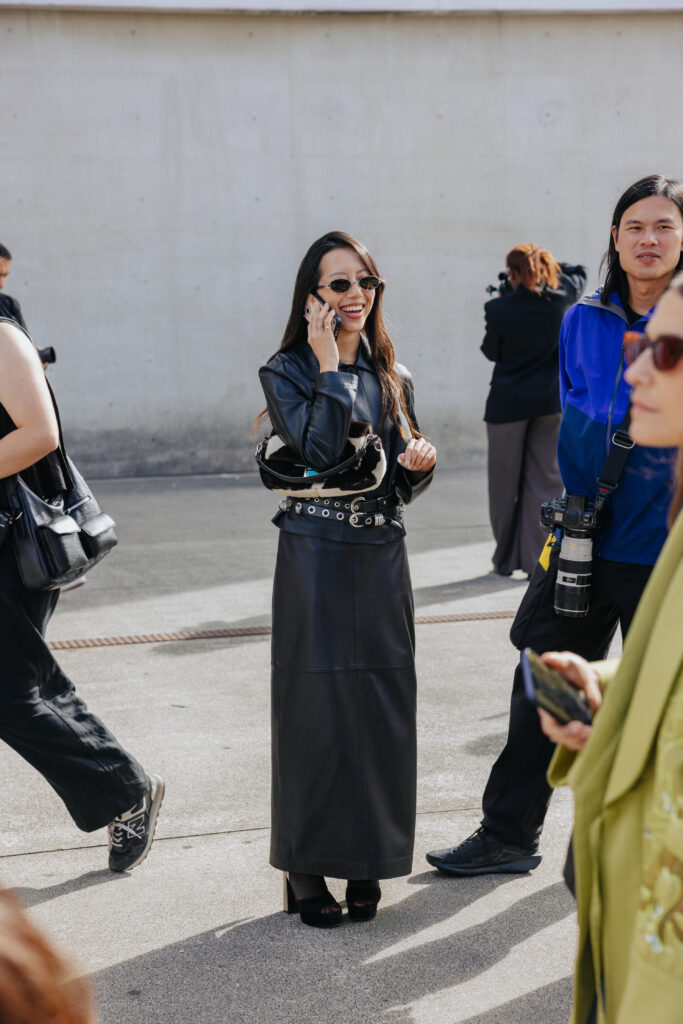
Something interesting happened to the Euro Summer around 2022. It became a TikTok category. Videos tagged with the phrase accumulated hundreds of millions of views. Styling guides proliferated. The ‘European summer aesthetic’ — linen separates, top-handle bags, old-money silhouettes, intentional detailing, the general suggestion of having arrived by train from Paris — became one of the dominant fashion reference points for a generation of consumers who had never been to Europe and, in many cases, had no immediate prospect of going.
This development is not, as some critics framed it, a dilution of the Euro Summer’s commercial value. It is an amplification of its demand base without any corresponding expansion of its supply. The Riviera remains physically scarce. The Hôtel du Cap has the same number of rooms it had in 1923. The cliffs above Positano have not grown. What TikTok accomplished was the globalization of desire for an experience that is structurally inaccessible to the majority of people who now desire it — and the consequent redirection of that desire into the purchase of Euro Summer-adjacent goods.
Scarcity, as luxury economics has always understood, is not merely a condition of production. It is the condition of value.
This dynamic – aspirational displacement purchasing, to give it a more precise name — is structurally beneficial to the conglomerate luxury economy for a specific reason. The Côte d’Azur in August remains beyond the reach of the majority of the Euro Summer’s global audience. But the Dior Addict lipstick photographed at Cap d’Antibes, the Jacquemus bag shot against terracotta, the Loro Piana linen shorts that code as ‘person who summers in southern France‘: these are purchasable. They are the portable, price-differentiated proxies for an experience that cannot itself be purchased at most price points. And the conglomerates that own the brands that own the aesthetic benefit from every transaction at every stratum.
The stylist Carlotta Constant, who splits her time between London and Monaco, articulated the mechanism with unusual clarity when she told Refinery29 that the Euro Summer ‘allows people to romanticize their lives, letting them bring out the best versions of themselves.’ This is the correct analysis, but it understates the commercial structure behind the romance. What it also does is generate perpetual, geographically grounded, conglomerate-captured revenue at a global scale, from consumers who are purchasing not a garment but a fantasy of arrival. The garment is the delivery mechanism. The fantasy is the product.
Why It Will Never End
Fashion has a well-documented tendency to declare the death of its own categories and then quietly resurrect them eighteen months later. The Euro Summer has never required resurrection. It has never died. Understanding why requires holding three structural conditions in view simultaneously.
The first is geographical irreducibility. The aesthetic is anchored to a physical place whose characteristic qualities cannot be manufactured elsewhere or substituted by equivalent alternatives. The Mediterranean coast has specific climatic properties, a specific quality of light, and a specific accumulation of cultural history that has no substitute. This is not nostalgia. It is geography. And geography, unlike a design trend or a cultural moment, does not expire.
The second is social stratification encoding. Every element of the Euro Summer grammar operates simultaneously as a social classifier and as an aspirational object. The weight of the gold, the grade of the linen, the construction of the sandal: each of these signals distinction in a way legible across cultural contexts. The quiet luxury register of the Euro Summer — Loro Piana, Brunello Cucinelli, The Row’s Mediterranean offerings — achieves what Pierre Bourdieu identified as the highest form of distinction: the communication of superiority through the deliberate suppression of its legible markers. The most expensive Euro Summer items look, to the untrained eye, like nothing at all.
The third is mythological depth. The Euro Summer is connected to a founding narrative of sufficient cultural prestige that it confers retrospective legitimacy on every new instantiation. The Murphys, Picasso, Fitzgerald, Chanel, Bardot, the Train Bleu, the Slim Aarons photographs, the New Wave films shot on the Riviera, the entire cultural apparatus of mid-century Mediterranean Europe: this is not a mood board. It is a century of accumulated authority. When a brand invokes it, it borrows that authority. The mythology functions as non-registrable intellectual property — it cannot be owned, but it can be consistently cited, and citation, done well, is indistinguishable from ownership.
No trend possesses all three of these properties. Most trends possess none of them. This is why the Euro Summer sits in a category of its own, why it has outlasted every aesthetic cycle that has risen and fallen around it, and why the fashion industry’s most sophisticated commercial actors — the luxury conglomerates with their long-term capital structures and their historical perspectives — continue to build significant portions of their annual revenue on it.
The Hotel That Never Closed
The Hôtel du Cap has not closed for the summer since Gerald Murphy convinced its proprietor to stay open in 1923. This single fact is, in miniature, the entire story of the Euro Summer: an anomaly that became a practice that became a mythology that became an industry.
What the fashion industry built on top of that mythology is worth examining without sentimentality. It is a vertically integrated commercial ecosystem in which geographic aspiration is manufactured, packaged, and sold at every price point from the EUR 12 Dior lip maximizer to the EUR 12,000 Loro Piana cashmere coat, all drawing on the same underlying territorial value that no brand actually owns and no legislation currently protects. The legal architecture has not caught up with the commercial reality. There is no IP framework adequate to the Euro Summer’s actual value proposition, which is not a product or a mark or a design, but a dream of a specific place.
Mark Twain was right, in the end. There are no new ideas, only the kaleidoscope. But some configurations of old ideas are so precisely calibrated to permanent human desires — for beauty, for warmth, for the performance of having arrived — that they never require replacement. The Euro Summer is the fashion industry’s most successful kaleidoscope. It has been turning for a century. The light through it is still the light of the Riviera in late afternoon, and the product being sold is still, at its core, the same thing the Murphys were selling when they played jazz on an empty beach in 1923: the proposition that this, specifically this, is where you want to be.
The Mediterranean has no plans to relocate. Which means the industry built on it has no plans to stop
Legal References
TRIPS Agreement, Art. 22 (1994). EU Regulation 2024/1143 on geographical indications. EU Trademark Regulation 2017/1001. Lanham Act, s. 43(a). Institut National de la Propriete Industrielle (INPI), Brand Registration of Cote d’Azur (2009). Tribunal de grande instance, Societe Civile du Domaine de Valmer v. Raveneau (2004).
Selected Sources
Amanda Vaill, Everybody Was So Young: Gerald and Sara Murphy (Broadway Books, 1998). Roland Barthes, Mythologies (1957). Pierre Bourdieu, Distinction (1979). LVMH Annual Report 2024. Kering 2024 Universal Registration Document. TheIndustry.fashion, Major M&A Deals in Fashion, December 2025. Refinery29, The European Summer Trend, June 2024. The Good Life France, How the French Riviera Became a Summer Destination (2024). Gisetudestouristiques.fr, Encyclopedie: Cote d’Azur.
FASHION LAW JOURNAL INSIDER
Join designers, brand founders and fashion lawyers who get the biggest brand battles, IP fights and career moves in fashion law, straight to their inbox.