
How Fashion, Beauty, and Digital Culture Erased the In-Between
For a long time, the teenage girl had a world of her own.
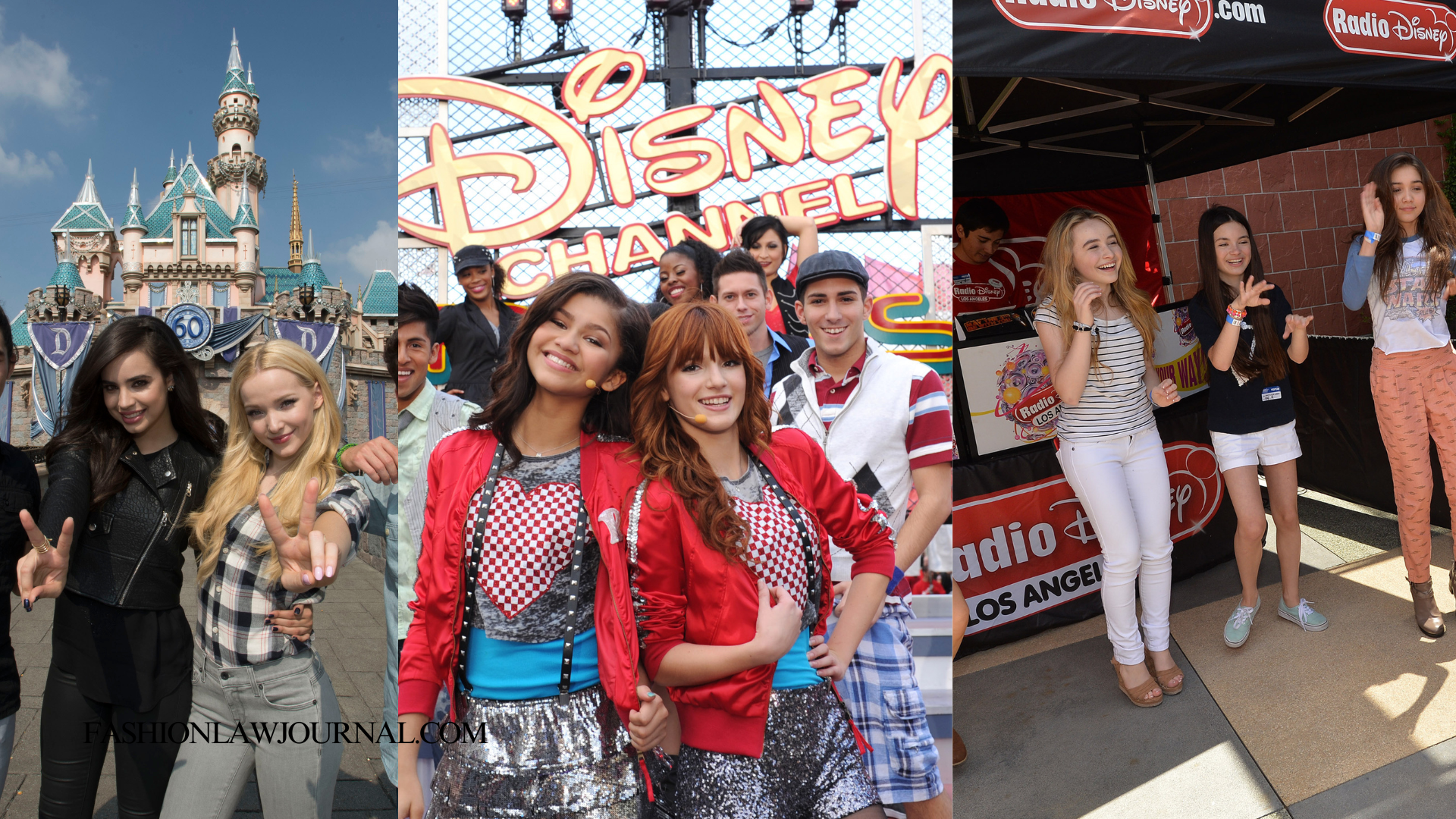
It lived somewhere between childhood and adulthood, in the soft chaos of Disney Channel premieres, glossy teen magazines, friendship bracelets, Claire’s earrings, Justice graphic tees, celebrity posters, and Saturday afternoons spent wandering the mall with no real agenda. It was awkward, colorful, sometimes embarrassing, and often over-accessorized. But it was a world. It gave girls a space to try on identity without having to arrive anywhere too quickly.
Today, that in-between feels harder to find.
A thirteen-year-old no longer has to wait for a magazine, a Disney star, or a mall storefront to tell her what is cool. She opens TikTok and meets the entire adult beauty economy at once. Skincare routines, Sephora hauls, “clean girl” tutorials, Stanley cups, Lululemon fits, anti-ageing language, and aesthetic labels arrive in the same feed. Childhood does not disappear overnight. But the commercial space once built around adolescence has been compressed, accelerated, and absorbed into something far less forgiving.
The Teenager Was Always a Market
It is worth remembering that the “teenager” was never a purely natural category. The term became widely recognized in the 1940s, as youth culture emerged as a distinct social and commercial force. More young people were staying in school, child labor had declined, and advertisers began to recognize adolescents as a separate consumer group with their own tastes, rituals, and spending power.
In that sense, the modern teenager emerged not only as a social category but also as a commercial one. Both boys and girls became important consumer groups, but the teenage girl would eventually become one of the most influential cultural and marketing demographics of the twentieth century. Fashion, music, film, magazines, and television helped build her world. Brands did not simply respond to teenage identity; they actively participated in shaping it.
That is not necessarily a cynical observation. Every generation needs cultural markers. The problem today is not that teenagers consume. They always have. The problem is that the market no longer seems interested in giving them a protected middle ground. Instead, it feeds them adult-coded products, adult anxieties, and adult performance metrics before they have had time to be clumsy.
The Collapse of Teen Culture

For decades, teen media created a shared cultural rhythm. Seventeen, Teen Vogue, J-14, Tiger Beat, Disney Channel, Nickelodeon, and early YouTube all helped form a recognizable teenage ecosystem. It had its own celebrities, language, clothes, crushes, scandals, and rituals.
That ecosystem has fractured. Streaming weakened the idea of a generational television moment. Social media replaced the magazine editor with the algorithm. TikTok does not care whether a viewer is thirteen, twenty-three, or thirty-three if the content keeps her watching.
The result is that teenage girls often consume the same beauty and fashion content as adult women. At first glance, that may appear empowering, but it also removes a developmental buffer. There is less room for the awkward phase, less room to experiment privately, and less room to be badly dressed before the internet teaches you that every outfit belongs to an aesthetic.
This is one of the quieter cultural losses of the platform era: teenagers are not only being watched more often. They are being categorized faster.
Where Did the Tween Store Go?
Fashion tells the story clearly.
There was once an entire retail universe designed for girls who were not children anymore, but not quite women. Justice, Limited Too, Delia’s, Claire’s, Wet Seal, Aeropostale, Abercrombie Kids, and early Hollister all helped define the tween and teen wardrobe. Some of it was chaotic. Some of it was questionable. But it was age-specific.
That market has weakened dramatically. Many of those stores closed, downsized, or lost cultural relevance as malls declined and e-commerce transformed how young consumers shop. In Teen Vogue’s “Where Did All The Tween Fashion Go?”, trend forecaster Katherine Irving notes that brands struggle with the tween market because it is brief, transitional, and difficult to retain. Customers move through it quickly, making constant acquisition expensive.
That is the business problem. The cultural problem is bigger.
If tween fashion no longer has a strong retail home, young girls shop where everyone else shops: Amazon, SHEIN, H&M, Lululemon, Nike, PacSun, Sephora, and whatever TikTok pushes that week. Piper Sandler’s teen surveys continue to show how central digital retail and major lifestyle brands have become to teenage spending habits. The old tween store did not vanish because girls stopped caring about style. It vanished because the market found faster, broader, more scalable ways to sell style to them.
The Algorithmic Aesthetic
The modern teenage girl does not just buy clothes. She is asked to select an identity.
Cottagecore. Coquette. Clean girl. Vanilla girl. Barbiecore. Preppy. Balletcore. Mob wife. Quiet luxury. The list changes quickly, but the structure remains the same: each “core” offers a full visual script. Clothes, makeup, hair, room decor, personality, lifestyle. It is identity packaged as an aesthetic.
Fashion historian Shelby Ivey Christie has pointed to the algorithm as a central force in this shift. The pressure is no longer only to dress well, but to know what category you belong to. For girls still forming a sense of self, that pressure can be intense. Style used to be a space for trial and error. Now, trial and error can be documented, judged, and resurfaced.
That changes the stakes. A bad outfit used to live in a family photo album. Now it can become content. No wonder younger consumers may lean toward already-approved aesthetics. The algorithm rewards legibility. Retailers benefit from it. A girl who knows her “core” is easier to target.
Sephora Kids and the Beauty of Growing Up Too Fast
The beauty industry has made this shift impossible to ignore.
The rise of “Sephora Kids” became one of the clearest symbols of the new tween consumer. Preteens began buying or requesting prestige skincare products, including brands like Drunk Elephant and Glow Recipe. Dermatologists have warned that some active ingredients, including retinoids, exfoliating acids, and strong vitamin C products, are unnecessary or potentially irritating for young skin. Even when a product is not dangerous, the message around it matters.
A child does not need anti-ageing language.
This is not about mocking girls for wanting skincare. Self-care can be playful. Beauty can be creative. The concern is the early importation of adult anxieties into childhood. Wrinkles, pores, texture, dullness, firmness, glow, and prevention. These are not neutral words. They train the eye to search for problems.
The business model is powerful because it not only sells products. It sells vigilance. And vigilance, once learned young, can become a lifelong customer relationship.
What Law Can and Cannot Fix
This is where fashion law enters the conversation.
There are existing rules around advertising to children, influencer marketing, privacy, and consumer protection. In the United States, the Federal Trade Commission requires advertisers and influencers to disclose material connections and avoid deceptive marketing. COPPA regulates the collection of personal information from children under 13. In Canada and other jurisdictions, advertising standards and privacy rules increasingly recognize that minors require heightened protection.
But the law is still playing catch-up.
Much of the existing framework was designed for a world where advertising looked like advertising. A television commercial. A magazine spread. A sponsored campaign. Today, marketing often looks like a routine, a recommendation, a “get ready with me,” a TikTok trend, or a child influencer’s bedroom shelf.
The difficulty is not simply disclosure. It is an environment. When children and teens encounter advertising inside social content, peer culture, algorithmic feeds, and aspirational aesthetics, the commercial message becomes harder to isolate. A hashtag may disclose sponsorship, but it does not undo the pressure to belong.
Fashion and beauty brands may not always market directly to children, but they benefit from ecosystems where children encounter adult-coded products through influencers, viral trends, and peer imitation. That is the grey zone regulators will have to take more seriously.
The End of the In-Between
The teenage girl has not disappeared. She is still here.
What has disappeared, or at least weakened, is the world that once gave her room to be in-between. The stores are fewer. The magazines are gone or transformed. The mall is no longer the same third space. It was not merely a place to shop. It was a place to socialize, experiment, and exist outside the supervision of both school and home. Many of those spaces have disappeared or migrated online. What replaced them often comes with algorithms, metrics, and constant visibility. The television shows no longer gather a generation in the same way. The internet offers endless choice, but very little shelter.
This is not a call to romanticize the past. Teen culture was never perfect. It had its own exclusions, pressures, and commercial manipulation. But it did understand one thing the current market often forgets: adolescence is not just a smaller version of adulthood.
The legal question is not whether girls should be allowed to enjoy fashion, beauty, or online culture. Of course they should. The more urgent question is whether the industries profiting from their attention owe them a higher duty of care.
Because if consumer culture helped invent the teenage girl, it should not be allowed to erase her simply because adult aspiration sells faster.
The teenage girl has not disappeared. The world simply stopped making room for her.
References
– Jon Savage, Teenage: The Creation of Youth Culture, Viking, 2007.
– TIME, “The Invention of Teenagers: LIFE and the Triumph of Youth Culture,” 2014.
– Aiyana Ishmael, “Where Did All The Tween Fashion Go?”, Teen Vogue, 2022.
– Piper Sandler, Taking Stock With Teens Survey, Spring 2025.
– Business Insider, “From Hollister to UGG, teen fashion is hitting rewind,” 2025.
– The Guardian, “‘She has a hyaluronic acid and niacinamide serum’: the curious boom in skincare for tweens,” 2024.
– The Guardian, “Sephora workers on the rise of chaotic child shoppers,” 2025.
– The Washington Post, “The tween skin care obsession: How worried should we be?”, 2024.
– Federal Trade Commission, “Children: Advertising and Marketing,” Business Guidance.
– Federal Trade Commission, “Endorsements, Influencers, and Reviews,” Business Guidance.
– Ad Standards Canada, Influencer Marketing Disclosure Guidelines, 2025.
– Covington Inside Privacy, “State and Federal Developments in Minors’ Privacy in 2025,” 2025.
FASHION LAW JOURNAL INSIDER
Join designers, brand founders and fashion lawyers who get the biggest brand battles, IP fights and career moves in fashion law, straight to their inbox.