


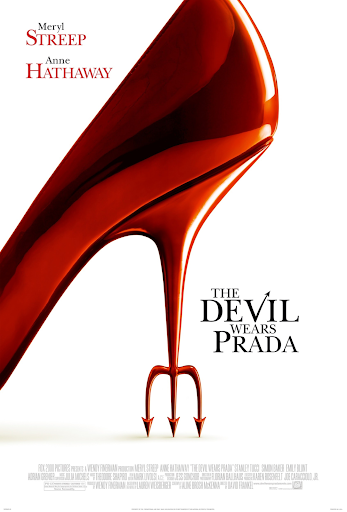
Released in 2006, The Devil Wears Prada depicted the fashion industry as a glamorous yet unforgiving environment defined by strict, image-focused authority. Nearly twenty years later, legal, social, and technological shifts have transformed the landscape. The new sequel revisits the high-fashion world, now pressured by modern concerns such as labor law, intellectual property, digital ethics, sustainability, and AI regulation. A contemporary “Devil” must navigate these evolving legal and ethical demands alongside traditional notions of glamour.
The once-authoritative figures, like Miranda Priestly, may not align with today’s legal and cultural standards. Workplace policies now emphasize respect for workers’ rights, equity, and dignity. For example, Canadian law, such as the Pay Equity Act, requires federally regulated employers to ensure that jobs predominantly done by women are compensated equally to those predominantly done by men.
Employers are also increasingly required to have harassment and violence-prevention policies, conduct fair investigations into complaints, and provide training and clear resolution procedures. When creating a dress code or “corporate image” requirements, the Ontario Human Rights Commission emphasizes that such policies should not have a discriminatory impact based on gender, gender identity/expression, or other grounds of protection.
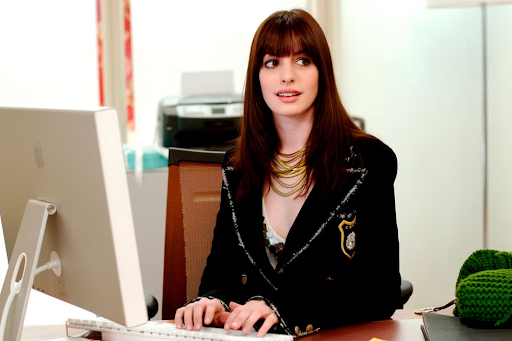
A fashion-industry “Devil” today has to work under a legal framework where workplace equity, diversity, and respect are highly expected, a reality in sharp contrast with the old-school, because-I-said-so model of fashion leadership. A sequel that acknowledges this shift could explore how power relations, authority, and managerial style have been reformed under the law and social pressure.
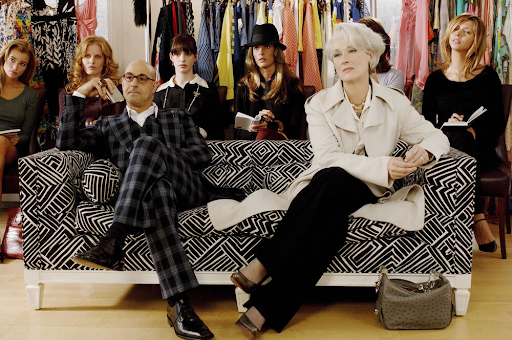
Intellectual Property, Design Rights and the boundaries of protection of fashion.
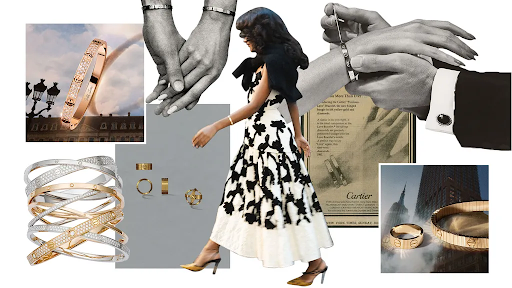
The safeguarding of creative design is one of the most thorny legal issues in fashion, both historically and today. Traditionally, the utility of clothes and other fashion products has meant that many jurisdictions have denied them the same copyright or design protection granted to other artistic works.
Since fashion designs are useful articles, critics note that they typically fall outside the scope of copyright protection under most copyright laws. An example of this is in Canada, where the Copyright Act does not automatically grant protection to all new designs of apparel; copyright mainly safeguards original works, which generally excludes designs whose primary value is utilitarian.
Although some protections exist through industrial/design-specific laws, like the Industrial Design Act, this protection applies only when the design is properly registered. This legal gap disadvantages independent or small designers who, due to a lack of resources, may be unable to register their designs or enforce their rights against fast-fashion companies that replicate and mass-produce their work.
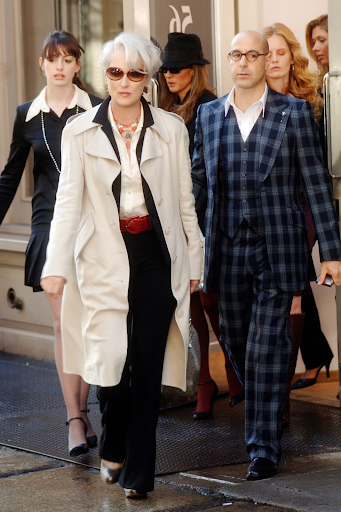
This structural imbalance might be a source of inquiry in a sequel setting: the conflict between creativity, commercial scale, and legal safeguarding; the vulnerability of small designers; and the question of whether fashion houses can or even ought to be held accountable under IP law for copying something that in 2006 might be morally dubious but largely permissible under the law.
Artificial Intelligence, Technologies, and the New Frontier of the Intelligible Property Borders.
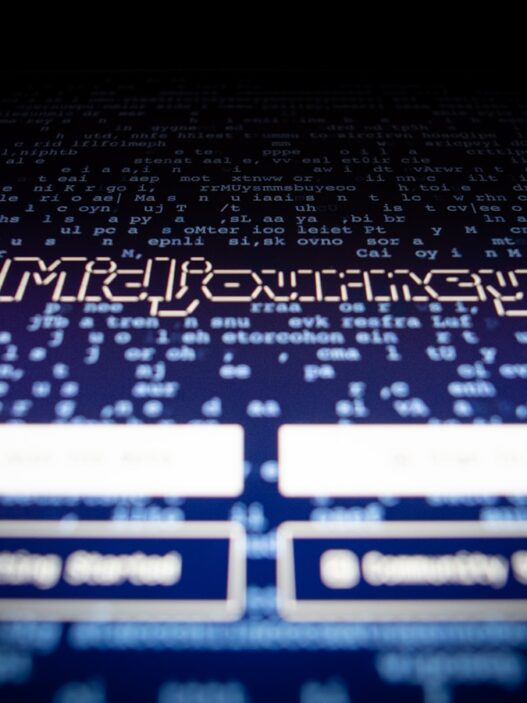
Technological transformation, particularly the emergence of generative AI (gen-AI), has been reshaping the meaning of creating and copying fashion since 2006. However, the law has been slow to adapt. The Journal of Intellectual Property Law & Practice (2025) recently discussed the way in which gen-AI in fashion design creates a serious copyright issue. Since most AI-generated designs are trained on massive datasets of pre-existing designs (some of which are still copyrighted), the question of the originality of AI-generated designs is a matter of legal controversy.
The dilemma: in case AI-created fashion is too derivative of a prior work, it might violate the copyright holder’s reproduction rights; in case it is altered and perfected by humans, it might attempt to claim originality. There are those who claim that there is also the question of ethics and transparency: who owns the output? Who owns the liability in the event AI-generated designs reproduce traditional or cultural designs (e.g., regionally distinctive patterns), in the case that training datasets are opaque?
This is complicated by the fact that existing IP regimes were mostly conceptualized prior to the extensive use of AI; most of them do not have direct statements regarding AI authorship or attribution. To play sequel in 2025, such tensions would be explored, dramatized, or themed: a plot set around a debate of authenticity, ownership, and creative credit in a world where algorithmic design is in competition with human creativity, all shadowed by legal ambiguity and moral uncertainty.
Why the Reboot (and Contemporary Critique) Should Be Law-Aware.
Technological transformation, particularly the emergence of generative AI, has been reshaping the meaning of creating and copying fashion since 2006. However, the law has been slow to adapt. The Journal of Intellectual Property Law & Practice (2025) recently discussed the way in which GenAI in fashion design creates a serious copyright issue. Since most AI-generated designs are trained on massive datasets of pre-existing designs (some of which are still copyrighted), the core originality of AI-generated designs is a matter of legal controversy.
The dilemma: if AI-created fashion is too derivative of a prior work, it might violate existing reproduction rights; if it is altered and perfected by humans, it might claim to establish originality. Some argue that there is also the question of ethics and transparency: who owns the output? Who owns the liability in the event AI-generated designs reproduce traditional or cultural designs (e.g., regionally distinctive patterns), when training datasets are opaque?
This is complicated by the fact that existing IP regimes were largely developed prior to the extensive use of AI; most of them lack clear provisions regarding AI authorship or attribution. To play the sequel in 2025, such tensions would be explored, dramatized, or themed: a plot set around a debate of authenticity, ownership, and creative credit in a world where algorithmic design is in competition with human creativity, all shaped by legal ambiguity and moral uncertainty.