

A Jurisprudential Analysis of the Collaborative IP Laundering Model in Haute Horlogerie: The Audemars Piguet × Swatch Royal Pop Collaboration (2026)
Introduction
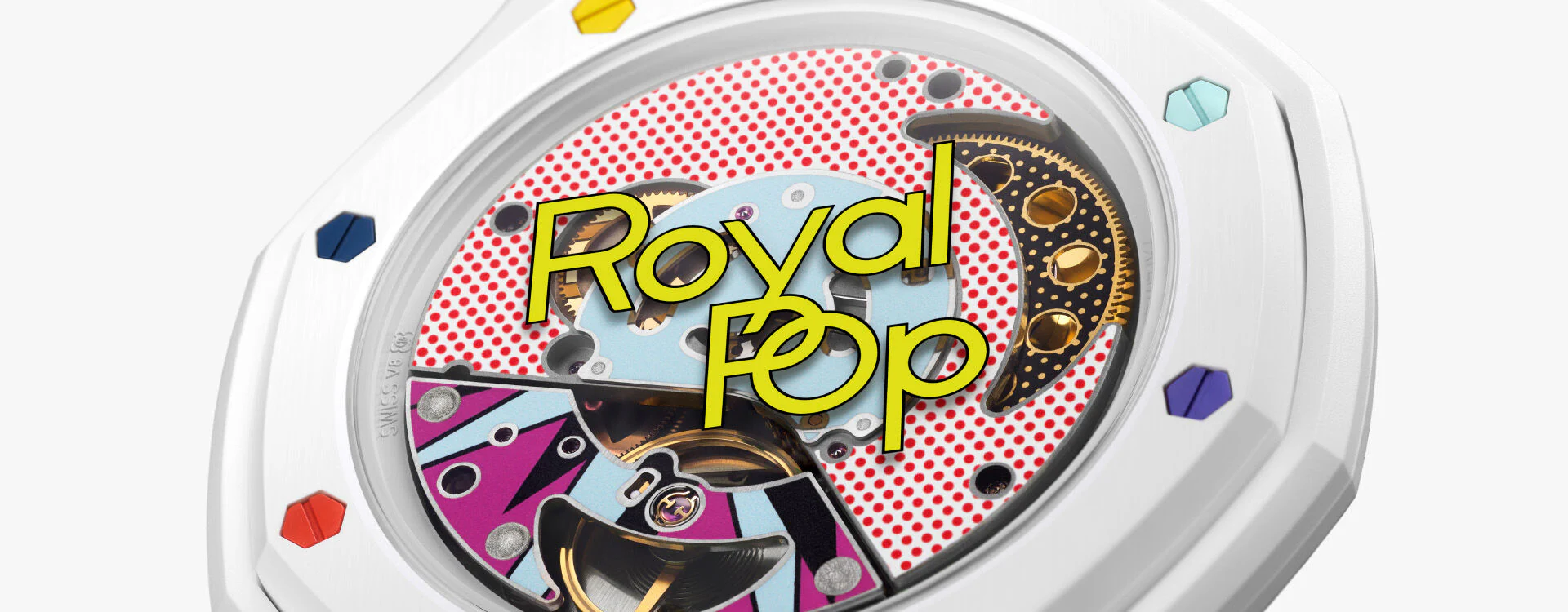
On 16 May 2026, Audemars Piguet (“AP”), one of Swiss horology’s most fiercely independent luxury houses, launched the “Royal Pop,” an eight-piece bio ceramic pocket watch collection produced in collaboration with the Swatch Group. The launch is simultaneously a marketing masterstroke and a jurisprudential event. It arrives at the precise moment that AP’s decade-long campaign to register the three-dimensional configuration of its iconic Royal Oak as a protectable trademark has collapsed across three jurisdictions, the United States Trademark Trial and Appeal Board (TTAB), the Japan Patent Office and its IP High Court, and the Court of Milan. This article argues that the Royal Pop is not merely a commercial collaboration; it is a deliberate strategic response to the failure of formal IP protection, deploying cross-segment licensing as a substitute for registration and a new trademark architecture as a defensive instrument.
The Royal Oak as IP Asset: Design History
In 1972, AP’s managing director Georges Golay commissioned Gérald Genta, the pre-eminent freelance watch designer of the era, to sketch a luxury steel sports watch overnight, for presentation at the Basel Watch Fair the following morning. [1]The result was the Royal Oak, an octagonal bezel secured by eight exposed hexagonal gold screws, inspired by the brass helmets of Swiss deep-sea divers, integrated into a seamless tapered steel bracelet. Launched at 3,300 Swiss francs, more expensive than a contemporary gold Patek Philippe, the Royal Oak initially baffled the market. Over the following decade, it established an entirely new product category of the luxury sports watch.[2]
A structural tension shapes the design’s IP significance. The Royal Oak is the creation of an identifiable author, sketched in one evening; it has an undeniable artistic personality. Yet Genta’s inspirational sources were explicitly functional. Exposed screws replicate the structural necessity of sealing a diver’s helmet; the octagonal form echoes naval porthole geometry. This tension between artistic originality and functional referentiality would prove legally fatal to AP’s registration campaign.
Genta compounded the problem by designing cognate vocabulary for competitors. The Patek Philippe Nautilus (1976), the IWC Ingenieur SL (1976), and the Cartier Pasha (1985) all deploy integrated bracelets, geometric bezels, and exposed architectural hardware.[3] The result is a crowded field in which no single manufacturer can credibly argue that the design grammar of the luxury sports watch uniquely identifies its source.
The Multi-Jurisdictional IP Collapse
When examining the jurisdictional record, it is necessary to establish the doctrinal standard that governed each proceeding, a standard that Indian trademark law articulates with particular clarity and that is directly relevant to the comparative analysis this article undertakes. Under Sections 9 and 32 of the Trade Marks Act, 1999, a product’s shape cannot be treated as inherently distinctive. It requires proof of acquired distinctiveness through long and exclusive use before it is eligible for registration. The Delhi High Court stated this principle with precision in Knitpro International v. Examiner of Trade Marks (2022)[4], holding that a shape mark must be immediately identifiable with the source of the product by itself, without any accompanying name or logo, and that only shapes which consumers have come genuinely to read as identifying a particular legal entity, rather than as a functional or ornamental feature of the product category, can qualify as trademarks. The court was explicit that generic or functional shapes, however familiar to consumers, cannot serve as source identifiers. The earlier decision in M.R.F. Limited v. Metro Tyres Limited (1990) [5]shows the same court acknowledging the doctrine’s obverse: a distinctive tyre tread pattern had, through sustained and exclusive use, moved sufficiently beyond mere functionality to signal a specific commercial origin in the consumer’s mind, and on that basis warranted protection. Together, these decisions draw the line that every jurisdiction has consistently applied to the Royal Oak’s design, a shape that is generic, functional, or associated in consumer perception with a word mark rather than with the configuration itself will not cross the threshold; a shape that consumers have genuinely learned to read as a brand signal, independent of any textual accompaniment, can. It is against this standard, consistent across the U.S., Japan, Italy, and India, that AP’s multi-jurisdictional record must be assessed.
United States: TTAB (2025)
AP filed two USPTO applications seeking registration of the Royal Oak’s three-dimensional configuration, encompassing the watch face, octagonal bezel, eight hexagonal screws, case, and integrated bracelet. The examiner refused both on grounds of functionality and absence of acquired distinctiveness. Rather than narrowing its claims to the bezel and screwheads, the elements the USPTO found potentially distinctive, AP appealed to the TTAB, seeking protection for the full design system as a unitary mark. In a decision of 2 January 2025, subsequently incorporated into the USPTO’s Trademark Manual of Examining Procedure (TMEP) update of June 2025, the TTAB affirmed the refusal on both grounds.[6] The functionality analysis found that round watch faces are utility-driven and ubiquitous. The distinctiveness analysis delivered the more damaging blow. AP’s own advertising systematically foregrounded the “Audemars Piguet” and “AP” word marks alongside product images, meaning consumers associated the design with a word mark and not the design configuration itself. The TTAB further noted that AP’s catalogues feature Royal Oak variants that lack one or more claimed design elements, thereby precluding proof of a consistent unitary mark.
B. Japan: JPO and IP High Court (2020–2024)
AP filed a Japanese trademark application for the Royal Oak shape in February 2020. The JPO examiner rejected it under Article 3(1)(iii) of the Japan Trademark Law as lacking inherent distinctiveness because the design fell within customary wristwatch shapes. The JPO Appeal Board affirmed in June 2023 and additionally found AP’s secondary-meaning evidence insufficient. Only eleven official stores in Japan, no market share data, and publications that invariably paired the Royal Oak with its word mark. AP’s suit before the Japan IP High Court was dismissed on 28 March 2024.[7] In a separate proceeding decided in October 2024, the JPO dismissed AP’s opposition to registration of the word mark “ROYAL OAK” by a Japanese whisky maker, finding insufficient general consumer recognition, illustrating the limits of an IP strategy that had never penetrated mass-market consciousness.[8]
C. Italy: Court of Milan (2015)
The erosion of AP’s IP position predates these proceedings. In March 2015, the Milan Business Court rejected AP’s preliminary injunction against a domestic start-up selling a Royal Oak-influenced steel sports watch at approximately €150.[9] The Court found that the individual design elements, octagonal bezel, exposed screws, and integrated case form were common across the industry and thus lacked the particularised distinctiveness required for interim relief. The Court notably held that AP’s extreme price-point separation (€20,000 versus €150) did not automatically establish the distinctiveness necessary to ground a trade dress claim.
The Royal Pop: Strategic Mechanics
The Royal Pop’s IP architecture was assembled over two years in deliberate sequence. On 15 January 2024, Swatch AG filed “ROYAL POP” as a Swiss trademark in Class 14.[10] On 28 March 2024, the Japan IP High Court dismissed AP’s design appeal. On 18 June 2024, Swatch filed the mark internationally under the Madrid Protocol. On 17 December 2024, the U.S. registration was confirmed. On 2 January 2025, the TTAB published its refusal of AP’s configuration marks. The Royal Pop launched on 16 May 2026. The sequence is consistent with a collaboration conceived precisely as AP’s IP position collapsed, using it to generate new registered trademark rights (“ROYAL POP”) that AP could not obtain for the design elements themselves.
The commercial structure reinforces this reading. AP confirmed that 100% of its proceeds from the collaboration will flow directly to a non-profit initiative to preserve watchmaking savoir-faire, funding training for the next generation of Swiss horological craftspeople. This commitment neutralises the narrative of brand dilution. AP cannot be characterised as selling its design language for profit, and converts the collaboration from a revenue play into a philanthropic instrument. Industry analysts estimate the royalty pool at CHF 25–50 million based on MoonSwatch volume comparisons; AP has declined to retain a single franc of it.
The pocket watch format is equally deliberate. The Royal Oak’s identity is inseparable from the wristwatch format; a pocket watch wearing Royal Oak design elements occupies a categorically different product space, preventing any product-line confusion between the Royal Pop and the luxury original. It borrows the design vocabulary of the Royal Oak without replicating its category, a form of controlled artistic quotation that declares its own secondary status while requiring recognition of the original for legibility. This is an IP strategy through product architecture rather than registration.
The Royal Pop’s most underappreciated legal risk, however, lies not in what it says but in how it is structured. Secondary meaning in trademark law is not a free-floating asset; it attaches to a specific applicant. For AP to successfully re-file for protection over the Royal Oak’s design configuration, it must demonstrate that the relevant consuming public associates the octagonal bezel, the eight hexagonal screws, and the tapisserie pattern with Audemars Piguet as a single, identifiable source, not with watches generally, and critically, not with Swatch. The Royal Pop’s distribution architecture makes this genuinely difficult. The collaboration is retailed exclusively through Swatch boutiques; every consumer touchpoint, the retail environment, the packaging, the sales staff, and the store’s brand identity is Swatch. Over hundreds of thousands of transactions, this architecture builds an association between the Royal Oak’s design vocabulary and the Swatch retail experience that may, over time, compete with AP’s single-source design claim rather than reinforce it. A design that consumers learn to associate simultaneously with AP and Swatch is, for registration purposes, arguably associated with neither as a sole source indicator, since secondary meaning demands that consumers understand the shape to mean “this came from one specific maker.” Co-branding, by definition, signals two makers. This risk can be managed; marketing communications that consistently frame the Royal Pop as “Swatch’s interpretation of the Audemars Piguet Royal Oak design,” preserving AP as originator and Swatch as manufacturing partner, maintain a cleaner attribution structure. Still, it cannot be eliminated, and it represents the collaboration’s most consequential unresolved legal tension.
Economic Analysis: Democratisation and Dilution
The MoonSwatch (March 2022) provides the closest commercial precedent. Omega and Swatch,, both Swatch Group members,, launched a bio-ceramic wristwatch referencing the Speedmaster Moonwatch at $260 retail. [11]Over two million units were sold across 36 models. Secondary market prices averaged $900 within the first week, a 250% premium. Omega’s brand metrics improved. The MoonSwatch became the most-traded watch release in StockX history at launch. Former AP CEO François-Henry Bennahmias praised it publicly as “innovative,” a statement whose prescience became apparent when AP announced its own analogous collaboration.[12]
The brand dilution counterargument is structurally serious. The Royal Oak’s value rests not merely on material quality but on its symbolic economy of decades of controlled scarcity, limited annual production of approximately 50,000–53,000 pieces, multi-year waiting lists, and secondary market premiums that derive from the perception that the Royal Oak is inaccessible. That perceived inaccessibility depends on social distance, the distance between Le Brassus and the Swatch boutique on the high street, which the Royal Pop explicitly closes. Luxury economists in the tradition of Dubois and Laurent would argue that aspirational desire is most powerful when the aspirant possesses a physical talisman that sustains rather than discharges the desire; [13] the $400 Royal Pop may function as precisely such a talisman for a generation priced out of the Royal Oak. The decisive empirical question of whether Royal Pop buyers become Royal Oak buyers, or whether the $400 encounter discharges aspiration rather than intensifying it, will take years to answer. What is already clear is that the Royal Pop creates an audience-development infrastructure that AP’s own distribution model of under 100 mono-brand boutiques, at an average transaction price of CHF 51,000, cannot structurally build.
Jurisprudential Synthesis
The Royal Pop exemplifies what this article designates the “Collaborative IP Laundering” (CIL) model, where a luxury house facing the failure of formal IP registration, enters a controlled licensing arrangement with a mass-market manufacturer to accomplish what registration denied namely enforceable trademark rights in the collaborative context, controlled deployment of the design in a defined product category, and cultural narrative ownership that formal registration cannot provide. Through the Royal Pop, AP generates a registered mark (“ROYAL POP”) around the collaboration; channels proceeds to a philanthropic purpose that neutralises dilution critiques; and creates a legal record of voluntary, controlled use that complicates future copycat claims of abandonment or field saturation.
The deeper jurisprudential lesson is that formal IP law is structurally inadequate to protect the kind of value that defines luxury goods. The Royal Oak’s market power derives from accumulated social capital. The story of Genta’s overnight sketch, the waitlists, the wrists it has graced, none of which is registrable. AP has understood this. The Royal Pop operates not at the level of trademark registration but at the level of cultural narrative, using the collaboration to extend the Royal Oak’s story, recruit new participants into its mythology, and reinforce, through the very act of controlled democratisation, the aspiration that sustains the original’s pricing power. It is an IP strategy conducted through narrative rather than registration, through cultural events rather than litigation.
For practitioners, the TTAB’s January 2025 ruling signals that luxury brands whose advertising foregrounds word marks over design elements will face structural difficulty establishing that consumers recognise the design itself as a source indicator. Brands relying on product configuration as a primary competitive asset should urgently document “look for” advertising directed specifically at design elements, and should not assume that global fame substitutes for jurisdiction-specific secondary-meaning evidence independent of word-mark association.
Conclusion
The Royal Pop is the most significant jurisprudential event in fashion law since the MoonSwatch demonstrated that accessible luxury collaborations need not destroy the luxury original. But unlike the MoonSwatch, an intra-group affair managed within a single corporate governance structure, the Royal Pop is a cross-group licensing transaction between an independent luxury house and a mass-market conglomerate, executed at the precise moment that the luxury house’s formal IP campaign has collapsed across three continents. It is simultaneously an acknowledgement of legal limits and a demonstration that those limits need not be fatal. AP could not trademark the Royal Oak’s design. It has instead trademarked something arguably more powerful, the story of what the Royal Oak means, extended to an audience that couldn’t have afforded it, funded in a manner that makes the extension impossible to criticise. The oak has left Le Brassus. The legal and economic consequences will unfold for years.
Author: Aleena Mary Joseph

| Aleena Mary Joseph is a BBA. LLB (Hons.) candidate at the National Forensic Sciences University, Delhi. Her research focuses on the intersection of general corporate law, intellectual property strategy, and commercial regulatory compliance. She is currently a legal intern at Reliance Industries Ltd., where she works on internal legal matters in the retail sector. Additionally, she is a candidate for the Company Secretary (CS) Executive Level program and serves as the Co-Convenor of the Internship Assistance Cell at NFSU Delhi. She frequently writes on contemporary legal issues affecting the retail and luxury sectors. |
Refrences:
[1] Audemars Piguet Heritage Department. (n.d.). The Origins of the Royal Oak. Audemars Piguet Archives.
[2] Foulkes, N. (2022). Royal Oak: From Iconoclast to Icon. Assouline Publishing.
[3] See generally Genta, G. (Design Patents/Historical Archives for Patek Philippe Nautilus and IWC Ingenieur SL).
[4] 2022/DHC/002720
[5] 1990 (10) PTC 101 (Mad)
[6] In re Audemars Piguet Holding S.A., 2025 USPQ2d 18 (T.T.A.B. Jan. 2, 2025); see also U.S. Patent & Trademark Office, Trademark Manual of Examining Procedure (TMEP) § 1202.02 (June 2025 ed.).
[7] Audemars Piguet Holding SA v. Japan Patent Office, Case No. Reiwa 5 (Gyo-Ke) 10119 (Japan IP High Ct., Mar. 28, 2024).
[8] Japan Patent Office (JPO) Opposition Decision, Opposition No. 2024-900016, Oct. 16, 2024.
[9] Court of Milan, Business and IP Specialized Section, Order of March 12, 2015, Audemars Piguet Holding S.A. v. The One Watches S.r.l.
[10] Swiss Federal Institute of Intellectual Property (IGE/IPI), Trademark Application for “ROYAL POP” in Class 14, filed Jan. 15, 2024 (International filing date June 18, 2024).
[11] Swatch Group. (2022, March). Bioceramic MoonSwatch Collection Press Release. Swatch Group Archives.
[12] Bennahmias, F.-H. (2022). Interview with François-Henry Bennahmias. Luxury Tribune (as cited in WatchPro).
[13] Dubois, B., & Laurent, G. (1994). Attitudes toward the concept of luxury: An exploratory analysis. Asia-Pacific Advances in Consumer Research, 1(1), 273-278.
FASHION LAW JOURNAL INSIDER
Join designers, brand founders and fashion lawyers who get the biggest brand battles, IP fights and career moves in fashion law, straight to their inbox.