
John Galliano’s Re{form} collection reworks Zara’s own back catalogue. The backlash is about the price, and the price was always the point.
The detail that slipped past almost everybody is this. John Galliano did not design a collection for Zara. He went into Zara’s past and took it apart.
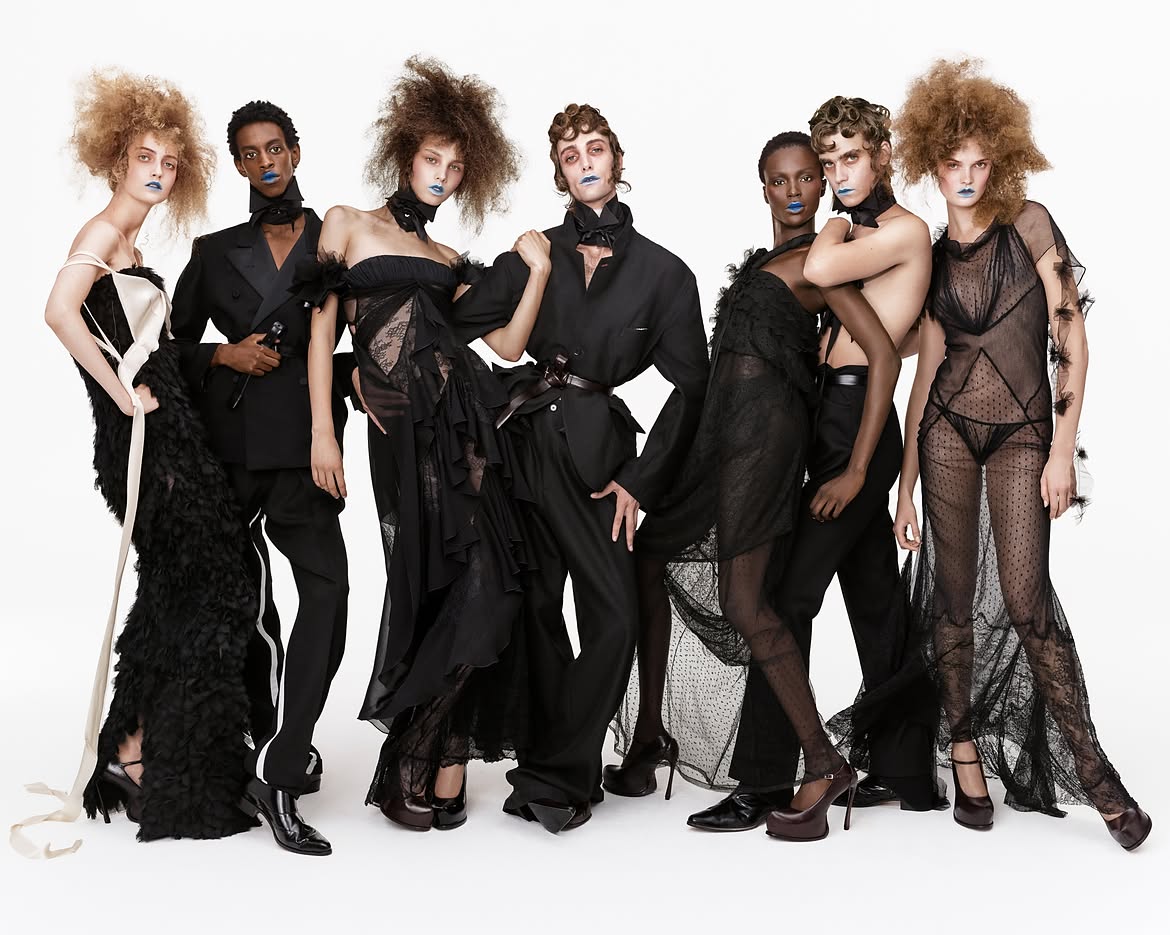
Re{form} Zara by John Galliano, Vol. 1, which landed on 1 October as the first instalment of a two-year arrangement, is built from the company’s own archive. Existing Zara pieces, cut open, dismantled and reassembled. The collection notes call it an act of revolution, reconstruction and renewal, and describe the whole thing as a couturier’s exchange with the archives of a fashion purveyor. The techniques have names, because of course they do. Re{form}ing. The Flix. The Shi/ft. Deep Pockets, which is either a joke about silhouette or a joke about the customer, and works beautifully as both.
Sit with the phrase for a second. The archives of a fashion purveyor.
An archive is the one thing fast fashion was never supposed to have
An archive is what heritage houses have. It is the room in Paris where someone in white gloves brings out a 1954 suit so that the current designer can look at how a shoulder was built. It is the proof that a house has a past worth consulting, and it is the single most reliable way a brand signals that its clothes were made to outlast the season they were sold in.
Fast fashion was founded on the opposite proposition. The entire machine runs on the understanding that nothing you bought eighteen months ago is worth returning to, which is precisely why you will be back. A company that encourages you to treasure last year’s blouse has a serious problem with this year’s numbers.
So when Zara announces that it has an archive, and pays one of the most decorated couturiers alive to rummage through it, that is a rather significant thing to claim. It is a brand saying that its own back catalogue has the status of source material.
Whether it does is a separate question, and the answer arrived within about forty-eight hours.
What Zara is actually buying
The commercial logic is not mysterious, and it is not really about clothes.
Inditex reported full-year 2025 sales of €39.9 billion, up 3.2 per cent, with net income up 6 per cent to €6.2 billion, and opened 2026 at a brisker 9 per cent. Those are enviable figures that nonetheless describe a company whose growth is arriving in smaller increments. When volume stops doing the work, the next lever is pricing power, and pricing power is a question of positioning rather than production.
Zara has been pulling this lever for a while. Its collaborations with Samuel Ross and Kate Moss pushed top-end pieces to somewhere between two and four times its core range, which is the whole exercise. One luxury analyst put the strategy plainly, noting that some collaborations are designed to generate attention and reposition a brand rather than to shift volume.
Re{form} runs from about $29.99 for a small accessory to $999 for a dress, or £79.99 to £469 in Britain. For a company whose reputation was built on the opposite end of that range, the top number is the entire announcement.
This is a different proposition from the format H&M invented with Karl Lagerfeld in 2004, which was a famous designer producing new clothes for the high street at high-street prices, available for one hysterical weekend. Here, a famous designer has been engaged to make the high street’s old clothes expensive. The flow of value has been reversed, and it took twenty-two years to get there.
The customer read the first half and declined the second
Social media did not object to the premise. It objected to the invoice.
The dominant complaint was about construction. One commenter described the collection as a bunch of rags and cheap fabric put together with hot glue for a photo shoot. Another observed, more temperately, that the pieces were overpriced given the materials. A smaller number of people raised Galliano’s history, which is a separate conversation, but the loud response was about value.
That response is more interesting than it looks, because of what it concedes. Nobody said Zara has no archive. Nobody disputed that a couturier had done something to the garments. The argument was conducted entirely on the terrain Zara had chosen, and it came down to whether reconstruction by a famous pair of hands is worth a four-hundred per cent premium over the same fabric unreconstructed.
Which is, when you strip it down, the question underneath every luxury transaction ever made. Zara has simply asked for it in a shop where everyone can still remember what the original item cost.
The most improbable career in fashion
It is worth noting where Galliano has arrived, because the route is extraordinary by any measure.
He ran Givenchy and then Dior through the most theatrical period in modern couture, was dismissed by the house in 2011 following antisemitic remarks for which he was convicted in a French court and has since repeatedly apologised, spent a decade from 2014 rebuilding a reputation at Maison Margiela, produced in that time work widely regarded as the finest of his career, and left in December 2024.
And the next thing he did was go to the high street and cut up its stock.
There is no obvious precedent for that. Designers move down market all the time, usually to sell their name on a fragrance or a pair of sunglasses, which is a licensing arrangement dressed up as a collaboration. This is a man physically disassembling someone else’s mass-produced garments and sending them back out with his signature on them.
What Re{form} is really selling
Fast fashion’s founding promise was that you would never want last season.
Re{form} is Zara testing the opposite. It is a bet that you would in fact keep last season, treasure it, and pay several times over for it, provided somebody sufficiently celebrated told you it was worth keeping. The clothes are made of Zara. The premium is made of Galliano.
That is a clever piece of merchandising and a slightly dizzying one, because if it works, the company that taught a generation to discard things will have found a way to sell the discarding back to them at couture adjacency pricing.
Volume two arrives in due course. The thing to watch is not the clothes. It is the top price.
FASHION LAW JOURNAL INSIDER
Join designers, brand founders and fashion lawyers who get the biggest brand battles, IP fights and career moves in fashion law, straight to their inbox.