Three of the most valuable names in Swiss watchmaking have no stock market listing and no luxury conglomerate behind them. Audemars Piguet is still owned by the two families that founded it in 1875, Rolex belongs to a Geneva charitable foundation, and Patek Philippe has been in the Stern family since 1932. Who owns a watch house is more than trivia: it decides who controls the trade marks, who chooses the retailers, how the brand treats the grey market and whether it can ever be sold. This explainer sets out the verified ownership of each house, compares them with the big groups, and looks at the legal consequences.
Short answer: The Audemars Piguet owner is the Audemars and Piguet founding families. The company is private and independent, chaired since November 2022 by former Tiffany chief executive Alessandro Bogliolo, with Ilaria Resta as chief executive since 1 January 2024. Rolex is owned by the Hans Wilsdorf Foundation, and Patek Philippe is owned by Thierry Stern.
Key takeaways
- Audemars Piguet describes itself as “independent and family owned” and as the oldest watch manufacturer still in the hands of its founding families.
- Rolex Holding SA is ultimately solely controlled by the Fondation Hans Wilsdorf, according to the European Commission’s 2024 decision clearing Rolex’s purchase of Bucherer.
- Thierry Stern, president of Patek Philippe since 2009, said in comments reported in October 2026 that he holds 100% of the shares and that the aim is to stay independent.
- Most other big names sit inside listed groups: Richemont, Swatch Group and LVMH, each controlled by a founding family through voting rights.
Who owns Audemars Piguet?
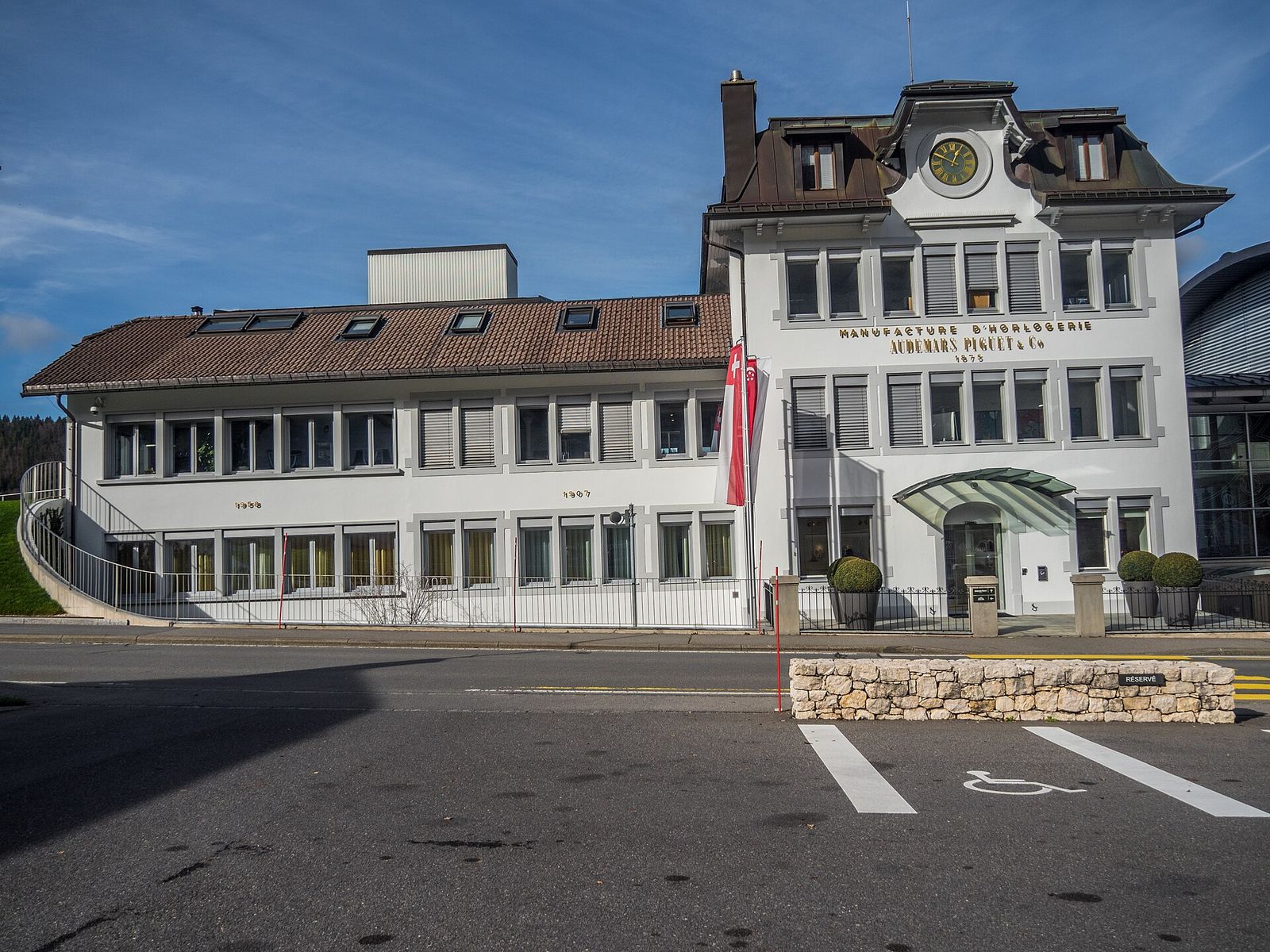
Audemars Piguet was founded in 1875 in Le Brassus, in the Vallée de Joux, by Jules Louis Audemars and Edward Auguste Piguet. The company’s own history page calls it “independent and family owned” and “the oldest watchmaking manufacturer still in the hands of its founding families”. It is a private company, so it does not publish accounts or the split of shares between the Audemars and Piguet families.
Family ownership does not mean family management. Jasmine Audemars, a member of the founding family, chaired the board for about 30 years before stepping down in 2022. Alessandro Bogliolo, the former chief executive of Tiffany & Co., became chairman on 11 November 2022. Olivier Audemars, a great-grandson of one of the founders, is vice chairman of the board. Day-to-day leadership passed from François-Henry Bennahmias, who had spent nearly 30 years at the company, to Ilaria Resta, previously of Firmenich and Procter & Gamble, who became chief executive on 1 January 2024. When her appointment was announced in May 2023, Bogliolo described Audemars Piguet as “an independent family-owned company”. There has been no change of ownership since.
FLJ Insider Pro is open: live fashion law jobs and internships, five career guides and two roadmaps. Early bird USD 12/month. See what's inside
Being independent has let the company make choices a listed group might not. It has spent years moving sales into its own boutiques and “AP Houses” and away from multi-brand retailers, and in May 2026 it launched the Royal Pop with Swatch, a collaboration FLJ has examined in When The Oak Leaves Le Brassus and The Royal Pop Resale Machine.
Who owns Rolex?
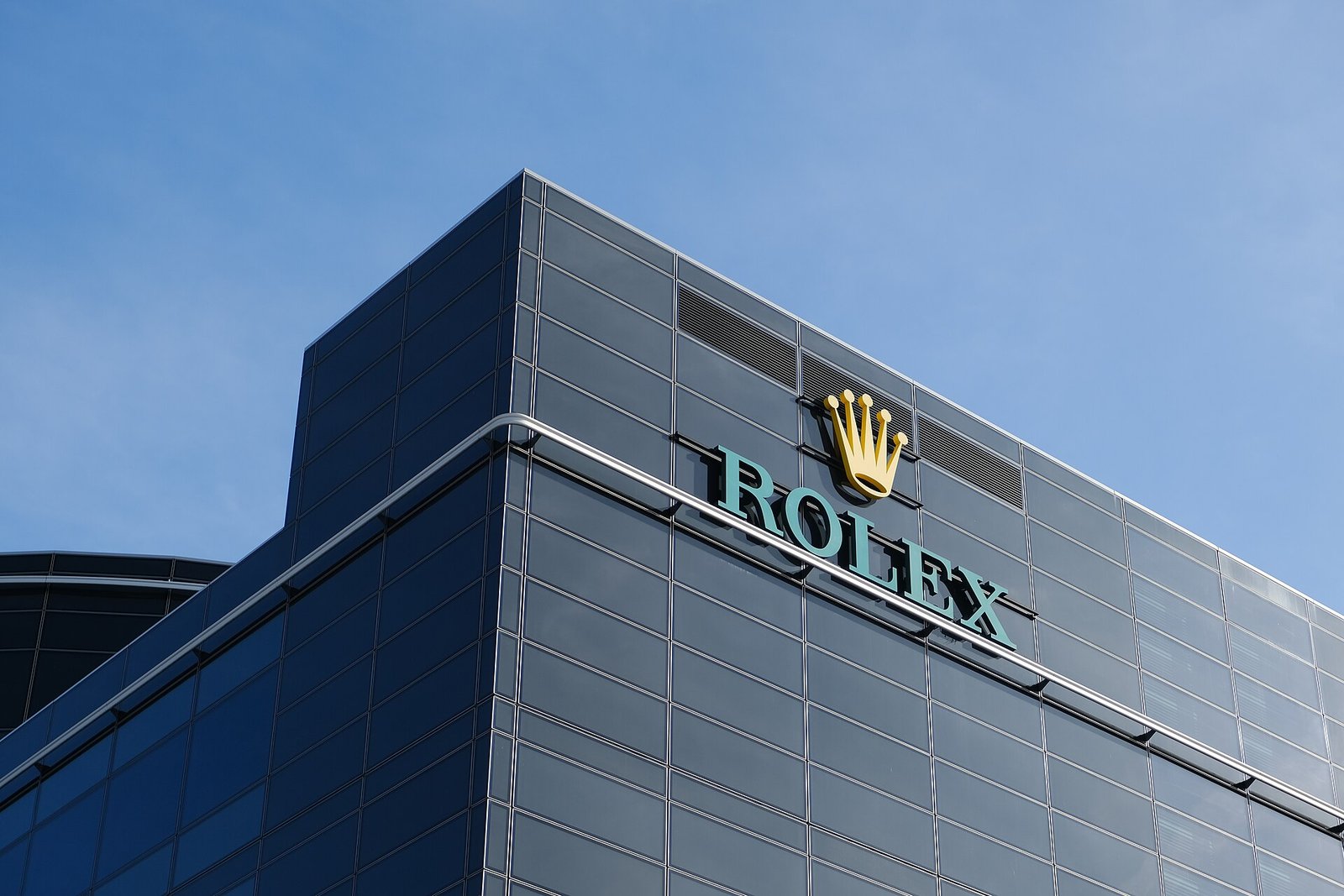
Rolex has no individual owner. Hans Wilsdorf, who founded the business in London in 1905, set up the Hans Wilsdorf Foundation in 1945 after the death of his wife and left it his Rolex shares. The foundation has owned the company since Wilsdorf died in 1960. It is a private Swiss foundation based in Geneva that funds social, educational and cultural causes. The clearest official statement of the position is in the European Commission’s merger decision in case M.11246, which says Rolex Holding SA “is ultimately solely controlled by Fondation Hans Wilsdorf”. The group owns two watch brands, Rolex and Tudor.
The same decision explains Rolex’s biggest recent deal. Under two share purchase agreements signed on 23 August 2023, Rolex agreed to buy Bucherer, the Lucerne retailer that had sold its watches since 1924. Jörg G. Bucherer, who had no heirs, chose Rolex as the buyer; he died on 6 November 2023 before the deal closed. The Commission cleared the purchase on 10 July 2024. At the time Bucherer ran 112 shops, including Tourneau stores in the US, and Rolex said it intended to keep Bucherer as an independent multi-brand retailer. Rolex’s chief executive, Jean-Frédéric Dufour, said in November 2025 that the company had “no intention of growing Bucherer” at the expense of its other retail partners.
Who owns Patek Philippe?
Patek Philippe was founded in Geneva in 1839 and became Patek, Philippe & Cie in 1851. In 1932, during the Great Depression, it was bought by Charles and Jean Stern, dial makers who supplied the company. It has stayed with the Stern family ever since. Henri Stern led the company, then his son Philippe Stern was president from 1993 to 2009, and Philippe’s son Thierry Stern has been president since 2009. Philippe Stern, who remained honorary president, died in June 2026 aged 88, as National Jeweler reported.
Thierry Stern has been unusually direct about ownership. Speaking at an exhibition in Milan in autumn 2026, he said “by having 100% of the shares, I can choose what to do” and that “the target is to stay independent”, according to WatchPro. He said there is no timetable for handing over to his two sons, who are being prepared for the business. FLJ has covered how Patek’s reputation makes it a target for fakes in a Dubai court ruling over a counterfeit Patek.
How do the independents compare with group-owned watch houses?
Many other famous watch brands belong to one of three listed groups. Each is still controlled by a family, but through voting power in a public company rather than outright ownership. Richemont’s 2025 corporate governance report says Compagnie Financière Rupert, whose general managing partner is chairman Johann Rupert, held 10.18% of the capital and some 51% of the voting rights at 31 March 2025. At Swatch Group, the Hayek family pool holds 26.4% of the capital and 44.5% of the votes, and it saw off an activist shareholder’s bid for a board seat in May 2026, as FashionUnited reported. AFP reported in February 2026 that the Arnault family had passed 50% of LVMH’s capital, with about 66% of the voting rights.
| Owner | Type | Who controls it | Main watch brands |
|---|---|---|---|
| Audemars Piguet | Private, independent | Audemars and Piguet founding families | Audemars Piguet |
| Rolex group | Owned by a private foundation | Hans Wilsdorf Foundation | Rolex, Tudor |
| Patek Philippe | Private, independent | Stern family (Thierry Stern holds 100%) | Patek Philippe |
| Richemont | Listed on SIX Swiss Exchange | Rupert family vehicle, about 51% of votes | Cartier, Vacheron Constantin, A. Lange & Söhne, Jaeger-LeCoultre, IWC, Panerai, Piaget, Roger Dubuis |
| Swatch Group | Listed on SIX Swiss Exchange | Hayek family pool, 44.5% of votes | Breguet, Blancpain, Omega, Longines, Tissot, Swatch |
| LVMH | Listed on Euronext Paris | Arnault family, over 50% of capital | TAG Heuer, Hublot, Zenith, Bulgari, Louis Vuitton |
Group portfolios do change. Richemont completed the sale of Baume & Mercier to Italy’s Damiani Group in 2026, which is why the brand no longer appears among its maisons.
Why does a foundation or family structure matter legally?
No takeover route. A Swiss foundation has no shareholders, so there is nobody who can sell Rolex. A family company can be sold, but only if the families agree, which is why so much attention goes to succession at Audemars Piguet and Patek Philippe. Listed groups, by contrast, are protected by share structures and voting pools that give families extra control, rather than by the absence of a market.
Disclosure. Private owners and foundations are not bound by stock exchange reporting rules, so Rolex, Patek Philippe and Audemars Piguet do not publish revenue. Figures you read for them are analyst estimates. Richemont, Swatch Group and LVMH must publish audited results and disclose major shareholders.
Long-term decisions. Without quarterly reporting pressure, independents can hold back supply, cut retail partners or refuse to sell certain models through particular channels, even when that costs short-term sales.
How do these houses protect their trade marks?
In each case the names, logos and model names sit inside the owning group, so the owner alone decides when to sue. Independent houses tend to keep enforcement close: there is no licensor or sister brand whose interests need balancing. Rolex enforces its marks actively, as FLJ’s analysis of Rolex Watch USA v Beckertime shows, where the issue was modified and refurbished Rolex watches resold under the Rolex name.
Geography also matters to the brand. “Swiss made” and place names such as Geneva and the Vallée de Joux carry legal weight of their own, which FLJ explores in GIs of Time.
What about authorised dealers and the grey market?
All three houses control who sells new watches. Rolex relies heavily on independent retailers: the Commission’s decision records that it supplies more than 1,540 retail stores in over 90 countries, while itself running only one shop in Switzerland and two in Greece at the time. Audemars Piguet has gone the other way, shifting sales into its own boutiques. Both are forms of selective distribution, where the brand picks retailers against set criteria and forbids them from selling on to unauthorised traders. Competition law allows this within limits, including market share thresholds and a ban on blocking online sales outright.
The grey market is the gap in that wall. Once a genuine watch has been put on the market in the European Economic Area by the brand or with its consent, its trade mark rights in that watch are generally exhausted, so it can be resold without permission. The UK keeps a “UK+” regime under which goods first sold in the EEA are also treated as exhausted in Britain, though UK-market goods may not be treated as exhausted in the EEA, according to UK government guidance. In the US, the first sale doctrine does similar work, explained in FLJ’s guide to the first sale doctrine. Brands have answered with their own resale channels: Rolex’s Certified Pre-Owned programme lets authorised retailers resell used watches with a Rolex warranty.
For buyers, the safest route outside the authorised network is still due diligence. FLJ’s guide on how to spot counterfeit luxury before buying sets out the checks.
This article is general information, not legal advice. Ownership details are based on public statements and filings available at the time of writing; private companies are not required to disclose their shareholders.
Frequently asked questions
Who is the owner of Audemars Piguet?
Audemars Piguet is owned by the Audemars and Piguet families, descendants of the founders who started the business in Le Brassus in 1875. It is private and independent, does not belong to any luxury group, and does not disclose how the shares are divided between the two families.
Who runs Audemars Piguet today?
Ilaria Resta has been chief executive since 1 January 2024, succeeding François-Henry Bennahmias. Alessandro Bogliolo, the former Tiffany & Co. chief executive, has chaired the board since November 2022, after Jasmine Audemars stepped down. Olivier Audemars is vice chairman, keeping a family member at board level.
Is Audemars Piguet owned by Richemont, Swatch or LVMH?
No. Audemars Piguet is not part of any group. Its 2026 Royal Pop watch was a collaboration with Swatch, not a sign of common ownership. Vacheron Constantin, often grouped with Audemars Piguet and Patek Philippe, does belong to Richemont.
Can anyone buy Rolex?
In practice, no. Rolex is ultimately controlled by the Hans Wilsdorf Foundation, a private Swiss foundation that has no shareholders. Since Hans Wilsdorf died in 1960, the foundation has owned the company, and there are no shares on a stock exchange for an outside buyer to acquire.
Does Rolex own Bucherer?
Yes. Rolex agreed to buy Bucherer in August 2023 and the European Commission cleared the deal on 10 July 2024. Rolex said it would run Bucherer as an independent multi-brand retailer, and in November 2025 its chief executive said there was no intention of growing Bucherer at the expense of other partners.
Who owns Patek Philippe?
Patek Philippe is owned by the Stern family, which bought it in 1932. President Thierry Stern said in 2026 that he holds 100% of the shares and intends the company to stay independent. His father, honorary president Philippe Stern, died in June 2026.
Featured image: Photo: Jag9889 via Wikimedia Commons, CC BY-SA 4.0 (adapted)
FASHION LAW JOURNAL INSIDER
Join designers, brand founders and fashion lawyers who get the biggest brand battles, IP fights and career moves in fashion law, straight to their inbox.