

Bernard Arnault turned a bankrupt textile group into the world’s largest luxury company, and almost every step was a legal fight: with the French state, Louis Vuitton’s management, François Pinault, the Hermès heirs and Tiffany’s board. His fortune tracks one number, the LVMH share price, and 2026 has been his worst year on the rich lists in almost a decade. Here is his net worth with dates and sources, where the money sits, and the deals that built LVMH.
Short answer: Forbes put Bernard Arnault and family at $121.6 billion on 12 November 2026, 17th in the world. The Bloomberg Billionaires Index had him at $143 billion on 10 September 2026, down $65 billion in the year and out of the top 10 for the first time since 2017. Almost all of it is his family’s controlling stake of just over 50% in LVMH.
Key takeaways
- Arnault’s net worth is mostly LVMH stock, so the share price fall from €645 at the end of 2025 to about €403 in November 2026 has cut tens of billions from his fortune.
- The family controls LVMH through Agache, Financière Agache and Christian Dior SE, with 50.33% of LVMH’s capital and 66.27% of its voting rights in September 2026.
- The deals that built LVMH were legal battles as much as purchases: Boussac in 1984, LVMH in 1989, Gucci, Hermès (and an €8 million AMF fine), Bulgari and Tiffany.
- Christian Dior SE is due to become a partnership limited by shares called Agache at the end of December 2026, with Arnault as managing partner and his five children behind the general partner.
What is Bernard Arnault’s net worth in November 2026?
Forbes’ real-time profile listed “Bernard Arnault & family” at $121.6 billion as of 12 November 2026, 17th in the world. The Bloomberg Billionaires Index put him at $143 billion on 10 September 2026, the day he fell out of its top 10. Bloomberg’s report said his fortune had dropped $65 billion since January, the biggest fall among the 500 people on the index. That is the latest dated Bloomberg figure we could verify.
The two differ in how they value family holdings, debt and private assets, and neither is audited, but both show a sharp fall in 2026. Forbes puts his peak at $233 billion and had him at $151 billion in April 2026.
FLJ Insider Pro is open: live fashion law jobs and internships, five career guides and two roadmaps. Early bird USD 12/month. See what's inside
How has the LVMH share price moved his fortune in 2025 and 2026?
LVMH closed 2024 at €635.50 on Euronext Paris and 2025 at €645.00, so the shares ended 2025 almost flat after a spring fall and an autumn recovery. In 2026 the slide resumed. By April, Forbes reported, the stock was down about 26%, LVMH’s worst start to a year on record. It hit €378.55 on 2 October and closed at €403.10 on 11 November 2026, about 37% down on the year and well under half its April 2023 record above €900.
The family has used low prices to buy more. Bloomberg reported in February 2026 that Arnault bought €407 million of LVMH shares, and on 24 February that the family stake had passed 50%, at 50.01% of the capital and 65.94% of the votes. That raises control but also concentrates risk.
Where does the Arnault family’s wealth actually sit?
The chain runs through family companies. Agache owns 100% of Financière Agache. According to the 23 September 2026 Christian Dior announcement, Financière Agache holds 96.00% of Christian Dior SE’s capital and 97.10% of its votes, plus 6.77% of LVMH directly. Agache holds a further 0.51% of LVMH.
Christian Dior SE is the key link. Its 2025 annual report says it held 42% of LVMH’s capital and 56% of its votes at 31 December 2025, with the rest of the family group holding another 8% and 10%. By September 2026 the family total was 50.33% of the capital and 66.27% of the votes. The gap reflects double voting rights, which French companies can give to shares held in registered form for a qualifying period.
Forbes also lists a 40% stake that Arnault and LVMH hold in private equity firm L Catterton, Agache’s majority stake in Paris FC bought in 2024, and minority stakes in Hermès and Birkenstock. These are small next to LVMH, whose houses are listed in FLJ’s guide to every LVMH brand and how the group bought it.
How did the Boussac takeover in 1984 start it all?
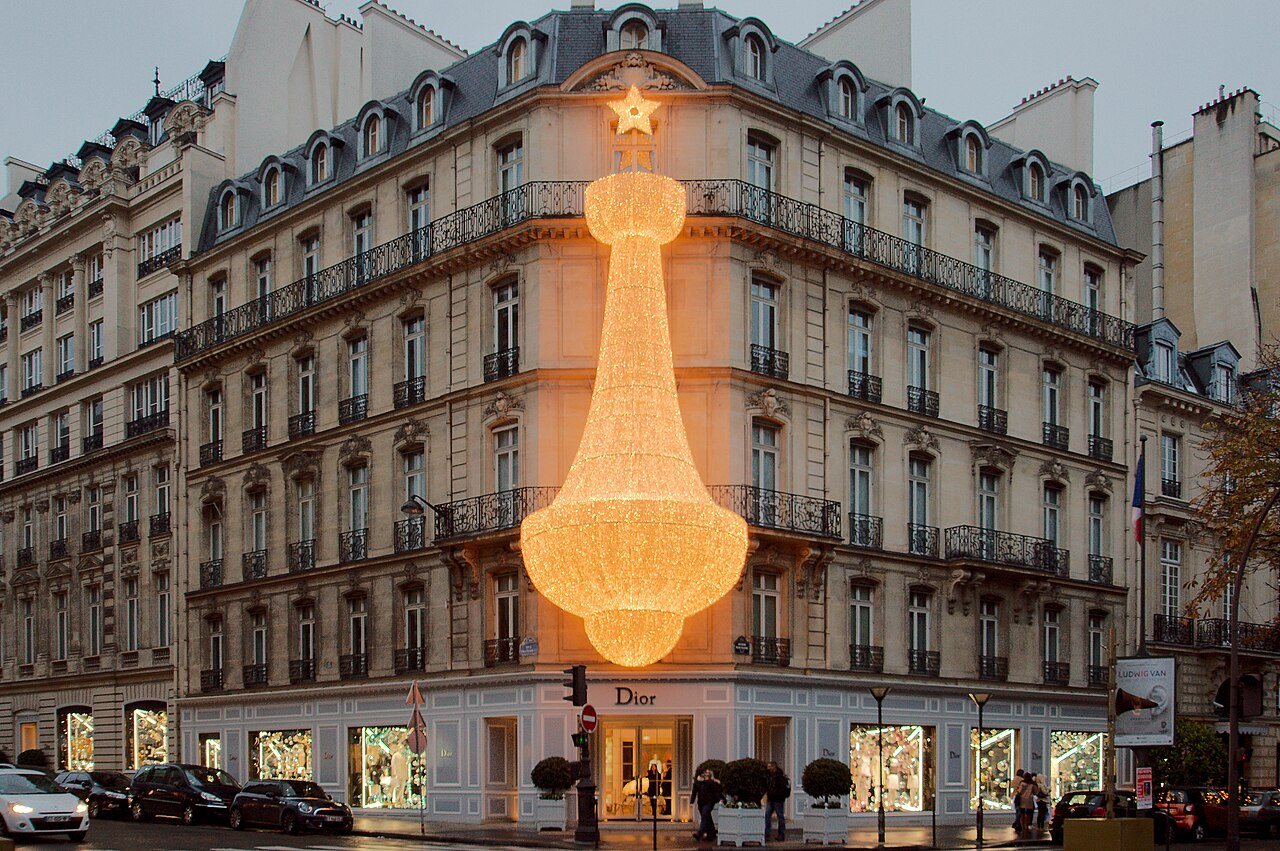
In 1984 the Boussac group, a failing textile business that owned Christian Dior, was acquired by Arnault “in association with a group of investors”, as Christian Dior’s own history puts it. Forbes reports that the French government was seeking a buyer, that the price was about $80 million, and that Arnault’s family put in $15 million with Lazard supplying the rest.
The legal and political point was the bargain with the state. Arnault reportedly promised to revive the group and protect jobs; Forbes says he then cut about 9,000 jobs and sold most of the businesses but kept Dior, earning the nickname “the wolf in the cashmere coat”.
How did Arnault win control of LVMH from Henry Racamier?
Arnault began buying LVMH shares in 1987, and in 1988 Christian Dior, through a subsidiary, took a 32% stake. Louis Vuitton’s chairman Henry Racamier soon clashed with him over strategy. With the drinks group Guinness, Arnault took their combined stake to 43.5%, enough for control, and became LVMH chairman in January 1989.
Racamier went to court. In November 1989 the LVMH supervisory board stripped him of his posts as vice-president and director general, saying his lawsuits were against the group’s interest, UPI reported, although a Paris commercial court let him delay a Louis Vuitton shareholders’ meeting. In April 1990 he resigned after a French court rejected his attempt to deny Arnault control of part of his LVMH holding.
What happened in the Gucci battle with Pinault?
In early 1999 LVMH built a 34.4% stake in Gucci, then listed in Amsterdam and New York. Gucci issued shares to an employee share plan and then brought in François Pinault’s PPR as a white knight, which paid $3 billion for 42% through 39 million new shares and cut LVMH to about 20%. LVMH asked the Enterprise Chamber in Amsterdam to annul the issue. On 27 May 1999 the Dutch court refused to unwind the PPR deal but stripped the employee plan’s voting rights, CNN reported.
The fight ended in September 2001. PPR bought LVMH’s shares at $94 each, about $806.5 million, Gucci paid other shareholders a $7 special dividend and PPR promised a $101.50 tender offer in 2004. PPR renamed itself Kering in 2013. The Gucci family’s own story is in FLJ’s piece on the House of Gucci murder case.
Why did the AMF fine LVMH €8 million over Hermès?
On 23 October 2010 LVMH announced it held 14.2% of Hermès, a stake that later reached about 23%. The AMF Sanctions Committee found LVMH had kept the market unaware that it already held 4.9% and had equity-linked swaps over 13 million Hermès shares, more than 12% of the capital, booked through Luxembourg and US subsidiaries. Cash-settled swaps did not then trigger disclosure thresholds; LVMH converted them into shares in October 2010.
On 25 June 2013 the committee fined LVMH €8 million for inaccurate public information about its Hermès holdings and for not telling the market it was preparing to buy a large stake. The Hermès family locked more than half the shares together. In September 2014, after mediation by the president of the Paris Commercial Court, LVMH agreed to distribute its Hermès shares, leaving Groupe Arnault with about 8.5%, and accepted a five-year standstill. FLJ’s piece on Birkin bag pricing shows what the family was protecting.
How did LVMH buy Bulgari and then fight Tiffany in Delaware?
Bulgari, in March 2011, was friendly. The founding family swapped its majority stake for LVMH shares, and LVMH made a mandatory tender offer to other shareholders at €12.25 a share, valuing Bulgari at about €4.3 billion. FLJ covers it in Italian luxury brands and their owners.
Tiffany was not. On 25 November 2019 LVMH agreed to pay $135 a share in cash, about $16.2 billion. After the pandemic hit, LVMH disclosed a 31 August 2020 letter from the French foreign ministry asking it to delay closing until 6 January 2021 amid threatened US tariffs. On 9 September 2020 Tiffany sued in the Delaware Court of Chancery (Case No. 2020-0768) for specific performance and a declaration that no material adverse effect (MAE) had occurred. LVMH countersued, claiming an MAE and a breach of Tiffany’s duty to run the business in the ordinary course, partly by paying dividends while losing money.
Vice Chancellor Joseph Slights III set a four-day trial for 5 January 2021. On 29 October 2020 the parties agreed $131.50 a share, about $15.8 billion or $425 million less, and dropped the case; the deal closed on 7 January 2021. The lesson: an uncertain MAE claim can still buy a price cut. Tiffany’s best known asset features in FLJ’s piece on Tiffany Blue.
What are the key deals, prices and legal points?
| Year | Deal | Price or stake | Legal point |
|---|---|---|---|
| 1984 | Boussac group, owner of Christian Dior | About $80 million, $15 million from the family (Forbes) | State-backed rescue with job pledges, then asset sales |
| 1987 to 1990 | Control of LVMH | 43.5% with Guinness | Board and court fight; Racamier resigned in April 1990 |
| 1999 to 2001 | Gucci | 34.4% stake, sold to PPR at $94 a share (about $806.5 million) | White knight share issue upheld by the Amsterdam Enterprise Chamber; employee plan votes stripped |
| 2010 to 2014 | Hermès | 14.2% disclosed in October 2010, later about 23% | Undisclosed equity swaps; AMF fine of €8 million on 25 June 2013; five-year standstill in 2014 |
| 2011 | Bulgari | About €4.3 billion; €12.25 a share offer | Share swap with the family, then a mandatory tender offer |
| 2017 | Christian Dior Couture | €6.5 billion enterprise value | Sold by Christian Dior SE to LVMH as the family bought out Dior minorities |
| 2019 to 2021 | Tiffany & Co. | $135 cut to $131.50 a share (about $15.8 billion) | Delaware Chancery suit for specific performance; LVMH’s MAE countersuit; settled October 2020 |
| 2022 | Agache becomes an SCA | No sale | Five children own the general partner equally; 30-year transfer lock |
| 2025 | LVMH bylaws | Approved with 99.18% of votes | Age limit for chairman and CEO raised from 80 to 85 |
| 2026 | Christian Dior SE to become Agache SCA | Cash offer for the 2.44% minority, about €1.63 billion | SCA conversion; buy-out offer at 95% of net asset value, no squeeze-out |
Sources: Christian Dior and LVMH releases, the AMF decision, the Delaware complaint, Forbes, Bloomberg, Reuters, CNN and CNBC.
Who will succeed Bernard Arnault, and how is control being locked in?
Arnault was born on 5 March 1949 and is 77. LVMH raised the age limit for its chairman and CEO from 75 to 80 in 2022 and from 80 to 85 on 17 April 2025, with 99.18% of votes, Reuters reported. He can stay until 2034 on current bylaws.
In July 2022 Agache said it would become a société en commandite par actions (SCA), a partnership limited by shares. Its general partner, Agache Commandité, is held equally by Delphine, Antoine, Alexandre, Frédéric and Jean Arnault, and according to the AMF filing reported by WWD, its shares cannot be sold or transferred for 30 years unless the five agree unanimously. In an SCA the general partners run the company and are hard to remove.
The September 2026 plan applies that model to the listed company. Financière Agache merges into Agache, Agache into Christian Dior, and Christian Dior converts into an SCA renamed Agache, targeted for the end of December 2026. Agache Commandité and Arnault become general partners, with Arnault as managing partner and the partners’ financial rights capped at €3 million a year. The new Agache will hold 49.76% of LVMH directly. Dior minorities will be offered cash at 95% of net asset value (illustrated at €469.05 a share) in the first quarter of 2027, subject to AMF clearance.
All five children hold senior roles. A January 2026 Reuters summary listed Delphine as chair and CEO of Christian Dior Couture, Antoine as LVMH’s head of communications, image and environment and CEO of Christian Dior SE, Alexandre as deputy CEO of Moët Hennessy, Frédéric as CEO of Loro Piana and Jean at Louis Vuitton’s watch division. No successor has been named, and in July 2026 Arnault rejected reports that his children were feuding. For the wider picture, see FLJ’s guide to French luxury brands and their owners.
Frequently asked questions
What is Bernard Arnault’s net worth?
Forbes put Bernard Arnault and family at $121.6 billion on 12 November 2026, 17th in the world. The Bloomberg Billionaires Index had him at $143 billion on 10 September 2026. Both figures move daily with the LVMH share price.
Why has Bernard Arnault’s net worth fallen in 2026?
LVMH shares fell from €645 at the end of 2025 to about €403 in November 2026 as luxury demand weakened. Bloomberg said his fortune fell $65 billion by early September.
How much of LVMH does the Arnault family own?
In September 2026 the family group held 50.33% of LVMH’s capital and 66.27% of its votes, mostly through Christian Dior SE.
What is Agache?
Agache is the family holding company at the top of the chain that controls Christian Dior SE and LVMH. Its general partner is owned equally by Arnault’s five children.
How much did LVMH pay for Tiffany?
LVMH agreed to pay $135 a share in 2019, then cut the price to $131.50 a share, about $15.8 billion, in October 2020 to settle Tiffany’s Delaware lawsuit. The deal closed on 7 January 2021.
Can Bernard Arnault stay CEO of LVMH past 80?
Yes. In April 2025 LVMH shareholders raised the age limit for the chairman and CEO from 80 to 85, so Arnault, born in March 1949, can stay until 2034.
Net worth figures and share prices are as of the dates stated and change daily. The Christian Dior restructuring is a proposal still subject to shareholder votes and AMF clearance. This article is general information, not legal or investment advice.
Featured image: Photo: Jérémy Barande via Wikimedia Commons, CC BY-SA 2.0, adapted
FASHION LAW JOURNAL INSIDER
Join designers, brand founders and fashion lawyers who get the biggest brand battles, IP fights and career moves in fashion law, straight to their inbox.