

Two back-to-back letter Cs, linked in the middle: the Chanel logo is one of the most recognised marks in fashion and one of the most counterfeited. It appears on turn-locks, earrings, buttons, sunglasses and perfume, and Chanel defends it in court constantly. This guide covers where the interlocking Cs first appeared, how the logo is registered, and the cases that show how far that protection reaches, from counterfeit sellers to a reseller’s hashtags to a tech company’s logo in Europe.
Short answer: The interlocking CC first appeared, according to the V&A, etched on the stopper of the Chanel N°5 bottle in 1921. Chanel has registered the logo as a US trade mark since at least 1983 and uses those registrations to sue counterfeiters and resellers, winning $4 million against What Goes Around Comes Around in 2024. It lost a 2021 EU case against Huawei’s logo.
Key takeaways
- The earliest documented use of the interlocking Cs is the 1921 N°5 perfume stopper, which the V&A says was the first time Chanel used the symbol.
- Chanel holds US registrations for the CC monogram on clothing (1983), handbags (1985), costume jewellery (1988) and many later goods.
- Counterfeiting a registered mark can cost a seller up to $2 million per mark per type of goods in US statutory damages if the court finds it wilful.
- The CC is strong but not unlimited: the EU General Court held in 2021 that Huawei’s logo was not similar enough to Chanel’s to block it.
When did the Chanel logo first appear?
The double C arrived with perfume. According to the V&A, which staged the Gabrielle Chanel: Fashion Manifesto exhibition in 2023 and 2024, the stopper of the original 1921 N°5 bottle was “etched with two interlocking C’s enclosed in a circle”, the first time Chanel used what became shorthand for the brand. In 1924 the square stopper became faceted and octagonal.
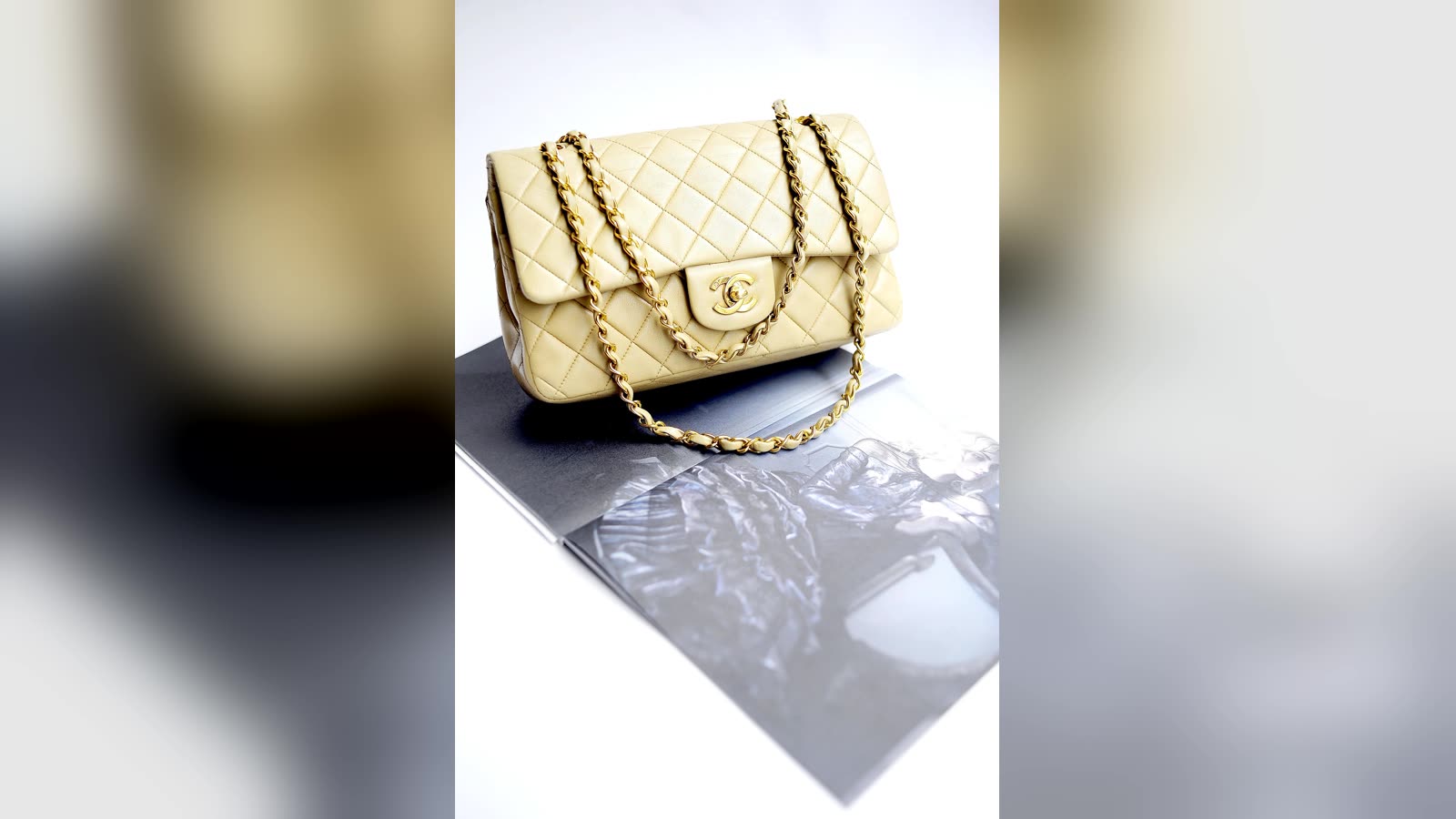
Several origin stories circulate online about where the design came from. We found no primary source that settles the question, so we stick to the documented record. What is clear is that the CC grew from a perfume detail into the house signature. Today the CC turn-lock on Chanel’s quilted flap bags is one of its most visible uses. The original 2.55 bag, launched in February 1955 after Chanel’s 1954 return to fashion, became a house classic. FLJ’s profile of Coco Chanel covers her life and the Wertheimer deal that shaped who owns the name, and the story behind the 2.55 covers the bag itself.
FLJ Insider Pro is open: live fashion law jobs and internships, five career guides and two roadmaps. Early bird USD 12/month. See what's inside
What does the Chanel logo look like in legal terms?
The logo is two mirror-image letter Cs, one facing left and one facing right, overlapping at the centre. When Chanel’s French registrations were examined by the EU General Court, the court described them as two curves resembling a horizontal, inverted mirror pair of letters C forming a vertical central ellipse, with one version enclosed in a circle. That precise description matters: trade marks are compared as registered, not as people remember them.
Chanel protects the CC monogram separately from the CHANEL word mark. The word mark covers the name in any typeface; the monogram covers the image. Brands register both because each catches copies the other might miss. FLJ explains the strategy in word mark vs logo mark.
How is the Chanel CC logo registered in the US?
Chanel, Inc. lists its registrations in the many counterfeiting cases it files. A 2024 Florida federal court order sets out the marks the court accepted as valid and registered on the Principal Register, including these CC monogram registrations:
| US Reg. No. | Registered | Goods covered |
|---|---|---|
| 1,241,264 | 7 June 1983 | Suits, jackets, skirts, dresses, sweaters, coats, scarves, shoes and other clothing (CC in a circle) |
| 1,314,511 | 15 January 1985 | Leather goods, namely handbags |
| 1,501,898 | 30 August 1988 | Keychains, costume jewellery, blouses, shoes, belts, scarves, ties, brooches and buttons |
| 1,734,822 | 24 November 1992 | Handbags, wallets, travel bags, luggage, card cases, tote bags and cosmetic bags |
| 3,025,936 | 13 December 2005 | Eyeglass frames, sunglasses, gloves, swimwear and barrettes |
Each registration covers specific classes of goods, so Chanel keeps filing as it moves into new categories. A registration on the Principal Register is evidence of validity and ownership, and it unlocks the Lanham Act’s counterfeiting remedies.
What happens to people who sell fake Chanel?
Under the Lanham Act, a brand suing over counterfeits can choose statutory damages instead of proving its losses: $1,000 to $200,000 per counterfeit mark per type of goods, or up to $2 million per mark per type of goods where the counterfeiting is wilful (15 U.S.C. § 1117(c)).
Chanel uses this routinely against online sellers. In the October 2024 Florida case above, against a DHgate store, the court granted a default judgment and accepted Chanel’s formula of a $30,000 baseline, trebled for wilfulness and doubled for deterrence: $180,000 per trademark counterfeited per type of good. The order notes other Florida judges applied the same formula in Chanel cases that year. Most of these sellers never appear in court, so collecting the money is another matter. FLJ’s guide to replica bags covers the buyer’s side.
What did Chanel v What Goes Around Comes Around decide?
The most important recent case about the CC logo involved a reseller, not a street counterfeiter. Chanel sued What Goes Around Comes Around (WGACA), a New York vintage dealer, in 2018. After a trial from 9 January to 6 February 2024, a jury found WGACA liable on every claim, including trademark infringement, false association and false advertising, and awarded $4 million in statutory damages over Chanel-branded handbags bearing counterfeit marks.
Judge Louis L. Stanton’s final judgment of 26 February 2025 defines the “CHANEL Marks” as the CHANEL word mark and the CC monogram, and bars WGACA from:
- using the CC logo or the CHANEL name to promote its business in a way likely to suggest a link with Chanel;
- using Chanel’s stylised font, Chanel runway or campaign images, or hashtags containing “Chanel” such as #wgacachanel;
- selling Chanel-branded items Chanel never authorised for sale, such as store props, or bags with serial numbers voided after authenticity cards were stolen from an Italian factory in 2012.
WGACA may still sell genuine Chanel, but every listing must carry a prominent disclaimer that it is not affiliated with or authorised by Chanel, and show the item’s serial number. It also had to give up $12,739 in profits from 51 bags with voided serial numbers and 779 counter-support items. Post-trial motions were resolved in June 2025. FLJ’s case note on Chanel v WGACA covers the trial in detail.
Why did Chanel lose to Huawei in the EU?
Strong marks still have limits. In 2017 Huawei applied to register a logo for computer hardware and other goods made of two vertical, back-to-back curved shapes. Chanel opposed, relying on two French CC registrations. The EUIPO rejected the opposition and, on 21 April 2021, the EU General Court dismissed Chanel’s appeal in Case T-44/20.
The key point was orientation. Chanel argued that Huawei’s mark, turned on its side, looked like its own. The court said marks must be compared in the form in which they are registered and applied for, not as they might be rotated in use. Compared that way, Chanel’s marks had rounder curves, thicker lines and a horizontal orientation, Huawei’s a vertical one, and the signs were not similar. Without similarity, Chanel’s reputation could not rescue the claim. The lesson for any brand is that the drawing you file is the mark you get.
Can you use the Chanel logo?
- Resellers of genuine items: you can say an item is Chanel and show the logo that is on the item, but use no more than you need, add a clear disclaimer, and avoid Chanel’s font, campaign imagery or hashtags, as the WGACA judgment shows.
- Designers: interlocking or mirrored letters in a similar arrangement invite a dispute, even on different goods. The Huawei case shows a clearly different design can survive.
- Customisers and upcyclers: reworking genuine Chanel and reselling it raises its own risks; the WGACA judgment bars selling materially altered items.
Gucci’s interlocking Gs raise similar questions, covered in FLJ’s guide to the Gucci logo. For the commercial story of how Chanel turns scarcity and its archive into pricing power, the Brand Case Study Pack opens with a Chanel chapter.
Frequently asked questions
What does the Chanel logo stand for?
The two Cs are commonly taken to stand for Coco Chanel, though we found no official Chanel statement on their meaning. The monogram is registered as a trade mark in its own right, separately from the CHANEL name.
When was the Chanel logo created?
The earliest documented use is on the stopper of the N°5 perfume bottle in 1921, which the V&A describes as the first time Chanel used the interlocking Cs.
Is the Chanel logo trademarked?
Yes. Chanel holds US registrations for the CC monogram dating back to at least 1983, covering clothing, handbags, jewellery, eyewear and more, as well as registrations in other countries.
Is it illegal to buy a fake Chanel bag?
In the US, the law targets people who sell or traffic in counterfeits rather than personal buyers, but fakes can be seized at the border. Rules differ in Europe, where some countries also penalise buyers.
Why did Chanel sue What Goes Around Comes Around?
For selling counterfeit and unauthorised Chanel items and for marketing that suggested a link with Chanel. A jury awarded $4 million in 2024, and a 2025 judgment imposed an injunction and a mandatory disclaimer.
Did Chanel win its case against Huawei’s logo?
No. In 2021 the EU General Court held that Huawei’s logo was not similar to Chanel’s CC marks as registered, so Chanel could not block its registration.
Case information is as of 11 November 2026. This article is general information, not legal advice.
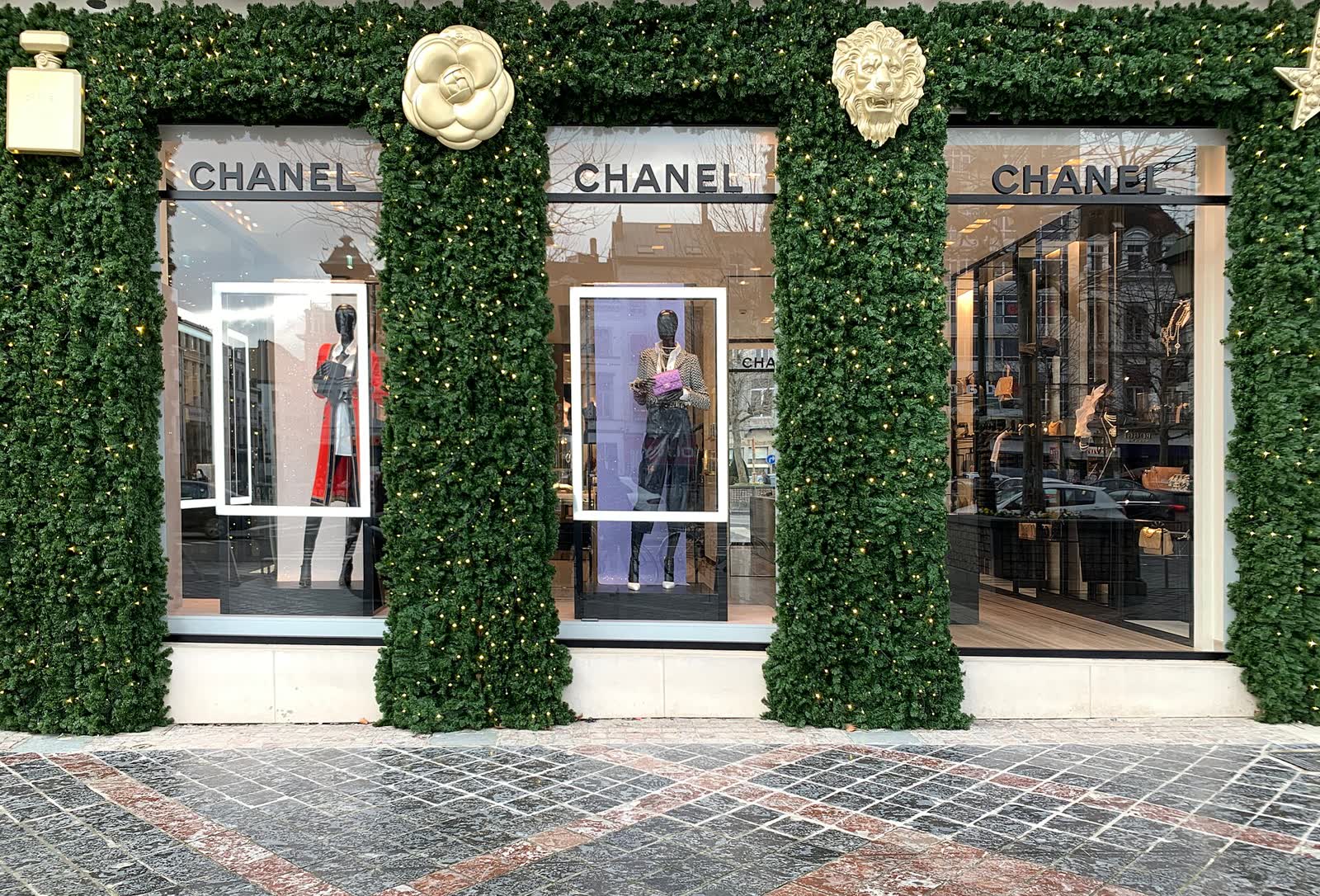
Featured image: Photo: Liu Wen Cheng via Wikimedia Commons, CC BY-SA 2.0, adapted
FASHION LAW JOURNAL INSIDER
Join designers, brand founders and fashion lawyers who get the biggest brand battles, IP fights and career moves in fashion law, straight to their inbox.