







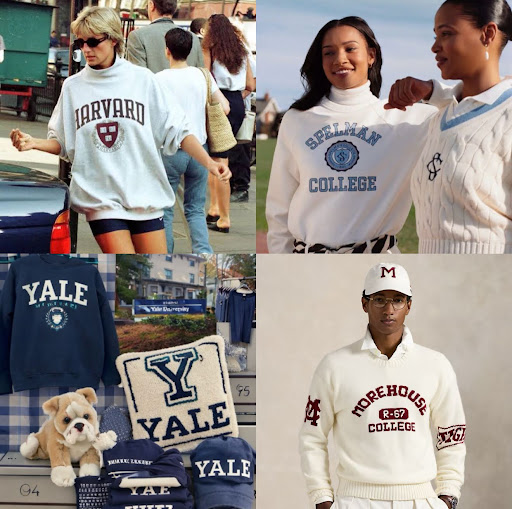
Walk through almost any city in the world today, and you will eventually see it: a crimson Harvard hoodie, a navy Yale crewneck, or a Princeton cap casually paired with jeans. The interesting part is that many of the people wearing these pieces have never set foot on those campuses. Yet the garments still carry meaning. They signal intellect, prestige, tradition — sometimes even aspiration.
Over time, university apparel has become far more than simple campus merchandise. The American collegiate aesthetic, often referred to as the “preppy” or “Ivy League” look, has evolved into a recognizable global style. From varsity jackets to cotton hoodies, these pieces now live comfortably in everyday wardrobes across continents. But behind the relaxed appearance of campus fashion lies something far more structured: a carefully managed system of branding, licensing, and intellectual property.
The Birth of the Campus Aesthetic
The roots of collegiate style trace back to the mid-20th century, when elite American universities developed distinct visual traditions tied to student life and athletics. Varsity jackets, originally awarded to athletes for sporting achievements, became coveted symbols of belonging. Letterman sweaters, rowing blazers, and tailored chinos formed part of a broader campus uniform that balanced casualness with quiet elegance.
Over the decades, this aesthetic moved beyond university grounds. Designers and fashion brands began to reinterpret the collegiate look for a wider audience. Among the most influential was Ralph Lauren, whose collections in the late twentieth century popularized the romantic image of Ivy League campuses. Through crisp shirts, cable-knit sweaters, and rowing blazers, Ralph Lauren transformed academic tradition into a global lifestyle narrative.
Other brands followed suit. Labels such as J.Crew, Brooks Brothers, and Tommy Hilfiger incorporated collegiate references into their collections, reinforcing the connection between academia and fashion. What began as campus dress codes gradually turned into an aesthetic language recognized around the world.
Universities as Merchandising Powerhouses
What many people overlook is the scale of the industry surrounding university merchandise. American universities operate sophisticated licensing programs that generate significant revenue each year. Through partnerships with manufacturers and retailers, institutions authorize the production of clothing and other goods bearing their names and logos.
One of the central organizations managing these relationships is the Collegiate Licensing Company, which represents hundreds of universities and facilitates licensing agreements with apparel brands and retailers. According to industry estimates, collegiate licensed merchandise generates more than $4 billion annually in retail sales in the United States alone.
Institutions such as Harvard University and Yale University license their names and insignia across a wide range of products — hoodies, caps, jackets, tote bags, and even household items. The result is a thriving marketplace where academic identity meets commercial opportunity.
Yet this system is tightly controlled. Universities do not simply allow anyone to print their name on a sweatshirt. Every authorized product must pass through licensing channels designed to protect institutional reputation and ensure compliance with brand guidelines.
The Legal Backbone: Trademarks and Licensing
The legal foundation of university merchandise lies in trademark law. Universities register their names, logos, seals, and sometimes even mascots as trademarks, giving them exclusive rights over how those identifiers are used commercially.
In practice, this means that a company cannot legally produce and sell a “Harvard” hoodie without permission. Instead, manufacturers must obtain licensing agreements that grant them the right to use university trademarks on approved products. In return, the university receives royalties from each sale.
This structure effectively turns universities into brand owners. Like any commercial brand, they manage visual identity, control distribution, and monitor unauthorized uses of their marks. Trademark protection also allows institutions to take action against counterfeit merchandise that could dilute their reputation or mislead consumers.
The system highlights an intriguing overlap between academia and commerce. Universities, traditionally seen as centers of knowledge, now operate in many ways like global brand custodians.
When Academia Meets Fashion
Occasionally, the relationship between universities and fashion becomes even more explicit. A notable example emerged in 2022, when Ralph Lauren partnered with Morehouse College and Spelman College to create a collection inspired by the traditions of historically Black colleges and universities (HBCUs).
The collaboration celebrated the elegance and cultural heritage associated with HBCU campuses, drawing inspiration from archival photographs and mid-century collegiate style. Beyond clothing, the project highlighted the deeper cultural narratives embedded in academic fashion traditions.
Moments like these illustrate how university style extends beyond simple branding. It carries history, identity, and community.
The Global Export of the Campus Look
Today, collegiate style travels far beyond American campuses. Walk through fashion districts in Paris, Tokyo, or Lagos, and you are likely to see vintage university sweatshirts or varsity jackets styled as everyday fashion pieces.
In many cases, the wearers have no academic connection to the institutions printed across their chests. Yet the symbolism remains powerful. Names like Harvard or Yale evoke ideas of intellectual prestige and cultural heritage, transforming simple garments into global signifiers.
Fashion has a way of circulating symbols across borders. What began as campus apparel has become a universal visual shorthand for education, ambition, and tradition.
When Education Becomes Identity
In the end, universities do not merely sell merchandise. They sell stories — stories about excellence, history, and belonging. A sweatshirt may appear casual, but it often carries a deeper narrative about aspiration and identity.
In a world where clothing communicates who we are and what we value, campus apparel has found an unexpected second life beyond lecture halls. The collegiate look no longer belongs solely to students or alumni. It has become a cultural language — one stitched with tradition, protected by law, and worn far beyond the gates of academia.
———————————————————————
References
- Collegiate Licensing Company – collegiate licensing data and industry reports
- Harvard University Trademark Program guidelines
- National Collegiate Athletic Association merchandising and licensing information
- Coverage of the Ralph Lauren HBCU collaboration with Morehouse College and Spelman College
- Reporting on collegiate fashion influence
Image credits
- Princess Diana wearing a Harvard sweatshirt, London, 1990s — Photo: Tony Harris / PA Images via Getty Images.
- Ralph Lauren, Exclusively for Morehouse and Spelman Colleges Collection, campaign imagery photographed by Nadine Ijewere (2022).
- Yale University merchandise — Yale Campus Store.
- Ralph Lauren, Morehouse College Sweater, Polo Ralph Lauren HBCU Collection (2022).