





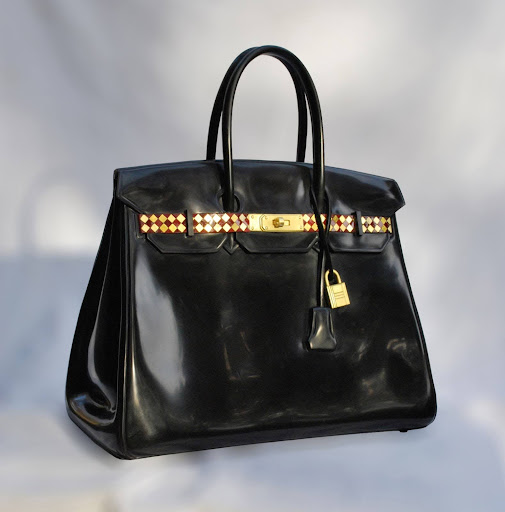
The lawsuit against Hermès International is equally intriguing as the Birkin handbags. 2 Californians, Tina Cavalleri and Mark Glinoga, have challenged the luxury giant, claiming it is using its signature Birkin bags to regulate the entire market through questionable tying practices. This case could be peculiarly strong because billions of dollars are at stake, and the result has the capacity to change the definition of exclusivity and equity in the luxury world.
Background
In the world of high retail, Hermès is a name that needs no introduction. This powerhouse of Paris was born in 1837 and, since then, has epitomised elegance, none more so than with its Birkin handbag. Owning one is, in many ways, a passport to fashion royalty, thanks to the rarity and demand of these handbags. Talented artisans spend long hours with their craftsmanship and meticulous work on every Birkin. Their mystery and allure are further heightened by the extreme cost; the prices range from the tens to hundreds of thousands of dollars.
The defendants in this case are the Parent company, Hermès International and its American subsidiary, Hermès of Paris, Inc., the exclusive distributor in the United States. The really interesting part, however, is that Birkins are never, ever publicly available, unlike most retailers that simply put their products out on a shelf openly for anyone to buy. They are available only to “worthy” clients, those who have earned their place in the exclusive Birkin club by spending a lot of their wealth on other Hermès products, such as scarves, belts, shoes, or housewares.
The plaintiffs argue that this system was basically holding them hostage, where they had to purchase a lot of other luxury products on the mere hope that they could buy a Birkin one day and feel more content with their lives. They argue that this is a massive antitrust violation rather than a sales tactic.
Claims
The primary allegation here is that Hermès has breached one of the best-known but seldom litigated antitrust laws: “tying.” It occurs when a business with significant market power over one product, in this case, the Birkin handbag, the “tying” product, requires customers to purchase other products, the “tied” products, other Hermès luxury goods, in order to close the deal they really want.
Allegations raised by the Plaintiff:
- Sherman Act Violation: The plaintiffs argue that Hermès has effectively commandeered the Birkin handbag market and, by exploiting this position, is coercing consumers into buying unwanted merchandise. The plaintiffs insist that this dampens competition at the product line level across multiple products and unjustly inflates Hermès’ sales margin.
- California Cartwright Act Violations: Not only in California, but nationwide, Hermès is charged with stifling fair competition and limiting trade by requiring the purchase of other goods in order to get access to the Birkin.
- Unfair Competition Law Violations: Plaintiffs contend that Hermès breaks the consumer protection laws because, in furtherance of a series of required ancillary purchases, it deceives and coerces customers to satisfy their desire for its luxury goods.
The details of the various allegations are particularly damning, with Hermès said to withhold any commission on sales of Birkins from the sales associates, while offering generous commissions on other goods. This, obviously, provides a strong incentive for the salespeople to encourage customers to make these extra purchases. The plaintiffs’ contention that this is an unlawful tying scheme is further supported by the fact that customers feel compelled to go through these extra steps, as Birkins are so infrequently (if at all) available.
But here’s the twist: they lost. And not just lost, they lost hard.
The Northern District of California dismissed the case with prejudice, meaning the plaintiffs can’t just resubmit with slight modifications. And the court’s reasoning? The complaint’s argument was essentially unproven. The plaintiffs were not able to prove that Hermès truly has monopoly-level control over Birkin handbags, sufficiently define the relevant product markets, or show that the practice actually hurt competition in the markets for luxury goods such as scarves, jewellery, shoes, and other items.
The ruling from the court was crystal clear: Hermès’ policy of saving Birkins for its most affluent customers is not necessarily unlawful. In fact, the judge actually regarded brand exclusivity and the selection of sales as a legal business strategy, not an illegal type of coercion.
Why This Matters (And Why It’s Complicated)
This decision shows the difficulty of applying conventional antitrust laws to the weird, aspirational world of luxury shopping. We think about competition in most markets in terms of price, availability, and quality. But luxury fashion operates on a different angle altogether, where brand mystique, exclusivity, and scarcity are not just marketing devices but the objective. Birkin is pricey because you can’t just walk in and buy one; it’s not because of the leather or craftsmanship alone. It’s a Birkin because of that. The court’s ruling effectively draws a line in the sand, unless there is evident, observable harm to competition- selective sales and manufactured scarcity do not, by themselves, amount to illegal tying. Furthermore, the plaintiffs in this case were unable to establish the existence of harm.
Plot Twist: The Battle Continues
The plaintiffs retaliated just as it appeared that Hermès had won this round. In an effort to overturn the lower court’s dismissal, Cavalleri and Glinoga filed notice on October 7, 2025, that they would be taking their case all the way to the U.S. Court of Appeals for the Ninth Circuit.
This appeal sets up a high-stakes battle that may shift how antitrust law approaches luxury retail. The Ninth Circuit will now consider whether the complaint pled a relevant market and market power, and whether the district court correctly applied the standards for antitrust pleadings to “luxury-scarcity facts.”
The Final Word (For Now)
This case, in effect, is a referendum on the legal meaning of status as strategy. It asks whether de facto barriers to entry, like scarcity and desirability that have, since the first Hermès saddle stitch, defined the notion of luxury, can continue to enjoy protection legally.
Hermès can keep playing hard to get for now. Yet the rules of the game might be about to change as the Ninth Circuit weighs in. Indeed, one of the most intriguing open questions of modern luxury retail is whether that is good business or bad policy – and where, precisely, the line should be drawn between brand exclusivity and anticompetitive strong-arming.
One thing’s certain: the Birkin battle is far from over. And the stakes? They’re as high as the price tags on those coveted handbags themselves.
Author: Anisha Sharma

 Anisha Sharma is a BA-LLB student with a keen interest in the intersection of entertainment, media, and legal disputes. When she’s not analyzing the latest industry controversies or preparing for competitions, you’ll find her organizing her life with color-coded planners, getting lost in a good book, or discovering new cuisines. Anisha writes with the precision of a law student and the passion of an entertainment enthusiast, bringing fresh perspectives to the stories that shape our media landscape.