

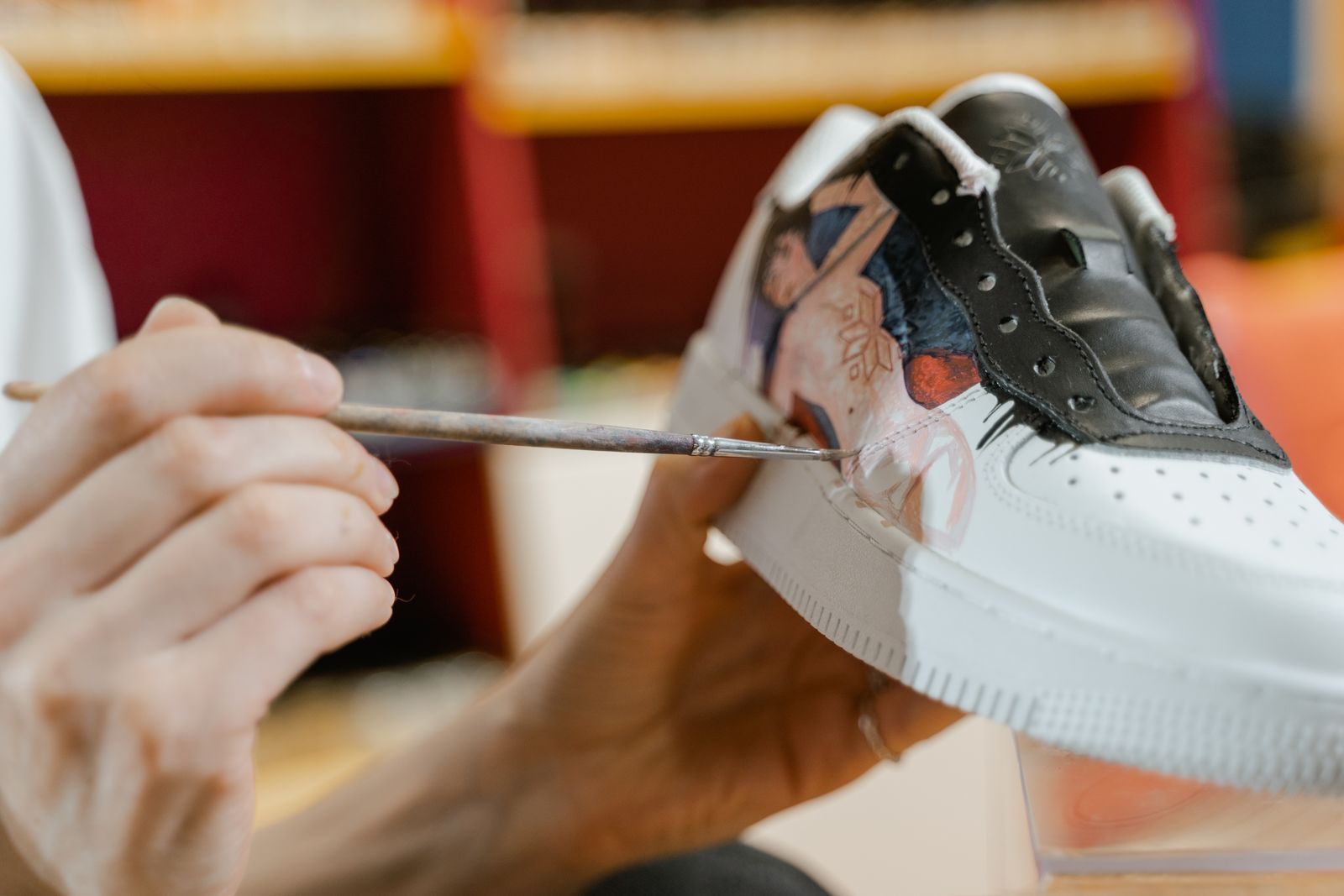
Hand-painted Air Force 1s sell for hundreds of dollars on Etsy, Instagram and TikTok, and most of the people making them assume that if they bought the shoes, they can do what they like with them. That is only half right. Once a customiser alters a branded sneaker and sells it with the brand’s marks still on it, US, EU and UK trade mark law ask a different question: is the buyer getting the brand’s product, or something new that borrows its name? Nike has pressed it against Drip Creationz, The Shoe Surgeon and MSCHF, and each agreed to stop. This guide explains the first sale rule, where it runs out, what the cases decided and how customisers can lower their risk.
Short answer: Customising sneakers you own is legal, and reselling a genuine pair unchanged is protected by the first sale rule. Selling customised pairs is riskier. US courts can treat a materially altered shoe that still carries the brand’s marks as infringing, and Nike used that argument to win consent judgments against Drip Creationz and The Shoe Surgeon. EU and UK law reach a similar result.
Key takeaways
- The first sale rule protects reselling a genuine sneaker as it is. It weakens once the shoe is materially different from what the brand sold, and it never covers fakes.
- Painting, re-dyeing or rebuilding a branded shoe and selling it with the logo on can amount to trade mark infringement, and adding new logos can be treated as counterfeiting.
- Disclaimers such as “not affiliated with Nike” help but do not cure confusion, because later buyers may never see them.
- In the EU and UK, a brand can oppose resale where the condition of the goods “has been changed or impaired”, and luxury image counts.
Is it legal to customise sneakers you bought?
Yes, for yourself. Trade mark law only bites on use of a mark in trade, so painting, gifting or wearing your own pair is not infringement. The question starts when a customised shoe is advertised, sold or made in numbers.
The base shoe being real is not enough. Drip Creationz and The Shoe Surgeon both worked, at least in part, on real Nike shoes and still ended up under permanent injunctions, because Nike argued the finished product was a different shoe sold under its name.
FLJ Insider Pro is open: live fashion law jobs and internships, five career guides and two roadmaps. Early bird USD 12/month. See what's inside
What does the first sale rule protect, and where does it stop?
In the US, trade mark rights in an item are “exhausted” once the brand, or someone with its permission, has sold it. As the Ninth Circuit put it in Bluetooth SIG v. FCA US (2022), the right to control distribution “does not extend beyond the first sale”. That is what lets resale sites and private sellers trade genuine sneakers; FLJ explains the wider doctrine in its guide to what brands can and cannot control after a sale.
The rule assumes a genuine product sold under its true mark confuses nobody. Courts withdraw it under the “material difference” exception when the goods differ in ways a buyer would care about, such as new materials, artwork or construction.
The leading Supreme Court case, Champion Spark Plug Co. v. Sanders (1947), allowed a company to resell repaired Champion spark plugs under the Champion name because they were clearly sold as repaired: “full disclosure gives the manufacturer all the protection to which he is entitled”. But the Court warned that some work may be “so extensive or so basic that it would be a misnomer” to use the original name, even with “used” or “repaired” added.
In 2024 the Fifth Circuit applied that warning in Rolex Watch USA v. BeckerTime, about pre-owned Rolex watches fitted with aftermarket bezels, dials and diamonds. Noting that BeckerTime itself called its work “customization” rather than restoration, the court held the watches were “of another make” and upheld the finding of infringement. BeckerTime’s many disclaimers were found insufficient because “subsequent potential purchasers” might never see them. Other cases have gone the other way on their facts, so there is no safe formula.
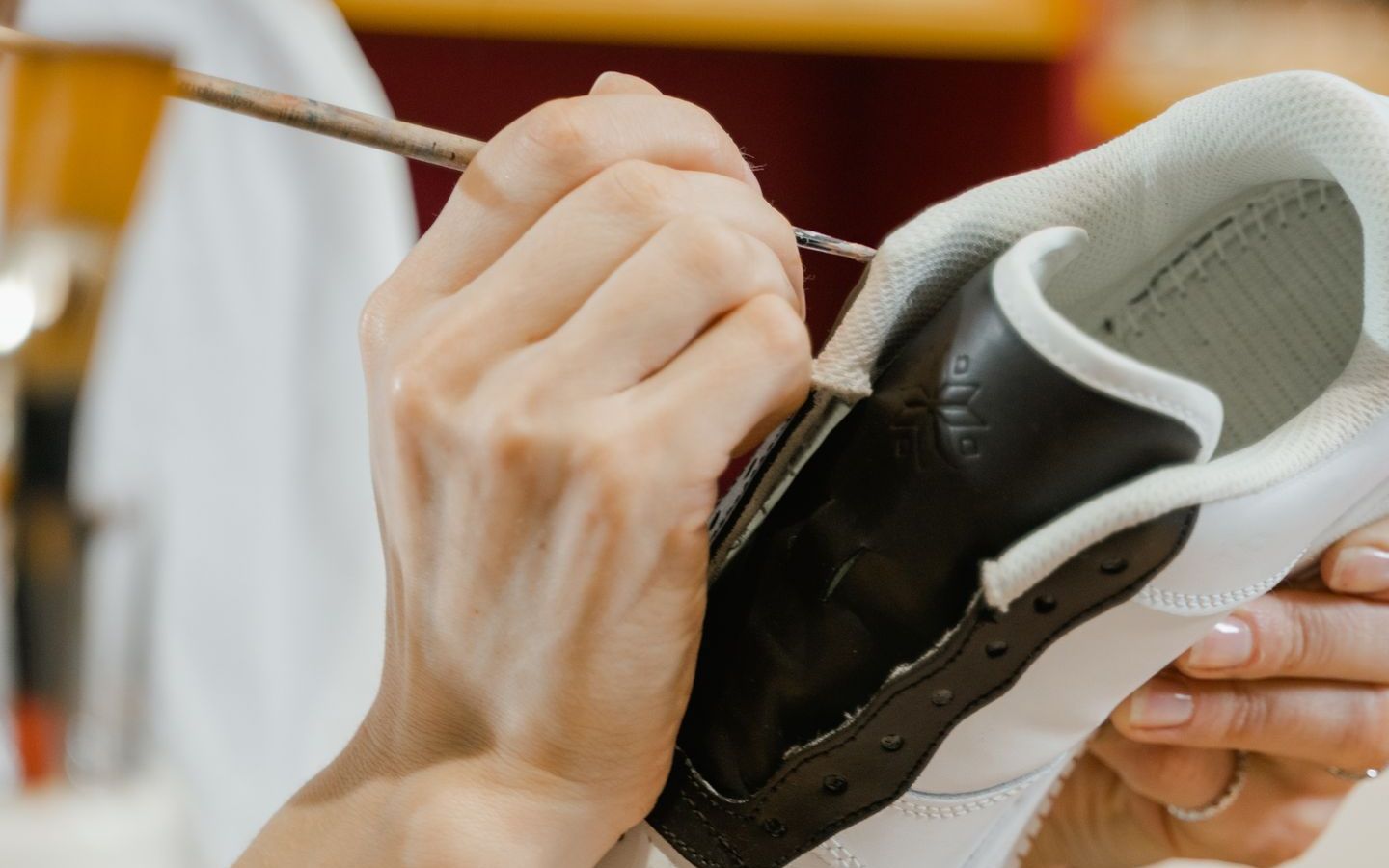
Why can a custom Air Force 1 count as infringement or counterfeiting?
A brand suing a customiser in the US usually pleads infringement of registered marks (15 U.S.C. § 1114), false designation of origin (§ 1125(a)) and dilution (§ 1125(c)). For the Air Force 1, Nike does not rely only on the Swoosh: both consent judgments below list its registered Air Force 1 trade dress, the design of the shoe itself, among the marks the customisers admitted were valid. Painting over the Swoosh does not take a custom AF1 outside Nike’s rights.
The bigger risk is counterfeiting. A mark identical to, or substantially indistinguishable from, the registered mark, such as a fresh Swoosh stitched onto a new upper, is a counterfeit. Under 15 U.S.C. § 1117(c), the brand can then claim statutory damages of $1,000 to $200,000 per counterfeit mark per type of goods, or up to $2 million where the use was wilful.
| Case | Court and outcome | What it means for customisers |
|---|---|---|
| Nike v. MSCHF (“Satan Shoes”) | E.D.N.Y., temporary restraining order 1 April 2021; settled with a recall and buy-back within days | Artistic intent did not stop a fast order |
| Nike v. Customs by Ilene (Drip Creationz) | C.D. Cal., filed July 2021; consent judgments in 2023 | Custom AF1s on real shoes admitted to infringe |
| Vans v. MSCHF (“Wavy Baby”) | 2d Cir., December 2023, injunction upheld; settled August 2024 | Parody is no defence when marks sell the shoe |
| Rolex v. BeckerTime | 5th Cir., 2024, infringement upheld | Disclaimers may not be enough |
| Nike v. The Shoe Surgeon | S.D.N.Y., consent judgment June 2025 | New uppers with Nike marks admitted unlawful |
Sources: court dockets on CourtListener, Second and Fifth Circuit opinions, CBS News.
What happened in Nike v. Drip Creationz?
Nike sued Customs by Ilene, Inc., trading as Drip Creationz, in the Central District of California on 19 July 2021 (No. 5:21-cv-01201). The complaint alleged that Drip sold “custom” Air Force 1s with images, materials, stitching and colourways Nike never approved, some featuring third-party marks such as Flamin’ Hot Cheetos and SpongeBob, for more than 140% of the retail price, and that some were built on counterfeit shoes.
The first sale defence was live: in August 2023 Judge John W. Holcomb ordered extra briefing “applying the first sale doctrine test” in light of Bluetooth SIG. He never had to decide it. On 11 September 2023 he entered a consent judgment against Drip Creationz and two individual defendants, and the last defendant consented in November 2023. Drip admitted that its custom AF1s were authentic shoes “materially altered” with unapproved images, materials, stitching and colourways, some with added third-party marks “suggesting false collaborations”, and that it “mass produced” them. It also admitted selling “Swoosh Patches”. The injunction bars “unauthorized customizations of Nike sneakers”, including “publicly displaying photos or drawings on social media accounts or websites”.
As a settlement, the case set no precedent on first sale, but it shows how Nike frames these claims. FLJ’s Nike lawsuit tracker follows the wider docket.
What did The Shoe Surgeon settlement allow?
Nike sued Dominic Ciambrone, known as The Shoe Surgeon, and related defendants in the Southern District of New York on 15 July 2024. The case ended with a consent judgment and permanent injunction in June 2025, after a confidential settlement including an undisclosed payment to Nike. The defendants acknowledged that making new uppers from third-party materials bearing Nike marks violated the Lanham Act and amounted to infringement and/or civil counterfeiting, while denying any criminal wrongdoing.
The injunction also covers lasts, moulds and Swooshes featuring Nike’s marks, digital assets and “deconstruction” or “reconstruction” classes. One exception allows certain “one of one” services under the private settlement, if each carries a clear written disclosure that it is not sponsored by or affiliated with Nike, may affect the performance of genuine Nike shoes, and is for personal and non-commercial purposes. That carve-out exists because Nike agreed to it; it is not a rule that one-off pieces are safe.
What do the MSCHF cases add?
MSCHF’s “Satan Shoes”, made with Lil Nas X, were Nike Air Max 97s modified with a pentagram pendant and a drop of human blood in the sole, released in a run of 666 pairs at $1,018 each. Nike sued in the Eastern District of New York on 29 March 2021 and won a temporary restraining order on 1 April. MSCHF then agreed to recall the shoes, and its 2019 “Jesus Shoes”, buying them back at the original price, and Nike dismissed the case on 9 April.
The Vans case involved MSCHF’s own shoe, the “Wavy Baby”, a melted version of the Old Skool sold in 4,306 pairs at $220 each. In December 2023 the Second Circuit upheld the injunction under the Supreme Court’s 2023 Jack Daniel’s ruling: a parody that uses another brand’s marks to identify its own goods gets no special free speech protection. It also noted that MSCHF “did not include a disclaimer”. FLJ covers the appeal in Vans v. MSCHF: why parody sneakers lost on appeal.
Where does Nike v. StockX fit?
StockX was not a customiser, but its case marks the edge of the first sale rule. In March 2025 Judge Valerie Caproni held StockX liable for distributing 37 pairs of counterfeit Nikes despite its authentication process; the parties settled in August 2025, as FLJ’s StockX guide explains. First sale protects genuine goods only, so a customiser working on a fake base shoe has no first sale argument at all.
Is customising sneakers treated differently in the UK and EU?
The EU and UK call the first sale rule “exhaustion of rights”. It applies once goods are put on the market in the European Economic Area (for the UK, the UK or the EEA) by the brand or with its consent. Article 15(2) of the EU Trade Mark Regulation and section 12 of the UK Trade Marks Act 1994 both let the owner object where there are “legitimate reasons”, in particular where “the condition of the goods has been changed or impaired” after sale. A repainted or rebuilt sneaker is the obvious example.
In Parfums Christian Dior v. Evora (C-337/95, 1997), the Court of Justice held that a reseller of genuine goods may use the mark to advertise them unless that seriously damages the mark’s reputation. In Copad v. Christian Dior (C-59/08, 2009), about a licensee selling Dior lingerie to a discount store, it said the quality of luxury goods also comes from “the allure and prestigious image which bestows on them an aura of luxury”. A heavily altered designer sneaker gives a brand both arguments: changed condition and harm to image.
Service businesses get some help from BMW v. Deenik (C-63/97, 1999): an independent garage may say it repairs or specialises in BMWs, unless it suggests a commercial connection. By analogy, a customiser can say which shoes it works on but should not look like part of the brand’s network.
How can sneaker customisers lower the risk?
- Prefer commissions to stock. Painting a customer’s own pair is a service on goods they already own. Buying shoes in bulk, customising and listing them is the Drip Creationz model.
- Never start from a fake. Buy base shoes from authorised retailers and keep receipts.
- Do not add or recreate logos. No new Swooshes, patches, heel tabs or rebuilt uppers bearing the brand’s marks. That is what The Shoe Surgeon admitted was unlawful.
- Keep brand names out of your branding. Avoid shop names, handles, hashtags and listing titles built around “AF1” or “Nike”. A small factual note about the base shoe is safer, and the Drip injunction covered social media posts.
- Do not borrow other people’s IP. Cartoon characters, team crests and snack logos bring a second rights owner into the dispute.
- Treat disclaimers as a help, not a shield. Use a clear “not affiliated with or endorsed by” notice on the listing and the box, but remember BeckerTime: later buyers may never see it.
- Watch volume and drops. Mass production, numbered releases and hype marketing look like a collaboration, as Drip and MSCHF found.
- Take a cease and desist letter seriously. Every customiser case above ended with the customiser agreeing to stop, and counterfeiting exposure can reach $2 million per mark.
The safest route is an unbranded blank or your own silhouette that does not copy a protected design; FLJ’s piece on dupes versus counterfeits explains where that line sits.
This article is general information on US, EU and UK law as of 21 November 2026. It is not legal advice. The Nike and Vans cases described here ended in settlements, so courts have not ruled on the merits of the customisers’ defences.
Frequently asked questions
Can I paint my own Air Force 1s?
Yes. Trade mark law applies to use of a mark in trade, so customising and wearing your own pair is not infringement. The risk starts when you sell, advertise or make customised pairs for others.
Is it legal to sell custom Nike shoes on Etsy?
It carries real risk. A materially altered Nike shoe sold with its marks can infringe, and Nike has obtained permanent injunctions against customisers.
Does a “not affiliated with Nike” disclaimer protect me?
Not on its own. In Rolex v. BeckerTime disclaimers were insufficient because later buyers may never see them, and no disclaimer fixes new logos.
Can I sell custom sneakers if I paint over the Swoosh?
It lowers the risk but may not remove it. Nike also holds registered trade dress in the Air Force 1 design itself, which appeared among the marks in both the Drip Creationz and Shoe Surgeon judgments.
Has Nike ever lost a case against a sneaker customiser?
None of the customiser cases covered here reached a ruling on the merits. Drip Creationz, The Shoe Surgeon and MSCHF all settled and agreed to stop.
Is customising sneakers to sell legal in the UK?
Reselling genuine sneakers is allowed, but section 12 of the Trade Marks Act 1994 lets a brand object where their condition has been changed or impaired, so selling altered branded shoes is risky.
FASHION LAW JOURNAL INSIDER
Join designers, brand founders and fashion lawyers who get the biggest brand battles, IP fights and career moves in fashion law, straight to their inbox.