

Nike goes to court more often than most brands, and 2026 has been busy in both directions. It won $11 million over counterfeits and its Dunk trade dress, lost a Flyknit patent verdict against Lululemon and then dropped its appeal, and watched 7-Eleven sue and walk away over an Air Max 95. Away from intellectual property, it faces consumer class actions over tariffs and sale emails, and a federal discrimination investigation that remains open. This tracker sets out where each Nike lawsuit stood as of 7 November 2026, using court orders, agency releases, law firm notes and press reports. Dockets move, so check before relying on any status here.
Short answer: The main Nike lawsuit stories of 2026 are an $11 million jury verdict for Nike over counterfeits and Dunk trade dress, a Flyknit patent verdict against Lululemon wiped out as invalid, and 7-Eleven’s Air Max 95 suit, dismissed with prejudice in October. Tariff refund and sale email class actions against Nike are still running.
Key takeaways
- Nike’s largest 2026 win was on trademarks and trade dress, while its patent fights with Lululemon ended in losses or agreed dismissals.
- The 7-Eleven case ended without a ruling on the merits, so it settles nothing about colourways and trademark law.
- The tariff and email cases are allegations. No court has found Nike liable in either, though the email case is heading for an early appeal.
- The EEOC dropped its subpoena case after Nike complied, but the investigation continues and no finding has been reported.
Which Nike lawsuits are being tracked in 2026?
This table covers the cases we could confirm from sources we were able to read. It is not every case involving Nike, which is a large employer and a frequent defendant. We have left out personal injury filings, data breach claims and routine employment claims. Status is as reported, and a gap in the reporting is not proof that nothing has happened since.
| Case | Court | Type | Status as of 7 November 2026 |
|---|---|---|---|
| Nike v Tuinenburg and Divide the Youth, No. 2:23-cv-10495 | C.D. Cal. | Counterfeiting, trade dress | $11 million jury verdict for Nike, 19 March 2026 |
| 7-Eleven v Nike, No. 3:26-cv-02201 | N.D. Tex. | Trademark, dilution | Dismissed with prejudice on the parties’ filing of 19 October 2026; no merits ruling |
| Nike v Lululemon (Flyknit), No. 1:23-cv-00771 | S.D.N.Y. | Patent | 2025 jury award of $355,450 set aside on 31 March 2026; Nike’s appeal dismissed by agreement, 6 May 2026 |
| Nike v Lululemon (Mirror home gym) | S.D.N.Y. | Patent | Dismissed with prejudice by agreement, September 2026, per Reuters |
| Nike v lululemon, Nos. 2024-2074, 2024-2134 and 2026-1275 | Fed. Cir. | Appeals from patent reviews | Lululemon’s Board wins affirmed 13 May and 5 August 2026; third appeal dismissed by agreement, 5 May 2026 |
| Caldwell v Nike, No. 3:26-cv-00923, consolidated with Dunn | D. Or. | Consumer class action, tariffs | Filed May 2026, consolidated June 2026; no merits ruling reported |
| Ma v Nike, No. 2:25-cv-01235 | W.D. Wash. | Consumer class action, sale emails | Motions to end the case denied January and October 2026; early appeal cleared, 3 November 2026 |
| RTFKT NFT class action | E.D.N.Y. | Consumer, securities theory | Sent to arbitration and stayed, 21 January 2026 |
| EEOC v Nike, No. 4:26-mc-00128 | E.D. Mo. | Subpoena enforcement | Dismissed at the EEOC’s request, August 2026; investigation continues |
What did the $11 million Dunk verdict decide?
This is the Nike lawsuit brand lawyers should read first. On 19 March 2026 a federal jury in Los Angeles returned a verdict against influencer Nick Tuinenburg and his company, Divide the Youth, in a case filed in December 2023. DLA Piper, Nike’s counsel, says the $11 million is made up of $8 million in Lanham Act statutory damages and $3 million in punitive damages. Bloomberg Law reports that the case involved nine Nike trademarks, and the firm names the Nike and Air Jordan word marks and the Swoosh and Jumpman designs among them.
FLJ Insider Pro is open: live fashion law jobs and internships, five career guides and two roadmaps. Early bird USD 12/month. See what's inside
The trade dress finding is the interesting part. Divide the Youth was found liable for infringing Nike’s registered Dunk trade dress, and DLA Piper’s reading is that the Dunk trade dress “is infringed even with third party marks replacing the Swoosh”. That is a winning lawyer’s summary, not the jury’s wording, but the point matters for anyone selling a lookalike with their own logo on the side. Removing the famous logo did not end the case. FLJ’s guides to trade dress and dupes and counterfeits explain why.
The Daily Journal reports that Nike sought $18 million. Under 15 U.S.C. § 1117(c), statutory damages can reach $2 million per counterfeit mark per type of goods where use is wilful, and nine marks at that limit would make $18 million. That is our arithmetic, not a reported basis for the claim. The reports we read do not explain the basis for the punitive award, and we found nothing on any injunction, post-trial motion or appeal as of 7 November 2026.
Why did 7-Eleven sue Nike, and how did it end?
Bloomberg Law reports that 7-Eleven filed its complaint on 1 July 2026 in the Northern District of Texas, ahead of the planned 11 July launch of an Air Max 95 Big Bubble with orange, green and red stripes. 11 July is 7-Eleven Day. The retailer said it had used its tri-colour mark for nearly 60 years, called the design a deliberate and willful effort to associate the shoe with its brand, and asked for an order blocking the shoes, a recall and destruction, enhanced damages and profits, and fees. Those were allegations. FLJ’s report on the 7-Eleven complaint sets out the claims in more detail.
The case ended quietly. The parties filed to dismiss it on 19 October, C-Store Dive reports, with prejudice, so 7-Eleven cannot bring the same claims again, and each side bears its own costs and fees. No settlement terms have been reported. No court ruled on whether a colour combination on a shoe infringed or diluted the marks, so the case gives no guidance on that question.
Where do Nike’s patent fights with Lululemon stand?
Mostly over, and mostly against Nike. In the Flyknit case in the Southern District of New York, a jury found in March 2025 that Lululemon’s footwear infringed claims of US Patent No. 8,266,749 and awarded $355,450. A year later, on 31 March 2026, Judge Arun Subramanian set the verdict aside, holding those claims invalid as obvious, so Nike takes no damages. He also refused Nike’s request to increase the award. Nike had lodged an appeal from the original judgment in April 2025. The Federal Circuit dismissed that appeal by agreement of the parties on 6 May 2026, each side bearing its own costs.
The patent office challenges went the same way. The Federal Circuit affirmed a Patent Trial and Appeal Board win for Lululemon without opinion on 13 May 2026 (No. 2024-2074), and on 5 August 2026 upheld the Board’s ruling that challenged claims of US Patent No. 8,620,413, which covers a watch that connects to fitness sensors, were anticipated or obvious. A third appeal, No. 2026-1275, was dismissed by agreement on 5 May. Finally, the suit Nike filed in January 2022 over six patents and Lululemon’s Mirror home gym was dismissed with prejudice in September 2026 after the companies told the court they would drop it, according to a Reuters report carried by Endurance Sportswire. No terms were disclosed. FLJ’s piece on what the Lululemon loss teaches takes the argument further: a patent can be undone in a way that a well-used trademark rarely is.
Which consumer and employment cases does Nike face?
Tariff refunds. Caldwell v Nike was filed in the District of Oregon on 8 May 2026, according to SGB. The proposed class alleges that Nike passed tariff costs to consumers through higher prices from 1 June 2025 and stands to keep refunds available after the Supreme Court’s February 2026 ruling on tariffs imposed under the International Emergency Economic Powers Act. Plaintiffs call that a double recovery. In June a federal judge in Portland consolidated Caldwell with a second suit, Dunn, on an unopposed joint motion, Mealey’s reports. Nike told Sportico it does not comment on pending litigation. For the importer’s side of the same refunds, see FLJ’s guide to IEEPA tariff refunds.
Sale emails. Harrison Ma, a Washington resident, alleges that Nike sent emails with deadlines its discounts outlasted, in breach of the state’s Commercial Electronic Mail Act and Consumer Protection Act. He sued in King County in May 2025, and Nike moved the case to federal court. On 14 January 2026 Judge James Robart held that the federal CAN-SPAM Act does not pre-empt the state law and denied Nike’s motion to dismiss, as Faegre Drinker explains. Law Commentary reports that a further attempt to end the case failed on 5 October. On 3 November the court cleared the way for an early appeal on Nike’s request, Law360 reports. Nike has argued that the answer could affect more than 200 similar pending cases.
RTFKT. Holders of NFTs from Nike’s former subsidiary alleged that the tokens lost value after the 2024 wind-down and were unregistered securities. DLA Piper, again Nike’s counsel, reports that on 21 January 2026 the Eastern District of New York sent the dispute to arbitration under RTFKT’s terms of service and stayed the case. The merits have not been decided.
EEOC. On 4 February 2026 the Equal Employment Opportunity Commission asked a Missouri federal court to enforce a subpoena in an investigation into whether Nike discriminated against white workers and applicants. In August the agency told the court Nike had complied, and Judge Cristian Stevens dismissed the case, Insurance Journal reports. The investigation, which began with a commissioner’s charge in May 2024, has not concluded and no finding has been reported. Nike has denied discrimination and called the filing “a surprising and unusual escalation”.
Which earlier Nike cases still shape the law?
Two disputes closed in 2025 and are still cited. In Nike v StockX, Fashion Dive reported in March 2025 that the court had held the resale platform liable for 37 counterfeit pairs while rejecting Nike’s false advertising claims. The parties settled on confidential terms in August 2025, Complex reports, so the fight over whether Vault NFTs infringe was never tried to a verdict. In Nike v The Shoe Surgeon, Nike had sought more than $60 million over reconstructed sneakers. According to Sole Retriever, a June 2025 consent judgment included a permanent injunction, an undisclosed payment and a narrow exception for one-of-one customisation of authentic Nike shoes for personal, non-commercial use.
What should brands and sellers take from the Nike cases?
Registered trade dress and trademarks have done more for Nike this year than patents. For brands, that supports filing early on shapes and designs and building the evidence of secondary meaning that product design needs. For sellers, swapping the logo is no safe harbour, and social media promotion does not sit outside the Lanham Act. Customisers should read the Shoe Surgeon terms before assuming that starting with an authentic shoe solves the problem. For marketers, the Washington email case is a reminder that a “last chance” subject line is a factual claim.
Nike’s own trademark filings can fail too, as the FOOTWARE dispute showed. For the wider picture, see FLJ’s trademark and brand battles hub and our legal calendar through 2027.
Frequently asked questions
What is the biggest Nike lawsuit of 2026?
By reported dollar value among decided IP cases, it is the $11 million jury verdict for Nike against an influencer and his company, Divide the Youth, in Los Angeles. The tariff class actions could be larger, but they are at an early stage and no amount has been awarded.
Why did 7-Eleven sue Nike?
7-Eleven alleged that an Air Max 95 in orange, green and red, due out on 11 July, imitated its tri-colour mark and diluted its trademarks. The parties filed to dismiss the case with prejudice on 19 October 2026, and no court ruled on those claims.
Did Nike win its patent case against Lululemon?
A jury awarded Nike $355,450 in March 2025, but in March 2026 the judge held the patent claims invalid as obvious and wiped out the verdict. Nike’s appeal was dismissed by agreement in May 2026, and the separate Mirror home gym case was dropped in September.
Can I join the Nike tariff refund lawsuit?
Not in any practical sense yet. The cases are proposed class actions, now consolidated, and we found no report of a certified class or a settlement. Buyers do not normally need to act until a court certifies a class or approves a settlement. Keep your receipts in case.
Is Nike being sued by the EEOC?
The EEOC filed a subpoena enforcement action, not a discrimination suit, and dropped it in August 2026 after Nike complied. The underlying investigation continues. Nike denies discrimination, and no finding has been reported as of 7 November 2026.
Can you customise Nike shoes and sell them?
That carries real risk. Nike has sued customisers, and The Shoe Surgeon’s consent judgment bars products likely to cause confusion, with a narrow exception. Selling customised shoes under Nike’s marks can raise trademark issues even if the base shoe is authentic, so take advice first.
This article is general information, not legal advice. Case statuses are as of 7 November 2026 and come from court orders, agency, law firm and press reports read that day, and some rest on one source only. Allegations are unproven unless a court has ruled. Nike’s counsel is the source for parts of the verdict and arbitration accounts.
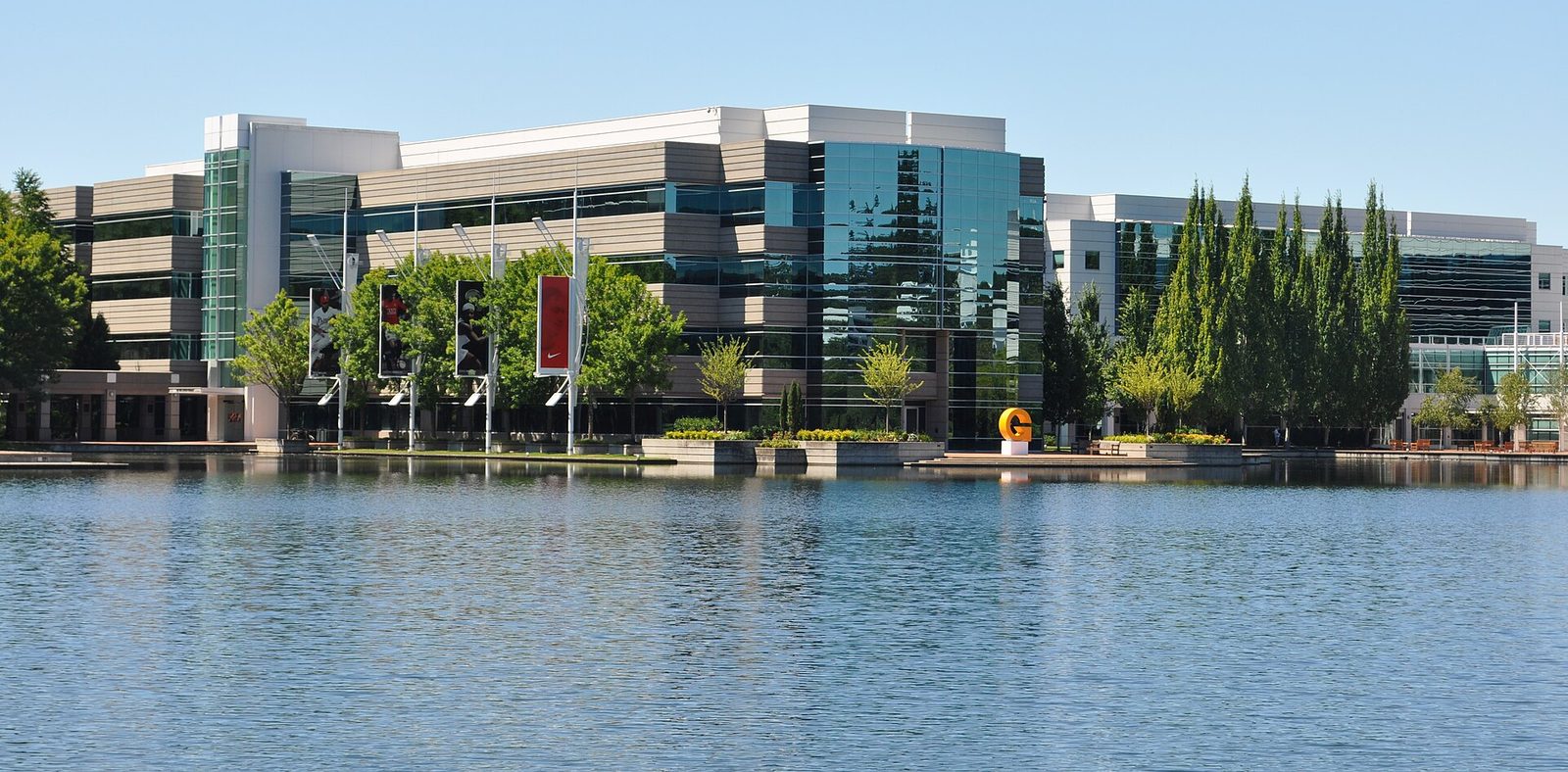
Featured image: Photo: Brandon Carson via Wikimedia Commons, CC BY 2.0, adapted
FASHION LAW JOURNAL INSIDER
Join designers, brand founders and fashion lawyers who get the biggest brand battles, IP fights and career moves in fashion law, straight to their inbox.