
Saint Laurent’s Fall 2026 campaign was already designed to attract attention. It had Rosé, Liu Wen, actor Connor Storrie, the unmistakable visual language of Anthony Vaccarello and a distinctly late-’80s aesthetic, but it was one unexpected element that helped push the campaign far beyond the usual fashion audience: a song that the internet already had a very specific memory attached to.
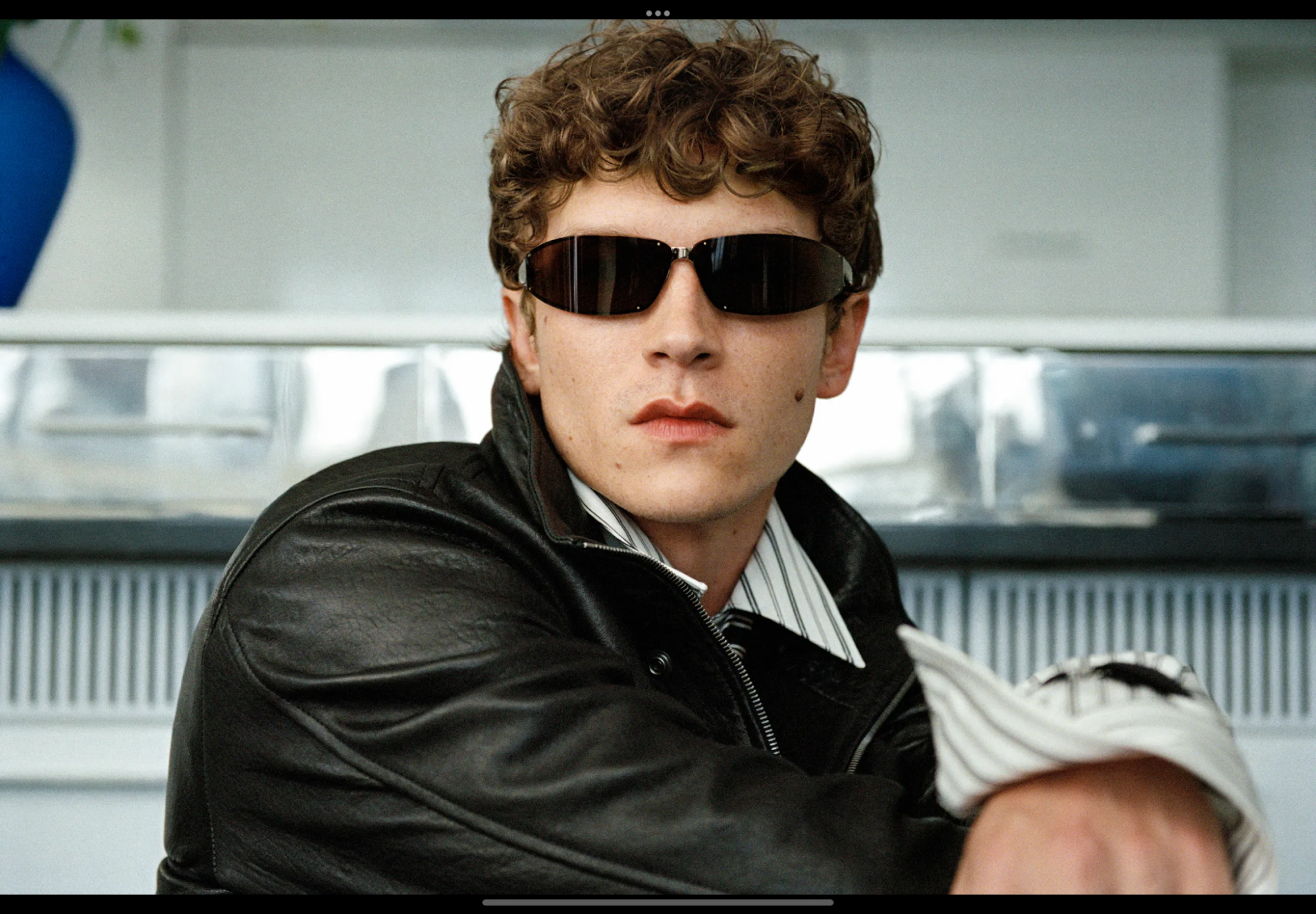
The campaign film, directed and photographed by Talia Chetrit under the creative direction of Saint Laurent’s Anthony Vaccarello, features Rosé, Connor Storrie and Liu Wen. Storrie appears in the campaign’s sharply tailored, retro-inspired menswear, complete with wraparound sunglasses, while the wider campaign moves between tailoring, leather, lace, brocade and sculptural silhouettes. And then the music starts. It is Milli Vanilli’s 1988 hit “Girl I’m Gonna Miss You.”
On its own, the choice feels perfectly compatible with Saint Laurent’s nostalgic, cinematic take on the 1980s. However, the song also carries another association which has nothing to do with fashion.
The Song That Internet Culture Remembers
For viewers of Netflix’s Monsters: The Lyle and Erik Menendez Story, “Girl I’m Gonna Miss You” is immediately recognizable.
The Ryan Murphy series dramatises the case of Lyle and Erik Menendez, the brothers who were convicted of murdering their parents, José and Kitty Menendez, in 1989. The series uses Milli Vanilli’s music prominently, including “Girl I’m Gonna Miss You.” Netflix itself notes that the song appears during the brothers’ parents’ memorial service, where Lyle plays the track and connects its lyrics to his mother.
The choice was not invented for the series. According to the show’s editor, Peggy Tachdjian, the production team actually investigated whether the brothers had played the song at the real memorial service and found that they had.
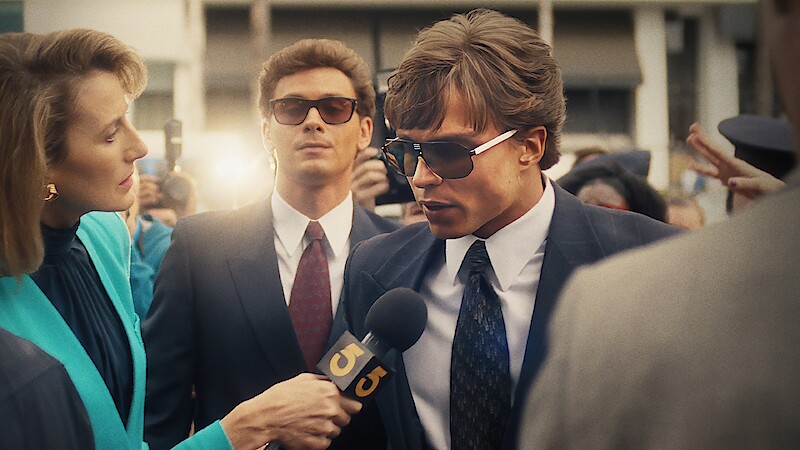
That detail matters because it explains why the song became so strongly associated with the series online.
The song had existed for decades, but Monsters gave it a completely new cultural context. In fact, the renewed interest was measurable. Following the Netflix series, “Girl I’m Gonna Miss You” saw a 258% increase in official on-demand U.S. streams during the period immediately following the show’s release, according to data reported at the time. Milli Vanilli’s overall catalogue also experienced a significant streaming jump.
Enter Connor Storrie
The other major ingredient is Connor Storrie.
Storrie has become a highly recognisable face following his role as Ilya Rozanov in Heated Rivalry. His casting in Saint Laurent’s Fall 2026 campaign places him firmly within the fashion world’s growing interest in actors whose online fandoms can travel with them into luxury marketing. V Magazine describes the campaign as a 35-second piece built around ’80s sensuality, with Storrie dancing to the Milli Vanilli track alongside Rosé and Liu Wen.
That combination is almost tailor-made for short-form platforms. There is the actor with an intensely online fanbase. There is the song people already associate with a heavily discussed television series. There is the retro visual language. And then there is Saint Laurent, a luxury house whose campaigns are designed to function as cultural images rather than straightforward advertisements.
When a Campaign Becomes an Edit
This is where the Saint Laurent campaign becomes particularly interesting from a marketing perspective.
Fashion campaigns traditionally ask audiences to look at the clothes. Social media asks audiences to do something with the content.
A 20- or 30-second campaign film can be reposted, slowed down, edited, paired with another scene, given a new caption or inserted into an entirely different fandom. That is exactly what makes short-form video such a powerful tool for contemporary fashion marketing: the brand does not necessarily control the second life of its campaign.
The Saint Laurent film arrives with several layers already built into it. Someone watching because of Storrie may stay for the clothes. Someone recognising Rosé may share it with a completely different audience. And someone hearing the opening notes of “Girl I’m Gonna Miss You” may immediately think of Monsters and the enormous ecosystem of fan edits that surrounded the series.
The campaign therefore becomes more than an advertisement. It becomes raw material for the internet, and that is an increasingly valuable form of attention.
Fashion Is No Longer Competing Only With Fashion
Saint Laurent’s campaign is a useful example of how luxury brands now operate in an attention economy where the competition is not simply another fashion house. The competition is Netflix, a fandom culture, music nostalgia, celebrity edits, TikTok and Instagram Reels. It is whatever piece of pop culture happens to be occupying people’s feeds that week.
The genius of the campaign may therefore lie less in creating something entirely new and more in recognising an existing cultural connection.
Saint Laurent gave audiences the fashion. Connor Storrie gave them the face. Milli Vanilli gave them the sound. And the internet supplied the context. The last part is impossible to manufacture completely. The Menendez brothers’ story had already travelled from a real-life crime into television and then into countless pieces of short-form internet content. Now, through the same song, that cultural memory has unexpectedly collided with a Saint Laurent campaign.
It is a reminder that in 2026, a fashion film does not necessarily end when the brand posts it. Sometimes, that is when the internet starts making it its own.
FASHION LAW JOURNAL INSIDER
Join designers, brand founders and fashion lawyers who get the biggest brand battles, IP fights and career moves in fashion law, straight to their inbox.